



Escultura de arenisca camboyana: historia, arte y significado
Escultura de arenisca camboyana: historia, arte y significado
La escultura de arenisca camboyana se define como la tradición artística en piedra del Imperio Jemer, producida principalmente entre los siglos IX y XIII, caracterizada por figuras independientes, totalmente tridimensionales, talladas en arenisca extraída de las montañas Kulen. El término académico estándar para este conjunto de trabajos es escultura jemer, y los dos términos se usan indistintamente a lo largo de este artículo.
Estas obras cumplían funciones religiosas hindúes y budistas, representando deidades, realeza y fuerzas cósmicas dentro de los santuarios de los templos. El Imperio Jemer dedicó enormes recursos a estos complejos, y las esculturas en su interior nunca fueron puramente decorativas. Eran iconos vivientes, integrados en el ritual, la arquitectura y la cosmología.
¿Qué es la escultura de arenisca camboyana y cómo se desarrolló?
La escultura jemer evolucionó a lo largo de cuatro siglos de patrocinio real y cambios religiosos. el El arte en piedra del Imperio Jemer comenzó en el siglo IX con figuras todavía influenciadas por las tradiciones de relieve indias y javanesas, donde las figuras fueron talladas contra losas de piedra planas o estelas como soporte estructural. En el siglo X, los escultores jemeres habían roto por completo esa convención.
Los hitos clave en el desarrollo histórico de la escultura de arenisca de Camboya incluyen:
- Siglo IX: Las primeras figuras jemeres muestran una fuerte influencia india, con figuras talladas en alto relieve sobre losas de piedra.
- Siglo X: El templo de Ta Keo se convirtió en el primer templo jemer importante construido casi en su totalidad con piedra arenisca, lo que marcó un cambio decisivo en material y ambición.
- Siglos XI-XII: El período de Angkor representa el apogeo de los logros escultóricos jemeres, con figuras de deidades totalmente independientes, elaborados bajorrelieves en Angkor Wat y complejos de templos a gran escala.
- Siglos XII-XIII: El cambio del patrocinio hindú al budista theravada alteró la iconografía. Las figuras de bodhisattvas y las imágenes de Buda reemplazaron o se unieron al anterior panteón hindú.
- Después del siglo XIII: El declive del Imperio Jemer redujo el patrocinio real y la tradición de talla en piedra arenisca a gran escala se contrajo gradualmente.
La transición del relieve a las figuras completamente redondas no fue simplemente estética. Reflejó un cambio teológico: las esculturas debían ser abordadas, circunvaladas y veneradas desde todos los ángulos. Esto requería soluciones de ingeniería que ninguna otra tradición regional había intentado hasta ahora a esta escala.
¿Por qué las esculturas de arenisca camboyanas tenían tanta importancia cultural y religiosa?
Las esculturas del Imperio Jemer retrataban figuras divinas con sensualidad femenina y grandeza de la corte real, no como estereotipos idealizados sino como presencias vivas y específicas. Cada estatua funcionaba como un recipiente para la energía divina dentro del santuario de su templo. Los sacerdotes realizaban rituales diarios de bañar, vestir y alimentar a estas figuras, tratándolas como residentes aristocráticos de una casa sagrada.
La importancia religiosa del arte en piedra arenisca en Camboya se extendió más allá de las estatuas individuales:
- Deidades hindúes: Vishnu, Shiva y sus consortes aparecen en todos los complejos de templos jemeres. el Torso de Vishnu estilo Phnom Da antiguo en HDAsianArt ilustra el modelado refinado de la forma humana que definió el vaisnavismo jemer temprano.
- Figuras budistas: Avalokiteshvara, Prajnaparamita y el Buda histórico aparecen en obras jemeres posteriores, lo que refleja la conversión gradual del imperio al budismo mahayana y luego al budismo theravada.
- Santificación del paisaje: Las esculturas no se limitaron a los interiores de los templos. En Kbal Spean, conocido como el Río de los mil lingas, los artesanos jemeres tallaron cientos de formas linga directamente en el lecho del río para que el agua corriente transportara energía sagrada río abajo para irrigar los campos de arroz.
"Las esculturas de piedra arenisca de Camboya no estaban pensadas como arte estático, sino que cumplían funciones sagradas y funcionales integradas con la cosmología jemer". — Documentación de investigación de Kbal Spean
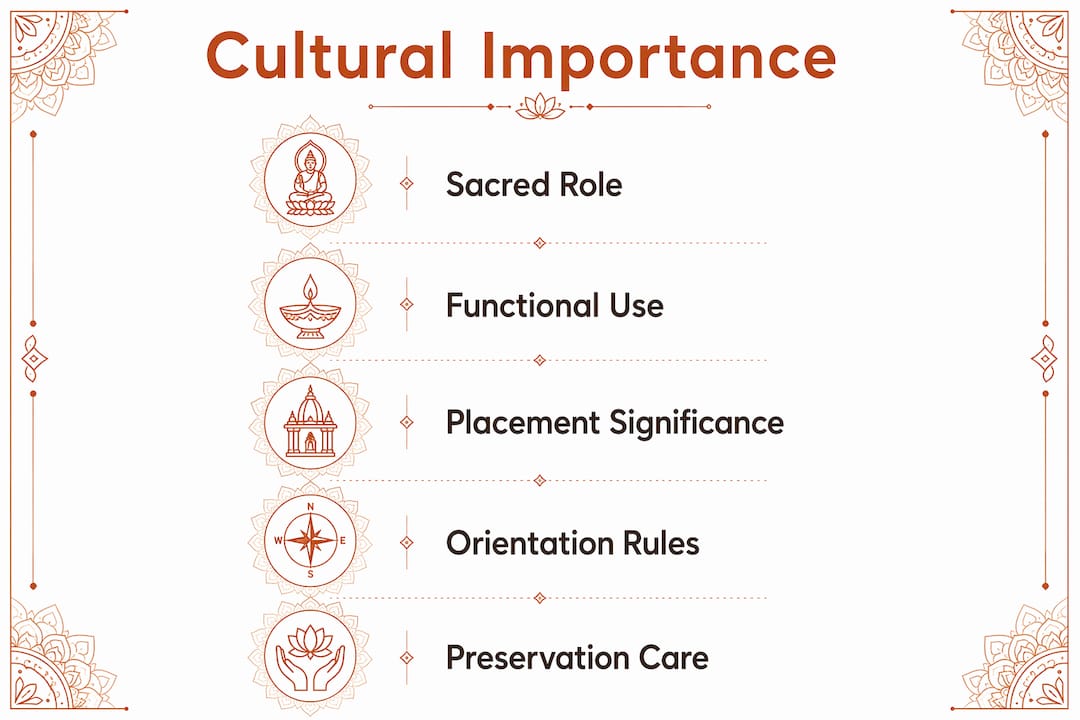
el roles sagrados y funcionales Algunas de estas obras explican por qué su ubicación, orientación y condición eran tan importantes para la sociedad jemer. Una estatua dañada no era sólo una pérdida estética. Fue una alteración del orden cósmico.
¿Cómo se hace la escultura de piedra arenisca en la tradición jemer?
Los escultores jemeres desarrollaron un conjunto de técnicas que distinguen su trabajo de cualquier otra tradición de tallado en piedra en el sudeste asiático. El material principal era arenisca de las montañas Kulen, transportada por río a los principales templos. La composición granular de la piedra permitió a los talladores trabajarla con las mismas herramientas y movimientos utilizados en el tallado en madera, y esa conexión fue directa.
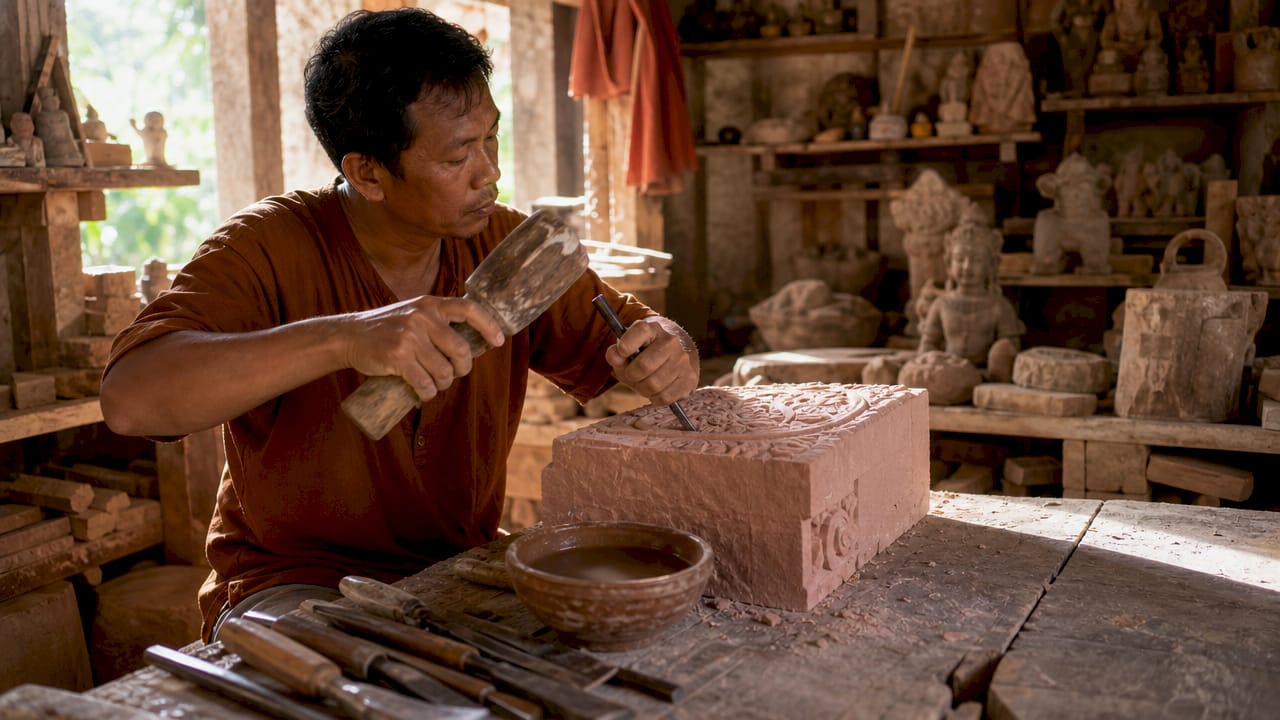
Técnicas de talla jemer evolucionó a partir de tradiciones de tallado en madera, permitiendo un vocabulario decorativo llamado kbach. Kbach se refiere al sistema de motivos florales, foliados y geométricos entrelazados que cubren fustes de columnas, dinteles y vestimentas de figuras. La composición de la piedra permitió a los artesanos manipularla como si fuera madera, produciendo superficies táctiles en capas que recompensan una inspección minuciosa.
El proceso de creación de ornamentación en profundo relieve siguió una secuencia definida:
- Transferencia de diseño: Los artesanos esbozaron la composición sobre la superficie de piedra usando carbón o tiza, estableciendo proporciones y ubicación del motivo antes de comenzar cualquier corte.
- Bloqueo brusco: Los talladores extrajeron grandes volúmenes de piedra con cinceles y mazos, estableciendo la forma primaria.
- Detalle tallado: Cinceles más finos y herramientas puntiagudas refinaron rasgos faciales, pliegues de cortinas y joyas.
- Trabajos de perforación: La ornamentación en relieve profundo se logró mediante tallado sustractivo utilizando taladros para crear agujeros, lo que permitió detalles intrincados que serían imposibles solo con cinceles.
- Acabado superficial: Las pasadas finales suavizaron las superficies de la piel de la figura y dejaron zonas decorativas con un alto contraste de textura.
La ingeniería estructural era tan importante como la técnica de superficies. Los escultores jemeres desarrollaron estatuas independientes sin respaldo, incorporando elementos estructurales discretos como arcos o atributos de estabilidad. Una figura podía sostener un tallo de loto que también funcionaba como columna de carga, o llevar un tocado cuyo arco posterior se conectaba con el cuerpo. Este enfoque contrasta directamente con las figuras indias y javanesas, que normalmente se apoyaban en losas o estelas de piedra como soporte.
| Tipo de arenisca | Ubicación de origen | Característica clave |
|---|---|---|
| Arenisca gris | Montañas Kulen | Material jemer estándar; viable y ampliamente utilizado |
| arenisca rosa | Banteay Srei, Siem Riep | Más denso y más duro; permite una precisión similar a la de una joya |
| Arenisca de Banteay Meanchey | Noroeste de Camboya | Fuente primaria de restauración moderna |
el arenisca rosa de Banteay Srei es más densa y dura que la arenisca gris utilizada en la mayoría de los demás sitios jemeres. Esa densidad permitió a los talladores cortar líneas más finas y lograr una mejor preservación de los detalles a largo plazo. Las superficies talladas de Banteay Srei se encuentran entre las más nítidas de cualquier monumento jemer que aún se encuentre en pie.
Consejo profesional: Al examinar una figura de arenisca jemer, observe la superficie posterior. Una estatua jemer verdaderamente independiente mostrará un tallado terminado en todos los lados, no un plano posterior plano o rugoso. Ese acabado de 360 grados es un marcador confiable de la auténtica producción de taller jemer.
¿Cuál es el resurgimiento moderno de la talla de arenisca camboyana?
La tradición del tallado en piedra arenisca en Camboya estuvo a punto de desaparecer por completo. En las décadas de 1970 y 1980, la tradición de tallar casi se perdió debido a décadas de conflicto, desplazamientos y destrucción de instituciones culturales. El conocimiento de los maestros talladores no fue documentado sistemáticamente y muchos practicantes no sobrevivieron a ese período.
La reactivación ha sido impulsada por varios esfuerzos superpuestos:
- Proyectos de restauración del templo: El trabajo de conservación en Angkor y otros sitios jemeres creó una demanda de talladores de arenisca expertos que pudieran reproducir elementos arquitectónicos dañados o faltantes.
- Nuevo abastecimiento de materiales: Los artesanos modernos ahora utilizan arenisca de la provincia de Banteay Meanchey como material principal para los trabajos de restauración, ya que las canteras originales de la montaña Kulen ya no son accesibles a escala.
- Programas de formación artesanal: Las organizaciones que trabajan con la UNESCO y agencias gubernamentales de Camboya han establecido programas de aprendizaje para transmitir conocimientos de tallado a las generaciones más jóvenes.
- Integración del diseño contemporáneo: Una generación de escultores camboyanos produce ahora obras que se basan en formas tradicionales jemeres y las adaptan a contextos arquitectónicos y decorativos contemporáneos.
- Ciencias de la conservación: Los investigadores aplican análisis de materiales y escaneo 3D para documentar esculturas existentes, creando registros que respaldan tanto la restauración como el estudio académico.
Consejo profesional: Si está estudiando figuras de arenisca jemer con fines de investigación o recopilación, consulte guías tipo piedra comprender cómo la variación del material afecta los detalles de la superficie, el color y los patrones de envejecimiento. La arenisca gris y rosa envejece de manera diferente, y esa diferencia es importante para la autenticación.
El resurgimiento es real pero frágil. El grupo de talladores con profundos conocimientos técnicos sigue siendo pequeño y el apoyo institucional a los programas de capacitación es inconsistente. La preservación de las esculturas físicas y la preservación del conocimiento artesanal son dos problemas separados y ambos requieren una atención sostenida.
Conclusiones clave
La escultura de arenisca camboyana es el arte en piedra definitorio del Imperio Jemer, que se distingue por figuras tridimensionales independientes, un vocabulario de tallado derivado de la madera y una función sagrada que hacía de cada obra una parte viva del ritual del templo.
| Punto | Detalles |
|---|---|
| Definición central | La escultura jemer se refiere a figuras independientes de piedra arenisca producidas por el Imperio jemer entre los siglos IX y XIII. |
| Orígenes materiales | La arenisca primaria procedía de las montañas Kulen; La arenisca rosa de Banteay Srei permitió un trabajo de detalle más fino y duradero. |
| Técnica de tallado | Los artesanos utilizaron transferencias de diseños con carbón, trabajos de perforación sustractiva y soportes estructurales ocultos para lograr figuras redondas. |
| Función religiosa | Las esculturas servían como iconos vivientes en los santuarios de los templos, no como objetos decorativos, y se integraban en la práctica ritual diaria. |
| Renacimiento moderno | La tradición de tallar casi desapareció en la década de 1980 y ahora se está restaurando a través de proyectos de conservación del templo que utilizan piedra arenisca de Banteay Meanchey. |
El ingenio detrás de la piedra arenisca jemer que la mayoría de la gente pasa por alto
La mayoría de las discusiones sobre la escultura jemer se centran en la escala y la iconografía. Angkor Wat es enorme. Los rostros están serenos. Los bajorrelieves son intrincados. Todo eso es cierto, pero pasa por alto el problema de ingeniería que los escultores jemeres realmente resolvieron.
Todas las demás tradiciones importantes de talla de piedra en el sur y sudeste de Asia mantenían figuras adheridas a una losa de respaldo o incrustadas en una pared. La decisión jemer de producir figuras totalmente independientes en piedra arenisca no fue una preferencia estilística. Fue una apuesta estructural. Fracturas de arenisca a lo largo de líneas de fibra bajo tensión lateral. Una figura parada sobre dos pies con los brazos extendidos es una colección de puntos de tensión a punto de fallar.
La solución fue invisible. Los escultores jemeres construyeron apoyo en la propia iconografía. Un tallo de loto se convierte en una columna. Una espada se convierte en un aparato ortopédico. Un arco en el tocado transfiere la carga a los hombros. Tienes que saber lo que buscas para verlo, y la mayoría de los espectadores nunca lo saben. Esa ingeniería oculta es, para mí, el logro más subestimado de toda la tradición.
La segunda cosa que rechazaría es la idea de que el resurgimiento es simplemente una historia de conservación. También es una historia de diseño. Los talladores que trabajan hoy en Banteay Meanchey no se limitan a copiar formas antiguas. Están tomando decisiones sobre proporciones, acabados y motivos que definirán cómo se verá la talla de arenisca jemer en la próxima generación. Vale la pena observarlo de cerca.
-Jaime, HDAsianArt.com
Auténtica escultura de arenisca jemer en HDAsianArt
HDAsianArt ofrece una selección curada de esculturas antiguas y tradicionales de arenisca jemer para coleccionistas y estudiantes que desean acceso directo a la realidad.
La colección incluye piezas como la Estatua de Banteay Srei Prajnaparamita, una antigua figura de deidad de estilo jemer que refleja la precisión de una joya asociada con la tradición de arenisca rosa de Banteay Srei. Cada pieza de la colección HDAsianArt es investigada, fotografiada y descrita individualmente por especialistas. El envío por DHL asegurado a todo el mundo está disponible. Para estudiantes y coleccionistas que crean una colección de referencia de arte jemer, el HDAsianArt galería Ofrece piezas con calidad de museo con documentación completa de procedencia.
Preguntas frecuentes
¿Qué es la escultura de arenisca camboyana?
La escultura de arenisca camboyana es la tradición artística en piedra del Imperio Jemer, producida entre los siglos IX y XIII. Se define por figuras tridimensionales totalmente independientes talladas en piedra arenisca, procedente principalmente de las montañas Kulen.
¿Qué diferencia a la escultura de arenisca jemer de otras tallas de piedra asiáticas?
Los escultores jemeres produjeron figuras independientes sin soporte para la espalda, un logro estructural que distinguió su trabajo de las tradiciones india y javanesa que dependían de estelas o fijaciones a la pared para lograr estabilidad.
¿Cuáles son las esculturas de arenisca camboyanas más famosas?
Las figuras de las deidades de Angkor Wat, los relieves tallados con precisión de Banteay Srei y las tallas del lecho del río en Kbal Spean se encuentran entre los ejemplos más reconocidos del arte jemer de arenisca.
¿Cómo se hace la escultura de piedra arenisca en la tradición jemer?
Los artesanos transfirieron diseños a la piedra utilizando carbón o tiza y luego retiraron el material progresivamente con cinceles y taladros. La ornamentación en relieve profundo llamada kbach se logró mediante tallado sustractivo basado en taladros.
¿Dónde se pueden encontrar auténticas esculturas de arenisca jemer hoy en día?
En instituciones como el Museo Nacional de Camboya en Phnom Penh y el Museo Guimet en París se conservan auténticas obras de arenisca jemer. Galerías especializadas como HDAsianArt también ofrecen piezas antiguas jemeres con procedencia documentada para coleccionistas e investigadores.
Recomendado
- Escultura del período Sukhothai: una guía de historia del arte para académicos - Arte asiático en HD
- Escultura budista Theravada explicada para estudiosos del arte – HD Asian Art
- Antiguo estilo Phnom Da Khmer de pie arenisca Vishnu Torso -43cm/17" – Arte asiático HD
- Tipos de piedra utilizados en esculturas asiáticas: una guía para coleccionistas – HD Asian Art
