



Guía de símbolos y significados jemeres para coleccionistas
Guía de símbolos y significados jemeres para coleccionistas
Has encontrado una escultura jemer en un mercado, en la tienda de un museo o en una colección familiar, y la primera pregunta es simple: ¿qué significa? Con los símbolos y significados jemeres, la respuesta generalmente no es una etiqueta, sino una lectura en capas de la religión, la realeza, la escritura o la identidad nacional. Un curador comenzaría preguntando de dónde vino el objeto, cómo se hizo y si la marca que estás viendo es una deidad, un signo escrito, un símbolo de calendario o un emblema moderno.
Esa distinción es importante porque el lenguaje visual jemer funciona como un sistema bien organizado, no como una caja de motivos decorativos. En las colecciones del Reino Unido, la misma marca de bronce, piedra o manuscrito puede leerse a través de debates sobre historia del arte, procedencia y repatriación, especialmente porque las instituciones británicas han conservado durante mucho tiempo material jemer de Camboya, como se describe en un estudio centrado en el Museo Británico sobre aproximadamente 224 objetos en la base de referencia del Reino Unido (Estudio SOAS sobre la colección de Camboya del Museo Británico). Para un coleccionista, eso significa que el significado comienza con el contexto, no con la belleza superficial.
Los objetos jemeres también pueden tener significados muy diferentes a la vez. La figura de un templo podría expresar la protección divina, el motivo de una bandera nacional podría representar a la propia Camboya y una escritura podría ser pura escritura en lugar de simbolismo. Si desea una descripción práctica y amigable para los coleccionistas de la historia del arte jemer y su legado más amplio, esta guía de HD Asian Art Combina bien con el enfoque de lectura aquí.
Tabla de contenidos
- Introducción a los símbolos jemeres y lo que comunican
- Cómo distinguir los símbolos jemeres sin confusión
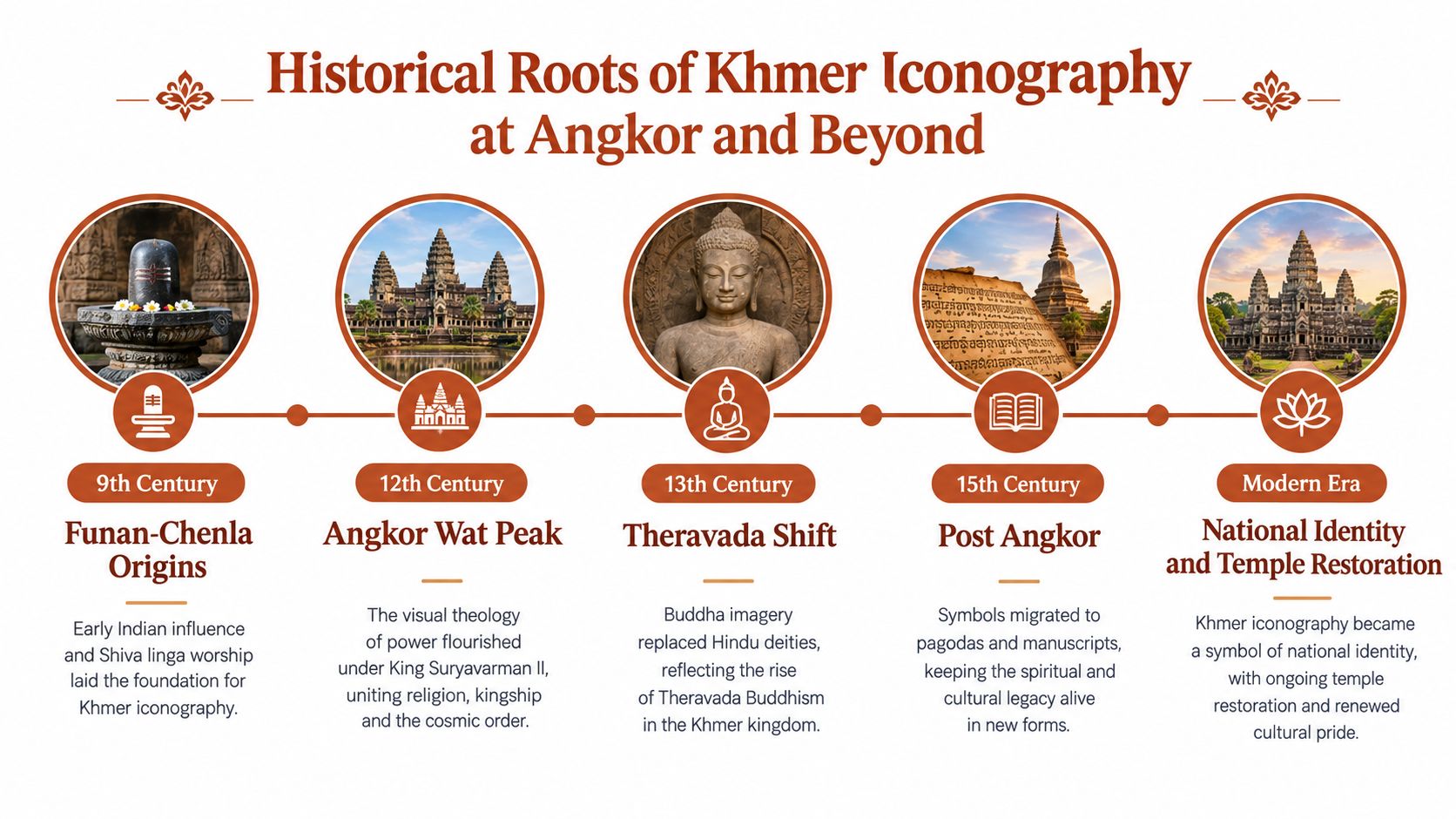
- Raíces históricas de la iconografía jemer en Angkor y más allá
- Deidades jemeres clave y formas sagradas que reconocerás
- Más allá de las deidades Emblemas nacionales Marcas de escritura y símbolos de calendario
- Elegir exhibir y cuidar piezas inspiradas en jemeres en casa
- Incorporando el simbolismo jemer a su colección con confianza
Introducción a los símbolos jemeres y lo que comunican
Un visitante se detiene ante un objeto jemer de una colección del Reino Unido. El rostro parece sereno, una serpiente se enrosca en el borde o una marca repetida recorre la piedra. La forma parece significativa antes de que su significado sea claro. Símbolos y significados jemeres Dependen del papel del objeto: iconografía religiosa, un emblema nacional, un signo escrito o un símbolo del calendario lunar.
Comience con el trabajo del objeto, no solo con su forma.
Pregunte para qué se creó la marca. ¿Tenía la intención de adoración, identificar, tiempo récord, o nombrar una nación? Esta pregunta funciona como el primer filtro de una etiqueta de museo. Mantiene una imagen sagrada separada de la escritura y evita que un signo de calendario se confunda con una decoración.
La escultura de un templo puede expresar teología a través de posturas, atributos y gestos. Una marca manuscrita puede organizar la escritura o registrar un signo especializado. Un motivo de bandera comunica identidad cívica, mientras que un símbolo de calendario lunar se relaciona con el cronometraje. Sus formas pueden superponerse, pero sus funciones difieren.
Las colecciones del Reino Unido añaden otra capa. Los museos de Londres, Oxford y archivos especializados pueden ayudar a conectar un objeto con su material, historia y procedencia. También proporcionan un contexto para comprender cómo las obras jemeres ingresaron a las colecciones británicas y por qué la repatriación se ha convertido en parte de su interpretación. Para obtener información más amplia sobre la historia del arte jemer y su legado, esta descripción general del arte jemer y sus significados de HD Asian Art ofrece un útil punto de partida.
Regla práctica: Si una marca parece “ornamental”, examine su función antes de llamarla decoración. En el material jemer, la forma a menudo conlleva instrucciones, identidad, creencias o un registro del tiempo.
Comience con la categoría, luego la interpretación. Ese hábito le ayuda a evaluar tanto una exposición casera como un objeto de museo. Una imagen sagrada puede requerir un entorno respetuoso, mientras que un signo escrito o un símbolo de calendario exige una explicación más que un tratamiento ritual.
Cómo distinguir los símbolos jemeres sin confusión
Un coleccionista en el Reino Unido puede encontrar una figura tallada, una bandera enmarcada, una página manuscrita y un calendario impreso que comparten el mismo vocabulario visual. Sus significados se vuelven más claros cuando identificas lo que hace cada objeto antes de interpretar su diseño. La distinción funciona como clasificar las piezas de museo por función: una apariencia relacionada no significa un uso idéntico.
Cuatro sistemas, cuatro controles prácticos
iconografía religiosa Aparece en esculturas de templos, relieves y objetos devocionales. Shiva, Vishnu, Brahma, Avalokitesvara y naga Las formas suelen comunicar identidad divina, protección u orden cósmico. Busque la postura, los atributos, el gesto y el entorno de una figura. Una deidad sentada sosteniendo objetos reconocibles pertenece a un programa iconográfico, incluso cuando una reproducción moderna la presenta como decoración del hogar.
emblemas nacionales comunicar identidad cívica. En la bandera de Camboya, Angkor Wat se sitúa en el centro. rojo se relaciona con la valentía y el sacrificio, azul a la libertad y la cooperación, y blanco a la pureza, la paz y la integridad (explicación de la bandera camboyana). Para un coleccionista, la señal más clara es el formato del objeto: un diseño de bandera repetido o un emblema oficial apunta al simbolismo nacional, no a la imagen de un templo.
Signos de guión pertenecen a la escritura. Los caracteres jemeres pueden parecer ornamentales cuando están tallados, impresos o dispuestos en un panel decorativo, pero sus formas pueden contener texto, puntuación, secciones o uso académico y religioso especializado (Gráfico de bloques Unicode jemer). Compare una línea de manuscrito con una estatua: los caracteres repetidos en una dirección de lectura consistente sugieren escritura, mientras que una figura con atributos sugiere iconografía. Un rizo no es automáticamente una bendición.
Símbolos del calendario lunar se relacionan con fechas, tiempos rituales y la organización de un calendario. Por lo tanto, un signo al lado de fechas o fases lunares debe leerse como una señal de cronometraje. Su disposición circundante importa más que un motivo atractivo visto de forma aislada.
Una etiqueta clara comienza con el sistema, no con el motivo.
Utilice esa prueba al catalogar, comprar regalos o planificar una exhibición. Las piezas religiosas exigen una ubicación respetuosa; los elementos del guión y del calendario necesitan una explicación precisa; Los emblemas nacionales pertenecen a una interpretación cívica más que devocional. Esta distinción también ayuda a los coleccionistas del Reino Unido a describir el contexto de procedencia y repatriación sin asignar un significado sagrado a cada forma de inspiración jemer.
Raíces históricas de la iconografía jemer en Angkor y más allá
Pasee por un templo de Angkor y las tallas hacen más que decorar la piedra. Su ubicación, escala, gestos y arquitectura circundante establecen un orden visual en el que la realeza, el ritual y el cosmos se refuerzan mutuamente. La iconografía jemer se desarrolló como un lenguaje de trabajo, muy parecido a un mapa cuidadosamente dispuesto: cada figura o criatura gana fuerza a partir de su posición dentro del diseño más grande.
Angkor hizo que las imágenes hicieran arte de gobernar
Los templos de la era Angkor unieron la imaginería religiosa a la autoridad real. Relieves y esculturas independientes ocupaban umbrales, galerías, santuarios y rutas procesionales, de modo que los espectadores encontraban formas sagradas dentro de una jerarquía organizada. Por tanto, el significado de una figura dependía de sus atributos, su entorno arquitectónico y la ceremonia o audiencia asociada a ella.
La investigación sobre material jemer en colecciones del Reino Unido muestra por qué la identificación aislada puede ser engañosa. Los objetos, una vez retirados de sus edificios originales, pueden conservar un estilo reconocible al tiempo que pierden las pistas espaciales que explicaban su función. Una divinidad masculina permanente, por ejemplo, puede resultar difícil de identificar cuando los atributos o inscripciones están incompletos. Los académicos comparan la postura, el vestuario, las posiciones de las manos, la escala y el contexto de supervivencia en lugar de tratar una característica visual como decisiva. el Estudio SOAS sobre la colección de Camboya del Museo Británico ilustra cómo la investigación de colecciones puede recuperar parte de esa historia más amplia.
El estilo también cambió a lo largo de los períodos. Las formas anteriores pueden parecer más sobrias o lineales, mientras que la escultura posterior de Angkor a menudo desarrolla cuerpos más completos, expresiones controladas y detalles ornamentales elaborados. Éstas son tendencias, no reglas rígidas. La práctica del taller, la variación regional, la restauración y el material original afectan lo que ve un coleccionista. Una descripción histórica útil del complejo del templo y su entorno cambiante aparece en Guía de historia de Angkor Wat de HD Asian Art.
Por qué el contexto del Reino Unido cambia la lectura
Un objeto jemer en Gran Bretaña tiene dos historias: la historia de su fabricación y la historia de su movimiento. Por lo tanto, las discusiones sobre procedencia, registros de adquisición y repatriación pueden afectar la responsabilidad con la que se describe. Los informes sobre los retornos del Reino Unido registran la recuperación de antigüedades camboyanas y su presentación en Phnom Penh (Cobertura de AP sobre antigüedades camboyanas devueltas desde el Reino Unido).
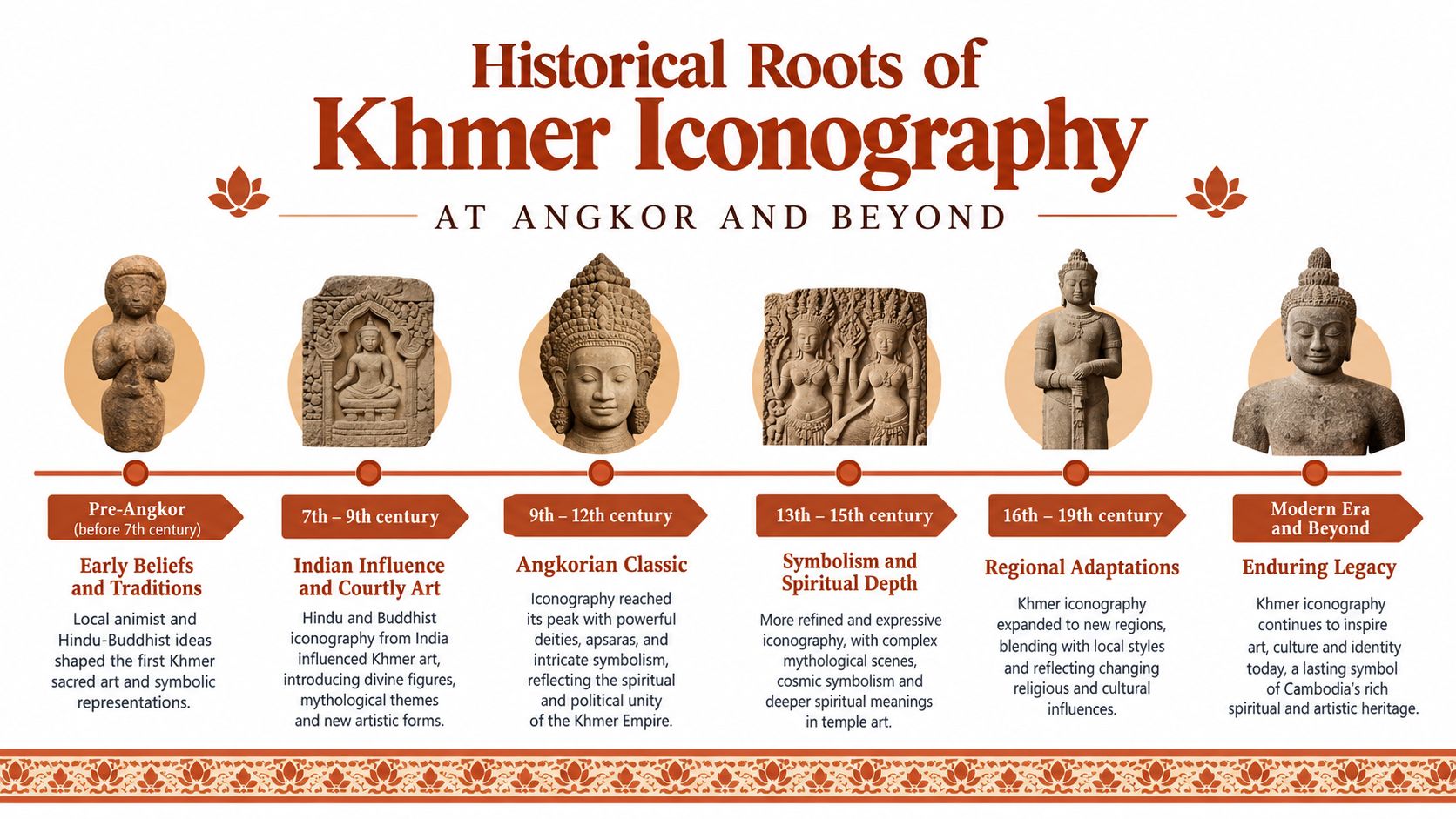
Para un coleccionista del Reino Unido, el estilo es sólo una capa de interpretación. El objeto también puede reflejar un uso sagrado, poder político, coleccionismo de la época colonial y esfuerzos modernos para reparar la pérdida cultural. Esa visión más amplia ayuda a distinguir las imágenes religiosas de los emblemas cívicos, los signos escritos y los símbolos del calendario antes de decidir cómo se debe etiquetar o colocar en casa una pieza de inspiración jemer.
Deidades jemeres clave y formas sagradas que reconocerás
Un coleccionista en una galería del Reino Unido puede encontrarse con varias figuras de apariencia similar. Comience con los atributos, no con la cara. Las manos, las armas, los arreglos de la cabeza y los compañeros funcionan como etiquetas en una vitrina de museo, limitando la identificación antes de que el estilo o la procedencia entren en discusión.
Las figuras que la mayoría de coleccionistas conocen primero
Las principales deidades hindúes del arte jemer pueden separarse por un pequeño grupo de signos recurrentes. shiva comúnmente se muestra con un tercer ojo, un tridente, y un luna creciente en el tocado. También podrá aparecer con el toro. Nandin. Juntas, estas características sugieren poder divino, trascendencia y fuerza ascética en lugar de identificar una deidad masculina anónima. Visnú suele ser reconocido por cuatro brazos sosteniendo un caracola, rueda, maza y bola. Los brazos adicionales funcionan como un mapa visual de poderes más allá de la acción humana ordinaria. Brahma aparece con cuatro cabezas mirando hacia los puntos cardinales, creando la impresión de una brújula sagrada encarnada en forma humana. Estos atributos agrupados se describen en la Descripción del Museo Nacional de Camboya.
El linga y el yoni Forman un objeto sagrado emparejado en lugar de dos figuras no relacionadas. el linga simboliza a Shiva, mientras que el yoni representa a Shakti. Su unión expresa creación y regeneración, así como relaciones de pareja como hombre y mujer o cielo y tierra (linga y yoni en Camboya). Por tanto, el emparejamiento afecta a la interpretación y la visualización. Es una relación expresada a través de la forma, no simplemente un único objeto decorativo.
Señal de coleccionista: Cuente los brazos y las cabezas cuidadosamente antes de asignar un nombre. Un atributo puede cambiar la lectura, y la incertidumbre es preferible a una identificación errónea y segura.
| Identificación rápida de las principales deidades y atributos jemeres | ||
|---|---|---|
| Deidad o forma | Atributos clave | Lo que señala |
| shiva | Tercer ojo, tridente, luna creciente, a veces Nandin | Poder ascético divino, destrucción, renovación. |
| Visnú | Cuatro brazos, caracola, rueda, maza, pelota. | Preservación, orden cósmico, autoridad en capas. |
| Brahma | Cuatro cabezas mirando hacia los puntos cardinales. | Creación, alcance universal, sabiduría estable. |
| Linga y yoni | Forma emparejada, una colocada dentro de la otra. | Armonía cósmica generativa, fertilidad, regeneración. |
La comparación produce mejores resultados que la prisa. Una figura de cuatro brazos aún puede requerir una cuidadosa revisión académica, especialmente cuando un objeto está dañado, restaurado o removido de su entorno original. Registre lo que pueda ver, separe la observación de la interpretación y etiquete el objeto en consecuencia.
Más allá de las deidades Emblemas nacionales Marcas de escritura y símbolos de calendario
Una marca jemer en un textil o estampado puede provocar una lectura equivocada. Un coleccionista puede ver Angkor Wat, una serpiente o una línea rizada y asumir un significado devocional, aunque el diseño pueda pertenecer a un emblema nacional, un sistema de escritura o un calendario lunar. Cada sistema tiene su propio propósito, por lo que la identificación debe comenzar con la función más que con la apariencia.
La bandera no es una imagen del templo.
Los lugares de la bandera camboyana Angkor Wat en su centro. Como se señaló anteriormente, sus colores tienen significados nacionales. Por tanto, el diseño funciona como un emblema cívico moderno, aunque se inspira en un símbolo arquitectónico más antiguo.
Esa distinción es importante en las colecciones del Reino Unido y en el mercado. Una bandera impresa, un recuerdo con el diseño nacional y un tejido con el borde repetido de un templo pueden referirse a Camboya, pero no deben recibir la misma etiqueta. Busque composición. El motivo de una bandera normalmente presenta a Angkor Wat como una única insignia central dentro de bandas horizontales. El motivo de un templo puede aislar torres, dinteles, apsaras o detalles arquitectónicos y repetirlos como decoración. Registrar esa diferencia ayuda a separar la identidad nacional de las imágenes religiosas o históricas.
Los letreros escritos no son un relleno decorativo
La escritura jemer incluye signos especializados cuyo significado depende de su lugar en el texto escrito. El gráfico de bloques Unicode Khmer registra formas raras, signos de puntuación y signos conectados con secciones u organización textual (Gráfico de bloques Unicode jemer). Sus curvas pueden parecerse a pétalos, amuletos o pequeños emblemas, pero el parecido visual no los convierte en devotos.
Una línea en un manuscrito puede indicar estructura, espaciado o pronunciación en lugar de protección. Antes de describir una marca como un amuleto o una flor, verifique si las formas vecinas crean una palabra, frase o pasaje. La denominación oficial jemer también muestra por qué es importante un lenguaje preciso cuando las instituciones identifican personas, lugares y estructuras constitucionales.
Las imágenes de serpientes requieren el mismo cuidado. Un naga sobre una balaustrada, una figura protectora en el marco de un templo y un patrón decorativo moderno pueden compartir una forma y al mismo tiempo desempeñar diferentes funciones. Guía naga de HD Asian Art proporciona contexto sobre historias de protección y origen sin hacer de cada diseño de serpiente un objeto religioso.
Los símbolos del calendario pertenecen al tiempo ritual.
Algunos signos jemeres organizan fechas lunares en lugar de decorar una superficie. En un manuscrito o calendario religioso, pregunte qué secuencia o fecha registra la marca antes de asignarlo a una deidad. Esa pregunta impide que un cartel de calendario sea catalogado como icono.
La prueba útil es simple: primero identifique el sistema y luego interprete el símbolo. Un emblema nacional, un signo escrito, una marca de calendario y una imagen sagrada pueden parecer relacionados, pero cada uno pertenece a un tipo diferente de significado.
Elegir exhibir y cuidar piezas inspiradas en jemeres en casa
Una pieza de inspiración jemer en casa debe resultar tranquila, no sobrecargada de trabajo. La ubicación correcta comienza con el papel simbólico del objeto, porque una imagen sagrada, un signo manuscrito y un motivo nacional no requieren el mismo escenario. Trate la pieza como lo haría un curador, con claridad sobre la intención, la orientación y el cuidado.
Relacionar la ubicación con el significado
Si el trabajo es devocional, la altura y la línea de visión importan. Una figura asociada con la meditación o la protección generalmente se lee mejor cuando se coloca con espacio a su alrededor, en lugar de amontonada entre una decoración no relacionada. Esto le da al símbolo espacio para funcionar visualmente y evita que la visualización parezca accidental.
Si el objeto es una forma de linga-yoni u otra imagen explícitamente sagrada, piense en la reverencia más que en la novedad. El punto no es imitar un templo, sino evitar una ubicación casual que despoje al objeto de su significado. Un estante por encima del nivel de los ojos, un pedestal limpio o una superficie dedicada al altar a menudo funcionan mejor que una consola desordenada.
Regla práctica: El daño cambia tanto el significado como la apariencia. En la creencia camboyana, las estatuas de los templos pueden contener las almas de dioses y reyes, y las estatuas rotas se tratan como pérdidas culturales y espirituales graves, por lo que su condición merece mucha atención en su exhibición y conservación (Cobertura del Smithsonian de las solicitudes camboyanas a instituciones del Reino Unido).
Cuidar la integridad, no solo el acabado.
Esa creencia tiene una consecuencia práctica en el museo. La pérdida de superficie, los daños en las extremidades y las uniones fragmentarias no son sólo cuestiones estéticas, sino que también pueden afectar la forma en que se entiende y respeta una figura. Un coleccionista no necesita exagerar la vida ritual del objeto, pero le ayuda reconocer que una reparación, un chip o una mano faltante pueden alterar la lectura.
El envío y el almacenamiento también son importantes, especialmente en el caso de la piedra y el bronce. Mantenga el objeto estable, evite empacarlo apretadamente y asegúrese de que cualquier soporte o soporte soporte el peso de manera uniforme. Si está comprando de una fuente especializada, elija uno que brinde información sobre la procedencia y orientación sobre el manejo junto con el objeto en sí. HD Asian Art es una opción con sede en el Reino Unido para coleccionistas que buscan esculturas budistas e hindúes con recursos de conocimiento publicados y soporte de envío.
Para un altar en casa o una sala de meditación, prefiera un entorno tranquilo y un único punto focal. Para una vitrina, mantenga las etiquetas precisas y utilice sólo una familia simbólica por grupo, a menos que la relación sea deliberada. Una pieza jemer cuidadosamente colocada debe dar la sensación de estar ambientada, no escenificada.
Incorporando el simbolismo jemer a su colección con confianza
La forma más fácil de recordar el simbolismo jemer es pensar en cuatro carriles. Primero, pregunte si el objeto es iconografía religiosa, emblema nacional, signo de escritura, o símbolo del calendario. Luego lea los atributos, no sólo la silueta, porque el arte jemer a menudo oculta su significado en las manos, las cabezas, los compañeros y el contexto.
Un coleccionista no necesita saberlo todo para hacerlo bien. Se necesita suficiente estructura para evitar errores comunes, como llamar motivo a una marca escrita o asumir que todas las formas de serpiente son iguales. Una vez que aprenda a separar los sistemas, los símbolos y significados jemeres serán mucho más fáciles de leer con confianza.
La recompensa más profunda es que estos objetos dejan de parecer importaciones decorativas y comienzan a comportarse como documentos vivos. Llevan teología, arte de gobernar, tiempo ritual e identidad moderna, todo al mismo tiempo. Por eso es importante mirar con calma, especialmente con material que ha viajado a través de museos, mercados y debates sobre la repatriación.
Si desea profundizar esa lectura, visite la colección de un museo, compare el objeto con ejemplos catalogados y mantenga sus etiquetas precisas. Las mejores colecciones jemeres son las que respetan lo que hace cada símbolo.
HD Asian Art ofrece esculturas jemeres, budistas e hindúes para coleccionistas que desean piezas con una identidad visual clara y una presentación bien pensada. Si desea comparar figuras religiosas, formas inspiradas en templos y objetos listos para exhibir con sus significados explicados, visite Arte asiático en alta definición y explore la colección con el mismo ojo cuidadoso que usaría en la galería de un museo.
