



Qué pertenece a un certificado de autenticidad de arte
Qué pertenece a un certificado de autenticidad de arte
Un certificado de autenticidad para el arte es un documento firmado que identifica una obra de arte específica y da fe de quién la hizo, y cada pieza que venda o adquiera debe salir de sus manos con uno adjunto, junto con una fotografía clara del objeto que describe. Esa combinación única, una declaración firmada más una imagen coincidente, es la base que espera el mercado. La lista de verificación y las plantillas a continuación le brindan un formato copiable para que nunca tenga que crear una desde cero.
Características clave
- Un COA sólido debe incluir detalles verificados como el nombre completo del artista, el título exacto, el medio, la fecha de creación y las dimensiones precisas para validar la autenticidad de manera efectiva.
- La creación de un COA debe realizarse con anticipación, idealmente al finalizar, utilizando una plantilla reutilizable, con copias físicas almacenadas en materiales de archivo y copias de seguridad digitales mantenidas de forma segura.
- Las afirmaciones de autenticidad requieren una verificación independiente a través de expertos, investigación de procedencia o pruebas científicas, y los métodos científicos se utilizan sólo después de que la investigación inicial reduce las posibilidades.
- El almacenamiento a largo plazo implica colocar una etiqueta coincidente con la obra de arte y conservar una copia digital y un comprobante de entrega para evitar pérdidas o identificación errónea con el tiempo.
- Tenga cuidado con los certificados que carecen de fotografías, información verificable del emisor o trazabilidad de procedencia, y siempre verifique los detalles con expertos reconocidos o bases de datos antes de realizar transacciones.
Tabla de contenidos
¿Qué es un certificado de autenticidad en el arte y por qué es importante?
Un certificado de autenticidad (COA) es un documento de identidad para una obra de arte. Vincula un objeto específico, por título, medio y dimensiones, a un fabricante u origen declarado, y viaja con la pieza mientras exista en el mercado. No todos los COA tienen el mismo peso. Uno firmado por el artista, un representante de la propiedad, un tasador reconocido o una galería con un historial documentado tiene mucho más valor que un certificado que el vendedor redactó para sí mismo sin corroboración externa.
La recompensa práctica aparece en tres momentos:
- Vender: Un comprador o una casa de subastas lo solicitará antes de acordar un precio.
- Asegurar: Los aseguradores utilizan el COA para confirmar el valor y la identidad al redactar una póliza.
- Exhibiendo: Los museos y galerías suelen exigir documentación antes de aceptar prestar o exhibir una pieza.
Un COA que falta, es vago o emitido únicamente por el vendedor puede reducir la liquidez futura del mercado de una obra, porque todos los compradores heredan la misma falta de documentación que usted.
¿Qué campos pertenecen a un certificado de autenticidad?
Los coleccionistas, aseguradoras y especialistas en subastas buscan la misma información básica y omitirla invita a hacer preguntas que no desea responder después de la venta. Utilice esto como plantilla de trabajo:
- Nombre legal completo del artista, más cualquier variante de firma utilizada en la propia obra.
- Título de la pieza, exactamente como aparece en sus registros y en cualquier documento de venta anterior.
- Medio, dicho con precisión (bronce, óleo sobre lienzo, madera de teca, no sólo “escultura” o “pintura”).
- Fecha de creación, o un rango estimado con la base para esa estimación anotada.
- Dimensiones, tanto en pulgadas como en centímetros, medido en los puntos más anchos.
- Información de edición, si corresponde, indicando el número de edición y el tamaño total de la tirada para impresiones o copias múltiples.
- Notas de condición, una descripción breve y honesta del desgaste, restauración o reparación.
- Una fotografía clara de la obra, idealmente filmada a la luz del día con una referencia de escala visible.
- Una declaración de autenticidad, una o dos frases que afirman la creencia del emisor en el origen de la obra.
- Información de contacto del emisor, incluido un nombre comercial verificable, dirección y número de teléfono o correo electrónico.
- Firma y fecha de la persona o entidad que expide el certificado.
- Un resumen de procedencia, o una referencia a un registro de procedencia más detallado mantenido en el archivo.
Consejo profesional: Mantenga el resumen de procedencia breve sobre el COA en sí, tres o cuatro líneas como máximo, y almacene la cadena completa de propiedad como un documento vinculado por separado. Reunir una década de historial de propiedad en un solo certificado hace que sea más difícil de leer y de actualizar más adelante.
¿Cómo se crea y entrega un certificado de autenticidad?
No necesitas habilidades de diseño gráfico para producir un COA profesional. La mayoría de los artistas en activo crean una plantilla reutilizable en un procesador de textos o en una hoja de cálculo y luego completan los detalles de cada pieza. Archivo de obras de arte ofrece un flujo de trabajo de generación integrado que extrae los detalles del inventario directamente en un certificado formateado, lo que ahorra tiempo si emite docenas de COA al año. Plataformas más grandes, incluidas Centro de ayuda de Saatchi Art, publique sus propias plantillas de campos obligatorios que valga la pena estudiar incluso si nunca vende a través de ellas.
La presentación física importa más de lo que la mayoría de los artistas esperan:
- Imprima en papel más pesado, con un peso de cubierta de al menos 80 lb, para que el certificado no parezca desechable.
- Guárdelo en una funda o sobre de archivo en lugar de doblarlo y guardarlo en una caja de envío.
- Agregue una etiqueta a juego o una pequeña pegatina de holograma en el reverso de la obra de arte, vinculada al COA mediante un número único.
La entrega digital se ha vuelto tan importante como el papel. Una versión en PDF, enviada por correo electrónico junto con la copia física, brinda a los compradores una copia de seguridad que sobrevive a un incendio, una inundación o un archivador perdido. Algunos vendedores ahora publican una página web no listada para cada obra, a la que solo se puede acceder a través de un código QR impreso en la etiqueta, que le permite actualizar las notas de condición o el historial de propiedad sin volver a emitir papel. Los certificados basados en blockchain y los emparejamientos de NFT están ganando atención como una opción a prueba de manipulaciones, aunque la tecnología aún es lo suficientemente joven como para que la mayoría de las aseguradoras y casas de subastas la traten como un complemento de la documentación tradicional, no como un reemplazo de ella.
COA frente a autenticación de terceros: ¿Cuándo se necesita un experto?
Un COA establece un reclamo. Pruebas de autenticación que se basan en pruebas independientes y ambas no son intercambiables. La autenticación se basa en tres pilares: conocimiento, investigación de procedencia y pruebas científicas o forenses. Ningún pilar demuestra la autoría por sí solo.
- conocedor es el juicio visual de un experto capacitado, que compara la pincelada, la pátina o la técnica de tallado con ejemplos conocidos de la misma mano o taller.
- investigación de procedencia rastrea la cadena documentada de propiedad hasta el punto de creación, utilizando registros de ventas, catálogos de exposiciones y documentos patrimoniales.
- Pruebas científicas examina materiales, pigmentos o composición de metales. Es mejor para descartar una atribución falsa que para demostrar una positiva, así que trate los resultados de laboratorio como una parte de un caso más amplio en lugar de un veredicto independiente.
El costo y la secuencia importan aquí. Comience con los pasos más económicos: fotografíe la pieza, documente todo lo que ya sabe y consulte el catálogo razonado o las bases de datos especializadas antes de gastar dinero. Las opiniones de expertos de un especialista reconocido suelen oscilar entre unos pocos cientos y unos miles de dólares, según el campo. El trabajo completo de laboratorio forense es la opción costosa, que comienza en las bajas cinco cifras en los mejores laboratorios privados, y generalmente se solicita solo después de que los conocimientos y la investigación de procedencia ya han reducido la cuestión. Colocar los pilares en ese orden ahorra dinero y evita la manipulación innecesaria del objeto.
¿Cómo se debe almacenar y adjuntar un COA a largo plazo?
Un COA que se pierde o se separa de su obra de arte no tiene valor en el momento en que sucede, así que trate el almacenamiento como parte del proceso de documentación, no como una ocurrencia tardía.
- Coloque la etiqueta correspondiente en el reverso de la pieza utilizando fundas de archivo o métodos de montaje con pH neutro, nunca un adhesivo dañino que pueda traspasar el lienzo o levantar la pintura.
- Mantenga un duplicado digital en un almacenamiento seguro en la nube, respaldado por una página web no listada con una URL estable o un código QR a la que los lectores puedan acceder en cualquier momento.
- Envíe una copia a su aseguradora tan pronto como se evalúe o adquiera la pieza, y mantenga registros fechados de la información del comprador y del vendedor después de cada venta.
Consejo profesional: Fotografíe el COA en sí, no solo la obra de arte, antes de enviar cualquier cosa. Una foto rápida confirma el documento exacto que salió de sus manos, lo cual es importante si alguna vez surge una disputa sobre qué versión recibió un comprador.
¿A qué costos y señales de alerta debería prestar atención?
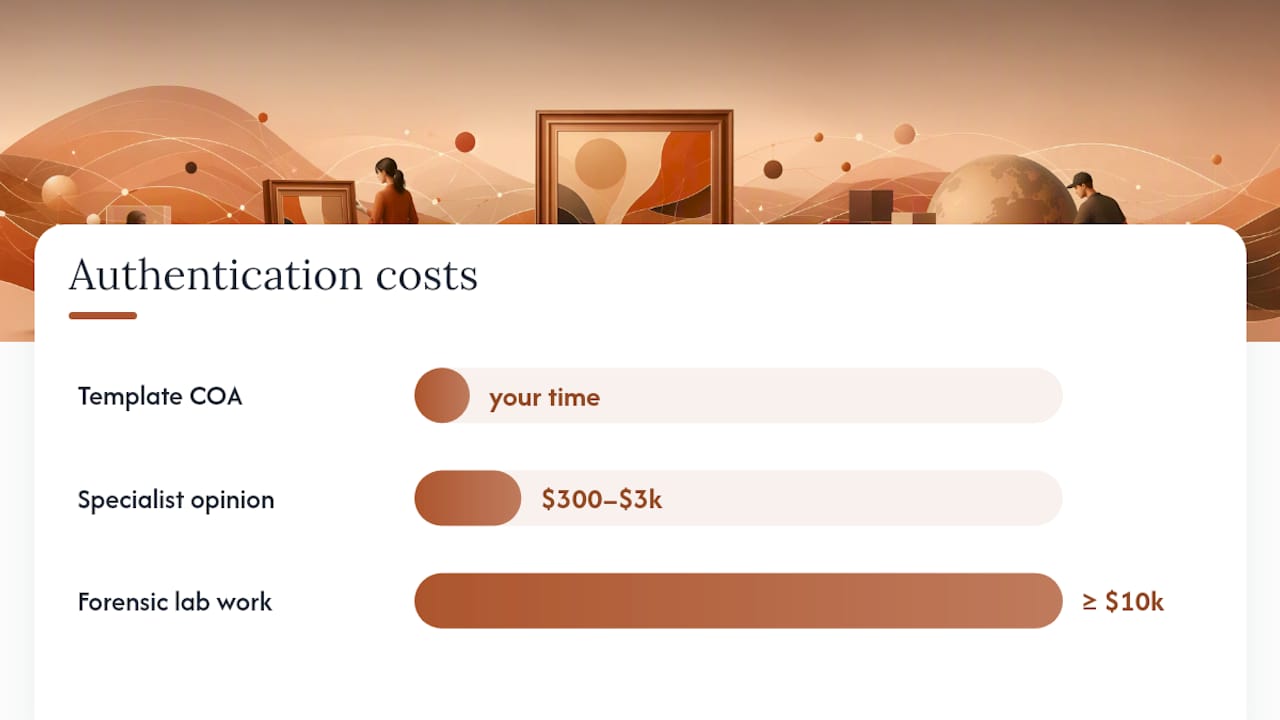
Un COA basado en una plantilla sólo le cuesta su propio tiempo. Una opinión escrita de un especialista reconocido cuesta entre unos cientos y unos miles de dólares. El trabajo completo de laboratorio forense comienza en las cinco cifras, por lo que la mayoría de los vendedores sólo lo recurren a piezas de alto valor donde el precio justifica el gasto.
Los compradores y tasadores están atentos a las mismas señales de advertencia, independientemente del medio:
- Un certificado sin fotografía de la pieza real.
- Un emisor sin nombre comercial, dirección o historial verificables.
- Afirmaciones de procedencia que no se pueden rastrear hasta ningún registro de venta, exposición o documento patrimonial.
- Una etiqueta en la obra de arte que no coincide con el número o descripción en la documentación.
Pasos rápidos de verificación antes de comprar o vender: comuníquese directamente con el emisor, consulte cualquier catálogo razonado relevante o guía de procedencia de la bibliotecay ejecutar un Registro de pérdida de arte verifique para confirmar que la pieza no esté marcada como robada o perdida.
¿Cómo documenta el arte asiático en HD la procedencia y la autenticidad?
HDAsianArt emite una nota de procedencia detallada y una descripción experta de cada escultura budista e hindú antigua que vende, que cubre la región de origen, el período estimado, el material y el estado junto con fotografías de alta resolución que documentan la pieza desde múltiples ángulos.
Las obras de bronce, piedra y madera de Camboya, Tailandia, Indonesia, Sri Lanka y Vietnam tienen cada una su propio archivo de investigación, construido antes de que la pieza entre en funcionamiento en el sitio. Los lectores que investiguen un estilo específico pueden comenzar con HDAsianArt. Guía para autenticar antiguas estatuas de Buda de bronce. o su guía de investigación de procedencia para esculturas antiguas asiáticas, ambos escritos para coleccionistas que desean conocer el método de investigación subyacente, no solo la conclusión.
La visión de un artista en activo sobre los certificados que realmente se mantienen
La mayoría de los consejos sobre este tema tratan el COA como papeleo que se debe marcar después del cierre de una venta. Eso es al revés. El certificado debe existir antes de que el comprador lo solicite, y debe completarse el mismo día que terminas la pieza, mientras cada detalle de medidas y materiales aún está fresco en tu cabeza. Los vendedores que esperan hasta que un coleccionista solicite la documentación suelen presentar un certificado más delgado y vago que el que habrían escrito el primer día. Si desea obtener información más detallada sobre el seguimiento del historial de propiedad, HDAsianArt guía de documentación de procedencia explica los pasos de verificación con más detalle y las preguntas directas sobre piezas específicas siempre son bienvenidas.
- James, HDAsianArt.com
Vea piezas documentadas y examinadas en galería en HD Asian Art
Cada pieza que vende HDAsianArt llega con una descripción escrita detallada, notas de procedencia y documentación fotográfica completa, el mismo estándar que este artículo le enseñó a construir usted mismo.
Eso significa que no depende únicamente de la palabra del vendedor cuando compra una escultura antigua de bronce, piedra o madera de Camboya, Tailandia, Indonesia, Sri Lanka o Vietnam. HDAsianArt investiga el período probable y el origen de cada objeto antes de incluirlo en la lista, y el envío a todo el mundo llega completamente asegurado, por lo que la documentación y el objeto están protegidos juntos durante el tránsito.
Si tiene una pregunta específica sobre la procedencia de una pieza antes de comprometerse, puede solicitar detalles adicionales directamente. Navegar por el actual colección de esculturas budistas e hindúes asiáticas antiguas, o observe cómo aparece la documentación en un listado real con esta estatua del Bodhisattva de Indonesia como siguiente paso.
Dónde verificar más la autenticidad y la procedencia
Para los lectores que quieran profundizar en la verificación antes de una compra o venta, se destacan algunos recursos. El manual de Masterworks Academy sobre autenticación de arte analiza el conocimiento, la procedencia y la ciencia en términos sencillos. La guía de la biblioteca de UC Berkeley para investigar una obra de arte apunta hacia el catálogo razonado y los recursos de referencia del museo. El generador de COA de Artwork Archive ofrece un práctico flujo de trabajo de plantillas y La guía de Noir Ci sobre certificados de arte cubre las mejores prácticas que vale la pena leer independientemente del medio.
Fuentes
- Cómo funciona realmente la autenticación de arte: conocimiento, ciencia y archivos | Academia de obras maestras
- ¿Qué es un certificado de autenticidad para obras de arte? - Blog de arte de Jackson
- Generando un Certificado de Autenticidad | Archivo de obras de arte
- Autenticación: cómo investigar una obra de arte - Guías de la biblioteca de UC Berkeley
Recomendado
- Documentos de procedencia de arte: una guía de verificación para coleccionistas – Arte asiático HD
- Arte simbólico para una vida consciente: una guía para coleccionistas – HD Asian Art
- Guía de la colección de arte budista: construya con confianza - Arte asiático HD
- Cómo autenticar estatuas antiguas de Buda de bronce – Arte asiático HD
