



Lord Ganesha Levitating Sculpture: Meaning and Buying Guide
Lord Ganesha Levitating Sculpture: Meaning and Buying Guide
You're standing in front of a floating Ganesha on a shelf or showroom plinth, and the first question is usually the same. Is this a sacred image with a modern twist, or a decorative object that just happens to look sacred?
A lord Ganesha levitating sculpture sits right in that tension. The figure may read as devotional, but the levitation effect is a contemporary display choice, and the engineering underneath matters just as much as the iconography on top.
Table of Contents
- What a Levitating Ganesha Sculpture Actually Is
- The Symbolism Behind the Floating Form
- How Levitation Works in Practice
- Common Materials and Finishes
- Buying and Authenticity Considerations
- Devotional Use Versus Decorative Display
- Placement in UK Homes and Interiors
- Safety, Care and Long-Term Maintenance
What a Levitating Ganesha Sculpture Actually Is
A buyer usually sees a complete visual trick first. A Ganesha figure appears to hover above a slim base, often with the trunk angled forward, one hand raised, and the whole form held in a very small visual gap over the plinth. What you're looking at is a two-part construction, the sculpture itself and a hidden support system beneath it.
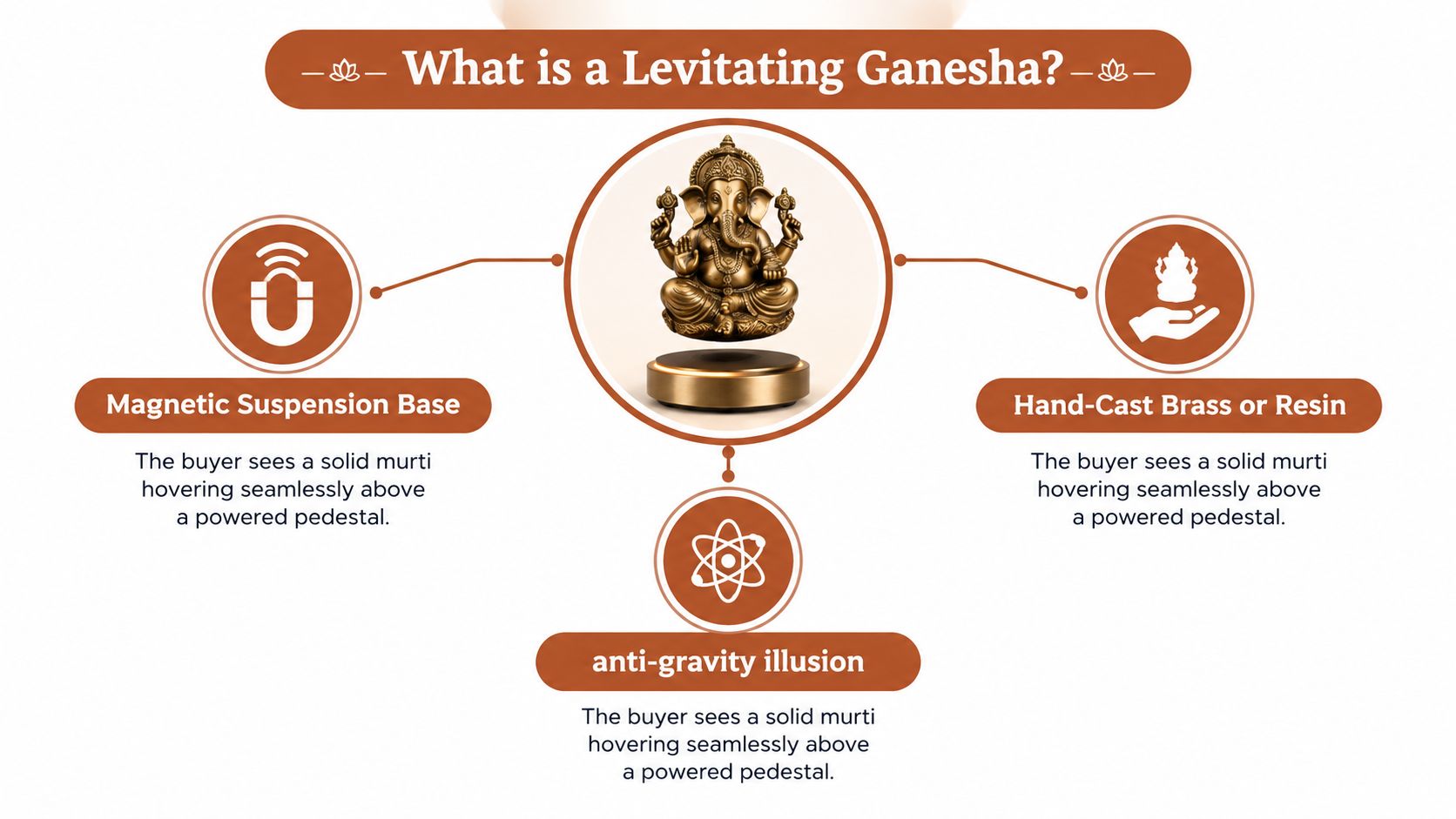
What the eye sees and what the hand gets
The visible part might be resin, brass, wood, or stone-like material, but the key point is that “levitating” describes the presentation, not a sacred category. In UK collecting and museum language, that distinction matters, because a floating effect can be used for a consecrated-style image or for a purely decorative one.
The British Museum's documented Ganesha holdings give a useful comparison point for scale and iconography. One major 13th-century schist figure from Orissa, now Odisha, measures 119 centimetres high and shows Ganesha standing on a lotus pedestal with his rat vehicle below, while a carved arch frames the figure. The same museum records a sandstone Ganesha dated to about AD 750, measuring 96 centimetres high, 36 centimetres wide, and 25 centimetres deep, and shown dancing rather than standing rigidly. Those examples show that movement in Ganesha sculpture is old, but levitation as a visual effect is modern. The museum's exhibition guide for Ancient India: living traditions also placed Ganesha among more than 180 objects, reinforcing that this deity appears in many historical forms rather than one fixed pose. British Museum object record and Ancient India exhibition guide
Practical rule: if a listing doesn't explain the base, the support method, and the sculpture's size, you're not buying a floating image, you're buying uncertainty.
That's why people get confused. They see a devotional figure, then assume the levitation is symbolic in itself. In reality, the symbolism and the mechanism are separate questions, and this article answers both, first by looking at what the image means, then by looking at what's holding it up.
The Symbolism Behind the Floating Form
A levitating Ganesha sculpture still begins with the same recognisable language devotees and collectors expect. The floating base changes how the figure is presented, but the core symbolism comes from the form itself, not the support underneath.
Recognisable iconography
The elephant head signals wisdom and the power to remove obstacles. Four arms often carry familiar attributes, including the axe, noose, lotus, and modaka sweet. A rounded belly, a calm face, and a lotus base add to the sense of stability, while the rat vahana at his feet reminds the viewer that desire can be kept under control. A levitating version keeps those cues intact, then adds a contemporary visual idea on top, the impression of hovering.
| Feature | Symbolic Meaning | Typical Placement on Sculpture |
|---|---|---|
| Elephant head | Wisdom, discernment, obstacle removal | Main head of the deity |
| Four arms | Divine power and layered action | Around the torso |
| Axe and noose | Removal and restraint | Held in the upper hands |
| Lotus and modaka | Purity and spiritual reward | Held or displayed in the hands |
| Rat vahana | Desire under control | At the feet or base |
| Lotus base | Sacred elevation and stability | Under the body or feet |
The British Museum's National Programmes resource on Ganesha notes that the deity has been worshipped in India since at least the fifth century AD, during the Gupta period, and that he may appear with anywhere from two to twenty arms, though four arms are the most common arrangement. That range matters because a floating sculpture can stay close to tradition while changing only the display method. Ganesha museum resource
For a fuller background on the deity's meaning, see our guide to the symbolism of Ganesha for wisdom and obstacle removal.
A modern visual layer
Levitation adds a contemporary display layer, and it often becomes the first thing a viewer notices in regional or workshop variations. A Tanjore brass figure, a Jaipur resin form, or a Balinese wood carving can all carry the same religious vocabulary, while the floating presentation changes how the object reads in a room.
The important point is that the levitation is added after carving or modelling. It does not alter the symbolism, it frames it differently, like mounting a manuscript page in a modern case without changing the text. A buyer may read the piece as devotional, decorative, or both. Those readings can coexist, because the traditional language remains intact while the presentation shifts into a contemporary display format.
How Levitation Works in Practice
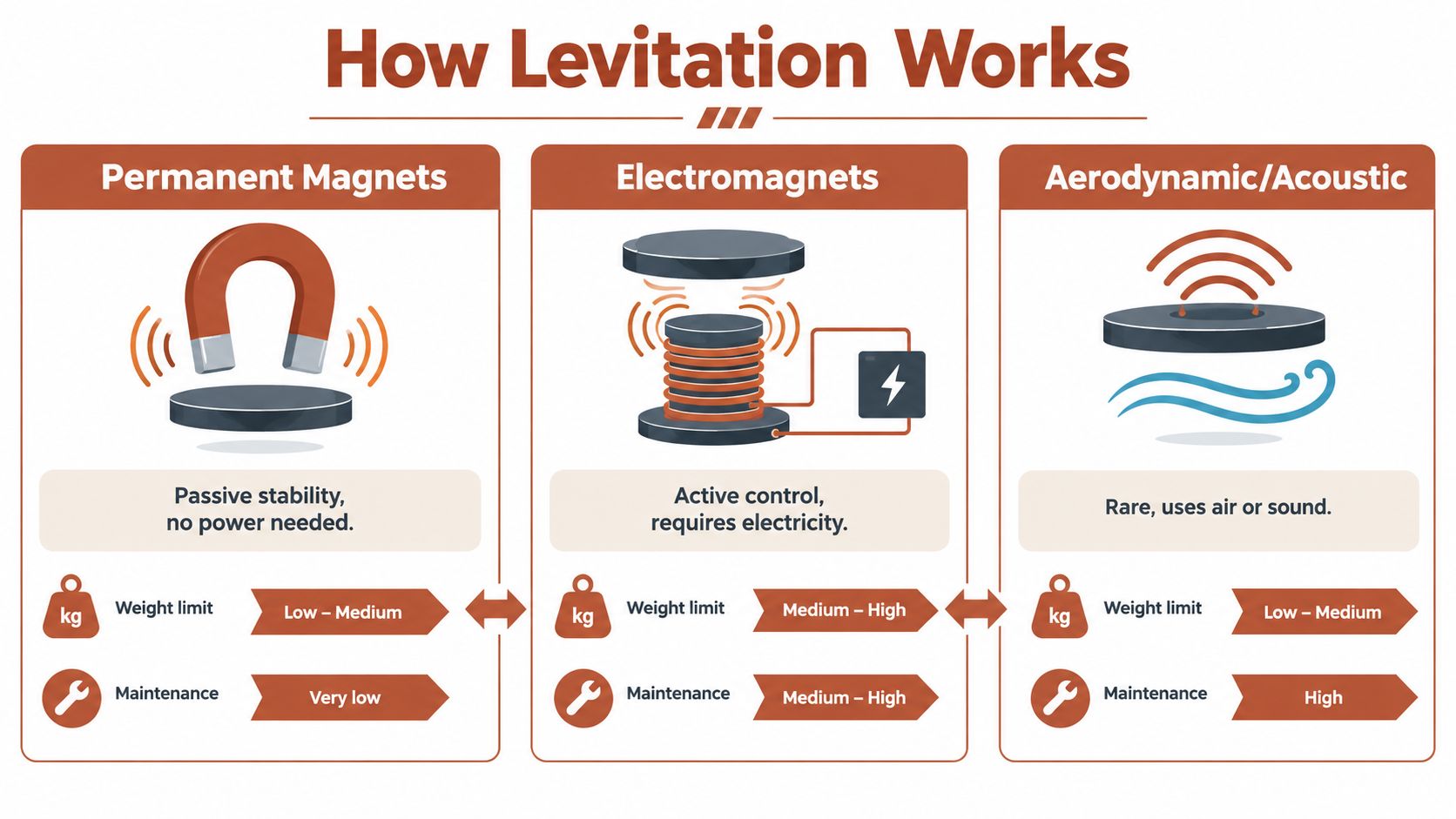
A seller may use the word “levitating” loosely, but buyers need to know which mechanism is doing the work. The difference affects noise, power use, fragility, weight limits, and what happens if the system fails.
Three common approaches
Magnetic suspension is the most literal version. Opposing magnets or an electromagnet in the base interact with a hidden armature inside the figure, creating a small suspended gap. This setup depends on a stable power supply, and the gap between base and sculpture is usually very small, which means alignment has to be precise.
Concealed cantilever support is simpler and often better for heavier pieces. A rigid steel arm is inserted through the plinth and into the sculpture's back or base, then hidden by carving, drapery, or the tail of the figure. It doesn't need electricity, so it's quieter and often less fragile, but the visual illusion is less pure if the concealment is imperfect.
Optical illusion relies on transparent acrylic, mirrored surfaces, or angled lighting to hide the support. It can look elegant in a showroom, but it's usually the least convincing when viewed from the side or under changing light.
If a product page says “floating” but never shows the underside, assume the manufacturer is hiding something, even if the object itself looks beautiful.
Reading the trade-offs
Magnetic suspension gives the strongest levitation effect, but it's also the most sensitive to power interruption and load mismatch. A concealed cantilever is more forgiving and can support heavier sculptural materials, though it changes the logic of the object because the figure is no longer suspended in open space. Optical systems are the most decorative, and they often work best for smaller interiors where the support can be controlled with lighting and viewing angle.
For a buyer, the right question is not which version sounds most impressive. It's which one fits the sculpture's weight, the room's conditions, and the level of maintenance the owner is prepared to manage.
Common Materials and Finishes
Material choice changes more than appearance. It affects weight, stability, susceptibility to chips, and how convincing a levitating display can be once the sculpture is mounted.
Comparing the main options
Resin and polyresin are common because they're light, detailed, and easy to adapt for hidden supports. They're also the easiest materials to shape for a cantilevered system, but edges can chip, and finishes may yellow over time if the piece sits in strong light.
Brass and bronze bring more visual richness and a sense of permanence. They also add weight, which means the support system has to be stronger and more carefully balanced. Stone reads as especially devotional and grounded, but it's unforgiving if dropped and usually needs a very sturdy hidden frame if it's meant to appear floating. Wood works well for smaller figures and can be elegant in warm interiors, though grain movement can affect alignment and long-term fit.
| Material | Weight | Magnet Compatibility | Finish Options | Durability Notes |
|---|---|---|---|---|
| Resin | Light | Good for hidden mounts | Matte, lacquer, painted, antique wash | Can chip at edges, may yellow |
| Brass | Medium to heavy | Works with stronger systems | Polished, antique, patinated | Strong visual presence, needs secure support |
| Bronze | Medium to heavy | Works with stronger systems | Patina, dark wash, polished detail | Durable, but weight increases stress on the base |
| Stone | Heavy | Limited, usually better for frame support | Natural, carved, honed | Vulnerable if dropped, hard to conceal supports well |
| Wood | Light to medium | Good for smaller systems | Stained, lacquered, carved natural finish | Sensitive to movement in grain and humidity |
The finish matters too. Matte surfaces absorb light and can make levitation look more serene, while gold leaf and high-gloss lacquer catch overhead lighting and heighten the display effect. That can be beautiful, but it also means the support has to be finished cleanly, because any visible hardware becomes part of the viewer's experience.
Buying and Authenticity Considerations
A good purchase starts with provenance, not just appearance. If you're buying a levitating Ganesha in the UK, you want to know where it came from, who made it, and whether the electrical base is compliant as well as attractive.
What to ask before you buy
Ask for country of origin, artisan workshop details, and any certificate that confirms hand-finishing rather than simple moulded mass production. If the sculpture is described as a floating or magnetic piece, the seller should also state the maximum supported weight and the exact suspension type, because the sculpture has to match the declared system.
For the electrical base, look for UKCA or CE marking, the correct BS 1363 three-pin plug, and a 230 V 50 Hz adapter with a fused plug where relevant. Cheap unbranded magnetic bases sold without clear certification are a bad idea in any home, and even more so in a display that may sit near an altar, shelf, or reception area.
A useful authenticity check is whether the seller can explain how the sculpture is removed from the base without damage. If the answer is vague, the product may not be designed for long-term ownership at all. The UK consumer context also matters. The Consumer Rights Act gives buyers a reason to care about clarity on returns, repair, and the condition of goods, especially when a product combines art, electronics, and fragile surfaces.
Buying rule: if the object can't be separated into art, base, and power supply on paper, it hasn't been described honestly enough to trust in a home.
A short dealer checklist
- Levitation height: how far above the base does the sculpture sit, and can that height be sustained consistently?
- Power-cut behaviour: does the figure land safely, or does it drop without warning?
- Warranty and parts: is there a warranty on the electromagnet or module, and are replacement parts available?
- Removal without damage: can the figure be lifted off cleanly for cleaning or storage?
- Trader status: is the seller a UK VAT-registered trader with clear returns terms?
If you want a second layer of confidence, compare the listing with how to tell if a Buddha or Hindu statue is authentic, especially where finish quality and workshop detail are concerned. Good craftsmanship usually leaves evidence, while vague listings usually leave questions.
Devotional Use Versus Decorative Display
Levitation is a display mechanic, not a religious category. That distinction matters because a consecrated murti used for puja isn't the same thing as a decorative sculpture that borrows sacred iconography.
Matching object to intention
A consecrated Ganesha image is traditionally treated with care, fixed placement, and ritual respect. In orthodox households, mounting that image on a powered base can raise real questions about whether the deity's body should be moved by current, vibration, or a visible support device. That doesn't make the object wrong, but it does mean the owner should think about ritual intention before purchase.
A meditation image is different. It can be lightweight, visually striking, and easy to handle while still being treated with respect. Clean hands, no footwear nearby, and a stable fixed base are sensible expectations. A decorative sculpture sits in a third category altogether. It's an art object, and it can be appreciated for form, finish, and placement without any ritual framing.
For households that want to pair a sacred corner with a broader gift or floral arrangement, premium floral gift options can complement the room without confusing the object's role. The point is clarity, not clutter.
Respectful signalling
The easiest way to avoid confusion with guests is to make the setting readable. A small raised platform, a simple cloth, or a dedicated shelf suggests reverence. A sculptural console with ambient lighting suggests decorative display. Both can be tasteful, but they send different messages.
In a mixed-faith or family home, the object works best when its purpose is obvious before anyone asks.
That's also why levitating Ganesha appeals to different buyers for different reasons. Some want a visual focus for prayer, some want an expressive centrepiece, and some want a contemporary object that still carries symbolic weight. The best choice is the one that matches practice, not just taste.
Placement in UK Homes and Interiors
In a UK home, placement has to work with the room you have, not the room you wish you had. A levitating Ganesha can sit in an entrance niche, on a pooja shelf, on a living room sideboard, or in a commercial reception, but each setting changes how the floating effect reads.
Reading the room
Eye level, or slightly below it, usually works best because the levitation effect stays clear without forcing the viewer to look down too sharply. A hidden base also complicates directional rules. If the base faces one way and the visible murti another, the visible deity should guide the devotional axis, while the base should merely support the engineering underneath.
The British Museum's home-placement guidance for stone Ganesh sculptures is useful here as a benchmark for reverent positioning, and it pairs well with the practical advice in best spots at home for a stone Ganesh sculpture. A levitating form can be more flexible than a heavy stone image, but it shouldn't be treated as directionless decoration.
Practical room choices
- Entrance niche: good for a welcoming image, especially where the figure can be seen on arrival.
- Pooja shelf: appropriate if the household treats the piece as devotional and keeps the area clean and stable.
- Living room sideboard: works well when the object is part of a broader interior scheme.
- Commercial reception: useful when the goal is a calm focal point rather than a private ritual corner.
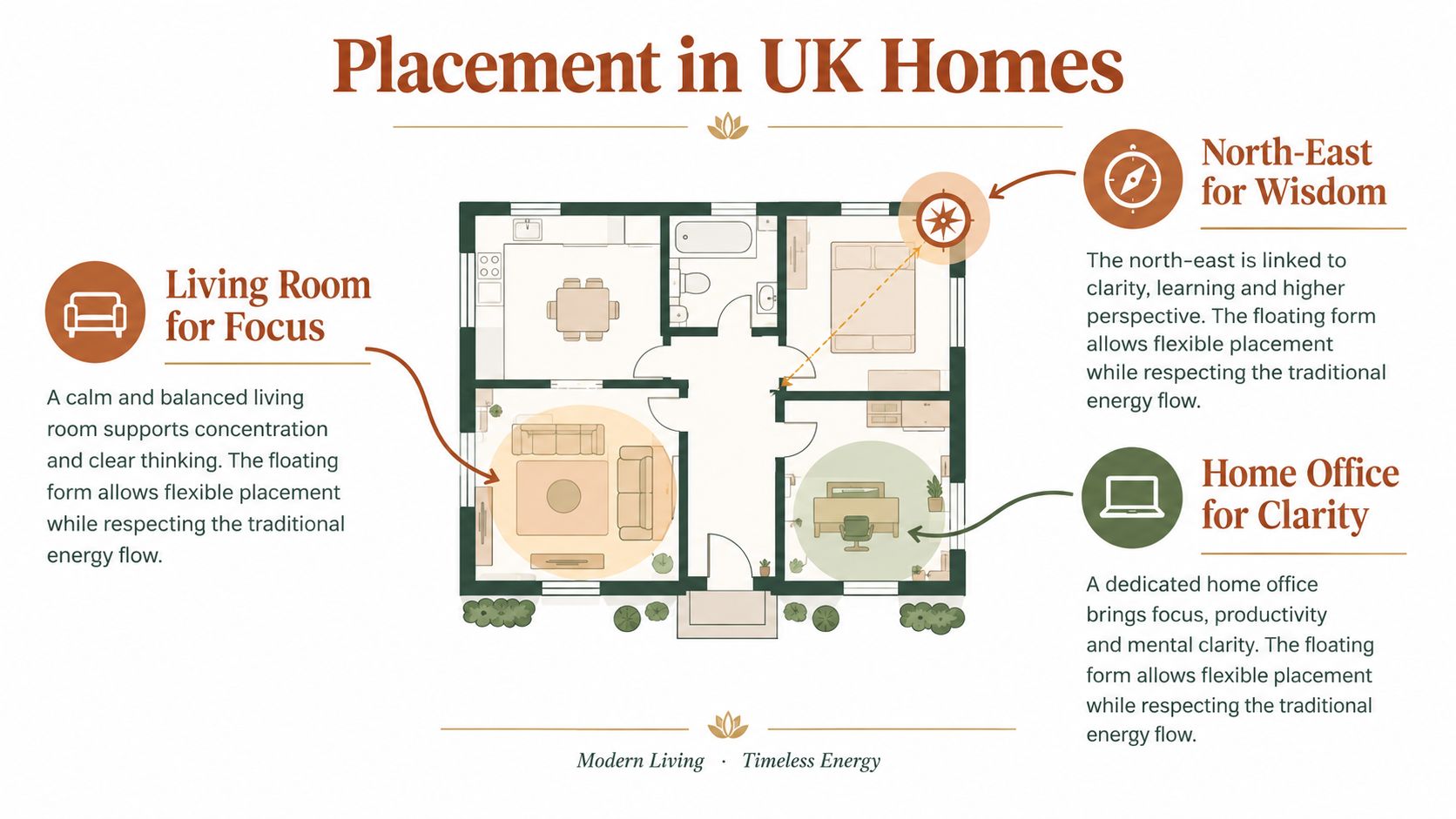
For lighting, museum-quality sculpture lighting advice is a helpful reference because levitation depends on visibility as much as structure. In a British interior, keep the sculpture away from damp corners, external walls, and radiator heat where possible, especially in older homes with uneven floorboards. A wooden floor that flexes can make a magnetic base feel less stable than it looked in the showroom.
If the room includes other deities, family photographs, or modern art, give the Ganesha enough breathing room to read as intentional. A levitating piece looks strongest when it isn't crowded.
Safety, Care and Long-Term Maintenance
A levitating sculpture is only graceful when it's stable. Underneath the visual effect, you're dealing with an object that can be sensitive to vibration, heat, and electrical interruption, so the maintenance routine matters as much as the first installation.
Safety first
The UK Health and Safety Executive identifies loss of power as a principal hazard in magnetic lifting equipment because the load can detach and fall. That's directly relevant to a levitating sculpture with an electromagnet or powered base. The same guidance also notes electromagnetic fields around magnets and supply conductors as a possible health risk, so the object should be kept away from vulnerable people and from places where a dropped figure could strike valuables or bare feet. HSE magnetic lifting devices
The HSE's more detailed guidance says a standby battery should automatically supply power if the external supply fails and should hold the safe working load for at least 10 minutes, with an automatic optical or acoustic warning at least 10 minutes before release. Those are industrial benchmarks, not domestic rules, but they show the right engineering mindset for a floating sculpture. HSE safe use guidance
Care by material
- Bronze: use a dry microfibre cloth and avoid aggressive polishing unless the finish is meant to shine.
- Resin: use a pH-neutral cleaner on a soft cloth and keep solvents away from painted edges.
- Wood: a light mineral-oil treatment may suit some unfinished or appropriate surfaces, but always test discreetly first.
- Hand-finished pieces: use conservation-grade methods, and avoid adhesive pads, heat, or harsh cleaning chemicals.
Humidity matters too. UK homes often sit in the middle range, but coastal properties and poor ventilation can push conditions higher, which affects wood and stone around concealed metalwork. As the British Museum's conservation policy stresses, display materials, storage, handling, and transport all need to be suitable, secure, and maintained, and baseline condition records help owners spot drift early. British Museum conservation policy
Failure-mode checklist
- Earthing: check that the powered base is correctly earthed where required.
- Cable strain relief: make sure the cable doesn't tug the unit sideways.
- Magnetic alignment drift: watch for wobble or a changing hover gap.
- Weight verification: confirm the sculpture still matches the declared load.
- Heat build-up: feel for unusual warmth in the base during operation.
- Service signs: flicker, audible strain, or repeated misalignment mean it needs attention, not improvisation.
If a unit no longer levitates cleanly, or if it needs constant correction, stop treating it as a decorative gadget. Stability is the standard, and anything less is a maintenance problem.
If you're choosing a lord Ganesha levitating sculpture for a home, altar, or collection, HD Asian Art can help you think beyond the novelty effect and toward the right balance of symbolism, craft, and placement. Visit HD Asian Art to explore curated pieces with a collector's eye and a respectful understanding of how these objects live in real interiors.
