



How to Cleanse Buddha Statue Energy With Respect
How to Cleanse Buddha Statue Energy With Respect
Last Updated: October 30, 2026
Quick Summary
To cleanse Buddha statue energy, set aside 15 to 20 minutes for a quiet ritual of intention, incense or a candle, a gentle dry wipe, a bowl of clean water, and silent breathing, then close by bowing and stating the cleansing is complete. This ritual resets stale energy and renews your focus, and it is separate from physical dusting.
- Cleansing is a repeatable reset you can do weekly, before a retreat, or after a difficult period.
- Blessing formally welcomes the statue into your practice and follows cleansing rather than replacing it.
- Consecration is a formal rite performed by a teacher, monk, or lama, not a DIY step.
- Dust first with a soft brush or dry microfiber cloth, working from the top down.
- Water is the most common cause of damage on gilded, painted, and metal pieces.
Table of Contents
- Why Cleansing Buddha Statue Energy Matters
- A Step-by-Step Buddha Statue Cleansing Ritual
- How to Clean a Buddha Statue Without Causing Damage
- How to Bless a Buddha Statue at Home
- How to Place a Buddha Statue in Your Home
- Buddha Statue Offering Ideas for Your Altar
- Choosing a Buddha Statue for Your Sacred Space
- Frequently Asked Questions
Why Cleansing Buddha Statue Energy Matters
To cleanse Buddha statue energy is a practice of clearing a sacred image of stale or heavy energy through intention, mindfulness, and respectful ritual.
Collectors and practitioners who keep a statue for years often slowly stop noticing it. The piece becomes furniture. The altar becomes a shelf.
Here is the distinction most guides skip. A statue can be spotless and still feel flat to you.
Physical Care and Spiritual Practice Are Different
Physical cleaning protects the object. You remove dust, avoid moisture, and keep the surface stable. Spiritual cleansing works on your relationship with the piece.
Keep the two apart in your mind and you will avoid the most common mistake: scrubbing a fragile statue while calling it a ritual. A soft cloth and a calm mind are not the same tool.
A Step-by-Step Buddha Statue Cleansing Ritual
Set aside 15 to 20 minutes when the room is quiet and you will not be interrupted. Wash your hands first. The sequence below is a beginner-friendly framework, not a fixed liturgy.
- Prepare the space. Clear the altar surface and dim harsh light. Open a window for a few minutes of fresh airflow. If you keep a dedicated altar, wipe the surrounding surface first so the ritual begins from a clean base.
- Set your intention. Say or think one clear sentence about what you want to release and what you want to invite. Keep it short enough to repeat the same way next time.
- Light incense or a candle. Let the smoke or flame settle you before you touch anything. This is a transition cue, not a requirement, a small lamp works if smoke or open flame is impractical.
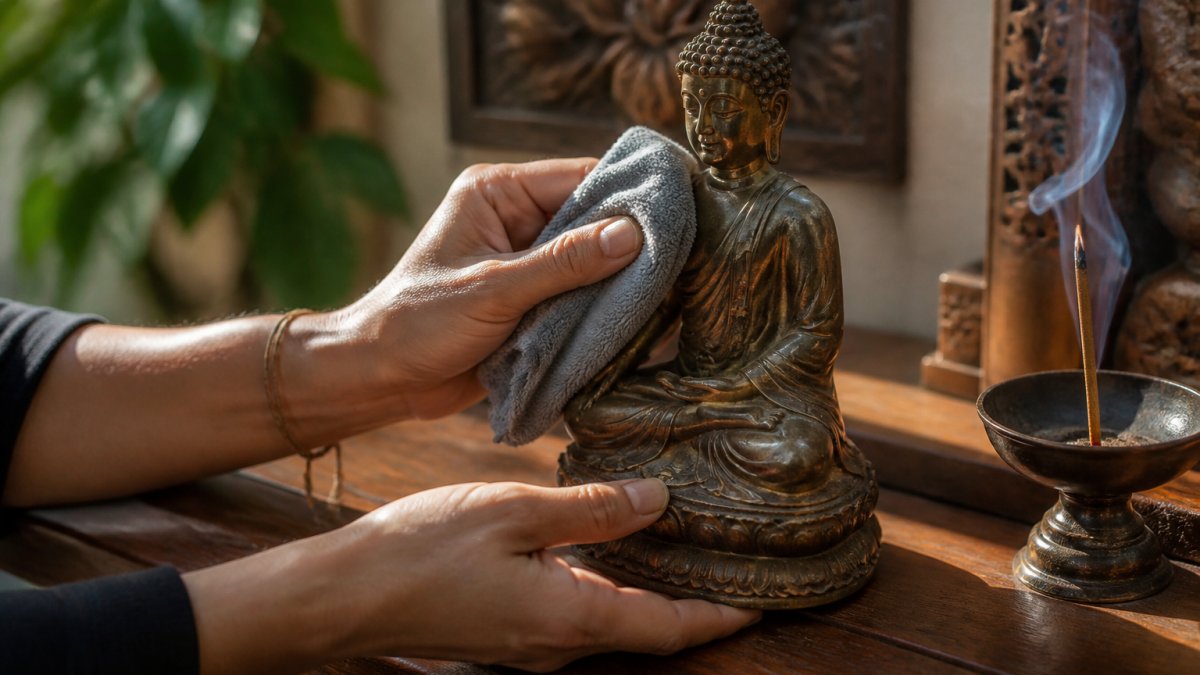
- Wipe the statue gently. Use a dry, soft brush or microfiber cloth. Work from the top down and support the statue by its base. This step is physical care, not the spiritual act itself; keep the two separate in your mind.
- Offer a small bowl of clean water. Place it in front of the statue and let it sit for the length of your practice. Water is the most common offering and the easiest to refresh.
- Sit in silence. Five minutes of steady breathing is enough. Let the room settle around the statue rather than rushing to the next task.
- Close the ritual. Bow, remove the water, and thank the piece. State clearly that the cleansing is complete so your mind registers a beginning and an end.
Cleansing, Blessing, and Consecration Are Not the Same Thing
These three terms get used interchangeably online, and that confusion is the main reason people either overdo the ritual or skip it entirely.
- Cleansing is a repeatable reset. You clear stale or heavy energy from the space and renew your own focus. It is something you can do weekly, before a retreat, or after a difficult period.
- Blessing is a welcoming act. It formally brings the statue into your practice, usually once, or again after a move. It follows cleansing rather than replacing it.
- Consecration is a formal rite that, in many traditions, is performed by a teacher, monk, or lama and may involve specific procedures the householder does not perform alone. It is not a DIY step, and a statue does not need it to be treated with respect.
A practical rule: if you are dusting and setting intention, you are cleansing. Maintaining this same spirit of reverence is essential when cleansing healing stones, ensuring that every object in your space remains aligned with your meditative focus.
When to Ask a Teacher or Temple
Most practitioners find that a simple home ritual is enough for a statue kept for personal practice. But some situations call for guidance rather than a guidebook:
- The statue came from a temple, monastery, or family altar and may already have been consecrated.
- You are unsure whether a particular offering, recitation, or gesture is appropriate in your tradition.
- The piece is antique, damaged, or fragile enough that moving it for a ritual risks harm.
Asking a teacher or temple is not a sign that your practice is lacking. It is the same instinct that leads people to consult a conservator before touching a fragile object, match the level of care to what you are handling.
What to Say or Think During the Ritual
There is no required script. Many practitioners use a simple dedication: "May this space be clear, and may my practice be steady." Others repeat a mantra they already use.
The words matter less than the consistency. Say the same thing each time and the ritual becomes a signal to your mind that practice is starting. That repetition is the whole point.
How to Clean a Buddha Statue Without Causing Damage
Dust first, always. A soft brush or dry microfiber cloth removes loose dust without touching the finish. Work slowly and let the cloth do the work, not pressure. Before you touch the surface, identify what you are actually cleaning, since the right method depends on the material.
Match the Method to the Material
Use this as a quick decision guide. When in doubt, do less.
- Metal (bronze, brass, copper): Dry dust with a soft brush. Avoid water on the surface and skip polishing compounds unless you have confirmed they are appropriate for the piece. A little patina is normal and is not dirt.
- Gilded surfaces: Dry methods only. Gold color can lift with moisture or friction, so use a dry, soft brush and never rub. Do not use polishing compounds.
- Painted surfaces: Dry, soft brush only. Moisture can stain or lift paint, and cleaning products can dull color. Keep the brush moving rather than pressing into details.
What to Avoid
- Harsh household cleaners, alcohol, and oils
- Polishing compounds on gilded or painted surfaces
- Submerging any statue in water
Handle every piece by the base with both hands. For an old or fragile statue, move it as little as possible and clean around it in place.
When Not to Clean or Move a Statue
Some situations call for restraint rather than a better technique:
- The statue is antique, damaged, or has loose parts.
- The piece may have been consecrated, or it came from a temple or family altar.
- The surface is flaking, lifting, or already compromised.
In those cases, avoid DIY treatment. Consult a conservator for the physical object, and a teacher or temple authority for questions about consecration or ritual handling. Cleaning and moving are separate decisions, you can leave a statue in place and still tend the space around it.
Drying and Airflow After Any Dampness
If a surface does get damp, dry it immediately with a soft, dry cloth and let the piece sit in open air rather than sealing it in a cabinet. Good airflow around the statue is part of routine care, not just a post-cleaning step. Keep the piece out of direct sunlight and away from heat sources, which can stress finishes over time.
How to Bless a Buddha Statue at Home
Blessing is the step that follows your cleanse Buddha statue ritual. Cleansing clears the space; blessing formally welcomes the statue into your practice. Many practitioners keep the two on separate days so each gets full attention.
A simple home blessing involves a clean altar, a fresh offering, and a short spoken intention. If you want a fuller walkthrough, our guide on how to perform a Buddha statue blessing ceremony covers the sequence step by step.
How to Place a Buddha Statue in Your Home
Place the statue at or slightly above eye level when you are seated. Choose a spot with stable humidity, no direct sunlight, and steady airflow. Keep it out of busy walkways and away from kitchens and bathrooms.
A small meditation corner works fine. If you are arranging a full altar for the first time, our guide to setting up a Buddhist altar at home walks through the layout. Beginners who want the short version can read how a beginner should arrange a Buddha statue altar.
Buddha Statue Offering Ideas for Your Altar
Keep offerings simple and fresh. Water is the most common and the easiest to maintain. Flowers, a small lamp or candle, and incense are traditional additions.
Change water daily. Replace wilted flowers promptly. A clean, uncluttered altar does more for the space than an elaborate one you stop tending. For a fuller list of traditional offerings, see our guide to Buddhist offerings for daily home worship.
Choosing a Buddha Statue for Your Sacred Space
Choose a piece you will actually sit with. Size, material, and expression matter more than rarity for daily practice. A smaller statue that fits your corner beats a large one you have nowhere to place.
Look for clear craftsmanship: defined features, a stable base, and a finish that suits your room's light. If you are still deciding, our guide on choosing a Buddha statue for your home altar covers material and scale.
| Step | Time | Frequency |
|---|---|---|
| Energy cleansing ritual | 15-20 min | Weekly or before retreats |
| Dry dusting | 5 min | Weekly |
| Offering water change | 1 min | Daily |
| Full surface check | 10 min | Monthly |
| Blessing ceremony | 20-30 min | Once, or after moving |
Frequently Asked Questions
How do I cleanse the energy of a Buddha statue?
Set aside a quiet time, wash your hands, and sit comfortably facing the statue. State your intention silently or aloud, then use a soft brush or microfiber cloth to wipe the surface gently while holding a mindful focus. You can offer incense or a small bowl of water. Finish by expressing gratitude and leaving the statue in a clean, uncluttered space. This cleanse buddha statue practice is about respect and attention, not elaborate tools.
Can I use incense when cleansing a Buddha statue?
Yes, incense is a common and appropriate offering during a cleansing ritual. Place the incense in a holder a safe distance from the statue so ash and smoke do not stain the surface. Let the scent move through the space rather than directing smoke at the figure. If you have respiratory sensitivities or the statue has delicate painted or gilded surfaces, keep the incense brief and ensure good airflow.
How often should I refresh the space around a Buddha statue?
A light dusting every one to two weeks keeps the surface clear, while a fuller cleansing ritual can be done monthly or before significant observances. If the statue sits near a window, kitchen, or high-traffic area, check it more often for dust and moisture. Always use gentle, dry methods first and avoid water on painted, gilded, or fragile pieces.
What should I do if I am unsure which cleansing practice is appropriate?
Start with the simplest approach: a clean space, a soft cloth, and a clear intention. If you follow a specific tradition, ask a teacher or community member for guidance. Avoid combining many rituals at once. The cleanse buddha statue process should feel calm and respectful rather than complicated, and you can adjust as you learn more about the statue's origin and your own practice.
Cleansing a statue only works when the object itself is cared for properly. That means gentle handling, dry methods, and a stable spot away from sun and damp. Get those right and the ritual has room to mean something.
At HD Asian Art, we curate Buddhist and Hindu statues for altars and meditation spaces, with free shipping and pieces chosen for daily practice rather than storage. Browse our collection and find a statue you will want to sit with.

