






Seven Rules for Keeping a Buddha Statue at Home Respectfully
Seven Rules for Keeping a Buddha Statue at Home Respectfully
Quick Summary
Yes, it is okay to have a Buddha statue at home, provided you display it with respect. A Buddha statue is a sacred symbol for many people, not just a piece of home decor, so the answer depends less on whether you own one and more on how you treat it.
- Set the statue at or above eye level, keep the area clean, and give it a quiet corner.
- Face the statue toward the room or entry so it looks outward, not at a blank wall.
- Avoid placing a statue in the bathroom, garage, laundry room, or storage areas.
- Many practitioners avoid the bedroom, but others keep a small statue on a high shelf.
- Choose a meditating Buddha for a quiet space and a laughing Buddha for a welcoming entry.
Table of Contents
- Is It Okay to Have a Buddha Statue at Home?
- Respectful Buddha Statue Placement Starts With Intention
- Which Way Should a Buddha Statue Face in the House?
- A Buddha Statue at Home Entrance: Welcoming or Wrong?
- Where to Place a Buddha Statue in a Bedroom
- Room-by-Room Placement Rules and Rooms to Avoid
- Choosing a Statue and Setting Up a Home Shrine
- Browse Statues for Your Meditation Space
- Frequently Asked Questions
Is It Okay to Have a Buddha Statue at Home?
Yes, it is okay to have a Buddha statue at home, provided you display it with respect. For the full placement and buying context, see our Buddha statue buying and placement guide. A Buddha statue is a sacred symbol for many people, not just a piece of home decor. The answer depends less on whether you own one and more on how you treat it.
Below, we'll show you exactly how to display a Buddha statue respectfully, room by room. But first, here's what most guides get wrong: they treat placement as a design choice. It isn't. It's a question of intention.
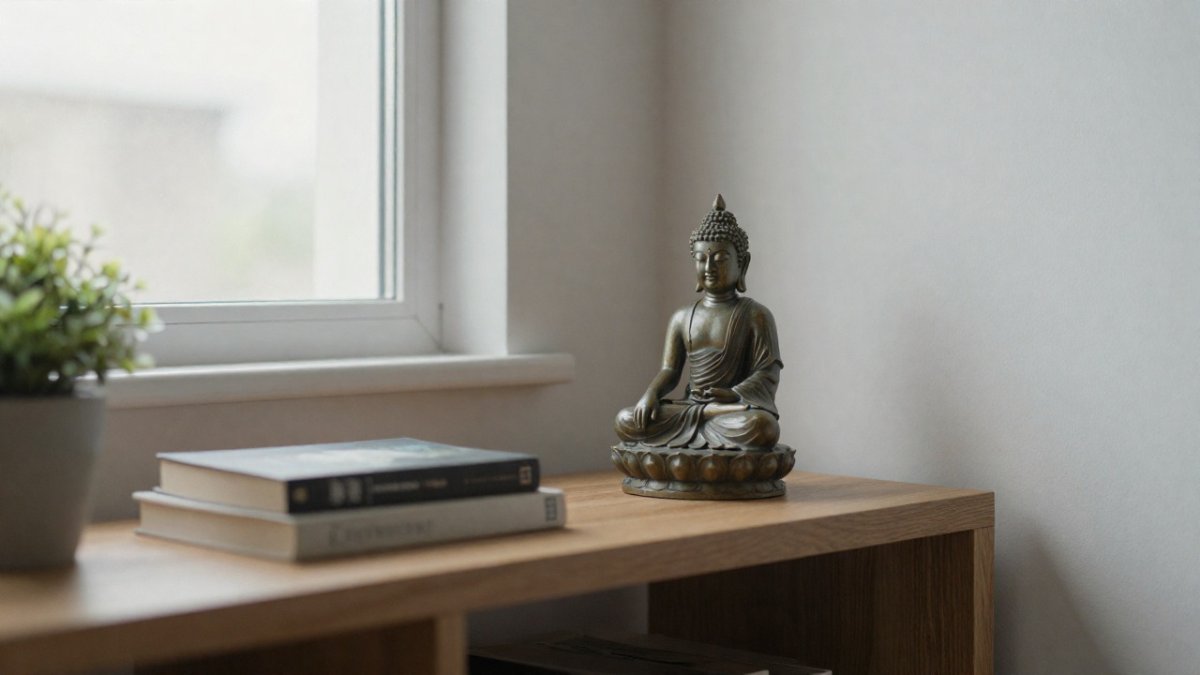
What Buddhist Traditions Say About Display
Buddhist communities do not agree on every detail, and that matters. Some traditions treat a Buddha image as a focus for meditation and reflection. Others see it as a reminder of qualities like compassion and calm. For many practitioners, the statue is not a god to worship but a symbol of a path.
That variation means there is no single rulebook. What holds across traditions is the idea of respectful intention. A statue placed with care reads differently than one used as a novelty.
When a Buddha Image Crosses Into Disrespect
A Buddha image becomes disrespectful when it is treated as a casual prop. Tricycle's guidance on appropriate Buddha statue use draws a clear line between respectful display and using a Buddha image as bathroom decor. That distinction is useful.
A few common missteps cross the line:
- Placing a statue on the floor or at foot level
- Using it as a bathroom or garden novelty
- Setting drinks or clutter on the same surface
- Treating it as a joke or costume piece
None of these are about taste. They are about whether the object is honored or dismissed.
Respectful Buddha Statue Placement Starts With Intention
Before you pick a spot, decide why the statue is there. Respectful Buddha statue placement begins with a simple question: is this a focal point for calm, or just filler for a shelf? Your answer shapes everything that follows.
A few principles guide good placement:
- Elevate it. Set the statue at or above eye level where possible.
- Keep it clean. Dust the area and avoid clutter around it.
- Give it space. A quiet corner beats a busy hallway.
- Face it inward. Point it toward the room, not a wall.
For a deeper walkthrough of display principles, our guide on how to display Buddhist statues in your home covers the details.
Which Way Should a Buddha Statue Face in the House?
The short answer: face the statue toward the room or the entry, so it greets those who enter. Which way should a Buddha statue face in the house is a common question, and most guidance points the same direction. The statue should look outward, not at a blank wall.
A few practical notes:
- Face it toward open space, such as a living room or meditation area.
- Avoid pointing it at a bathroom door or a cluttered zone.
- If the room has a natural focal wall, let the statue face away from it.
Some people consult feng shui or vastu for direction. Those traditions vary, so treat them as preferences, not rules.
A Buddha Statue at Home Entrance: Welcoming or Wrong?
A Buddha statue at home entrance can work well, if it is set with care. An entryway statue greets guests and sets a calm tone for the home. The key is placement and height.
Do this:
- Place it on a console or shelf, not the floor
- Keep the surface clear of keys, mail, and shoes
- Angle it toward the door so it faces those who enter
Watch out: an entryway is high-traffic. If the statue sits where bags get dropped or shoes get kicked off, it reads as a catch-all spot, not a place of respect. Move it up and out of the way.
Where to Place a Buddha Statue in a Bedroom
Where to place a Buddha statue in a bedroom is trickier than other rooms. Many practitioners avoid the bedroom entirely, since it is a private, restful space. Others keep a small statue on a bedside shelf for calm and reflection.
If you choose the bedroom, follow these rules:
- Set it on a high shelf or dresser, never the floor
- Keep it away from the bed's foot and any clutter
- Face it toward open space, not the mattress
- Avoid placing it near laundry or storage piles
The material matters too. A smaller stone or wood piece often suits a bedroom better than a large bronze. Our guide on the best materials for bedroom Buddha statues walks through the options.
Room-by-Room Placement Rules and Rooms to Avoid
Some rooms welcome a statue. Others work against respectful display. The table below is a starting point, not a verdict, the notes explain which recommendations are tradition-specific and which are broadly shared.
| Room | Suitable? | Why |
|---|---|---|
| Living room | Yes | Elevated shelf or console, clear surface, faces into the room |
| Meditation room | Best | Quiet, clean, dedicated space; most traditions favor this |
| Entryway | Yes | Above traffic, facing the door, not a catch-all surface |
| Home office | Usually | Fine if the desk is tidy; avoid placing it beside a monitor as decor |
| Bedroom | Sometimes | Tradition-specific; many practitioners avoid it, others keep a small image on a high shelf |
| Kitchen | Rarely | Grease, steam, and clutter work against respectful treatment |
| Bathroom | No | Broadly treated as disrespectful across traditions |
| Garage, laundry, storage | No | Tied to waste, mess, or neglect |
The Bathroom and Other Off-Limits Spaces
The bathroom is the clearest no. Most traditions treat it as an impure space, and placing a sacred symbol there reads as disrespect. Keep the statue out of bathrooms, laundry rooms, and any spot tied to waste or mess.
Other spaces to skip:
- Floors and foot-level shelves
- Garages and storage areas
- Outdoor spots exposed to weather and dirt
The Ambiguous Rooms, Explained
The bedroom is where guidance diverges most. Many Theravada and Mahayana practitioners avoid it entirely, since it is a private, restful space. Others, particularly in smaller homes, keep a small statue on a high shelf for calm and reflection. If you choose the bedroom, set it above the bed line, keep it away from laundry piles, and face it toward open space rather than the mattress.
The kitchen is a softer no. A statue on a clean shelf away from the stove is not automatically wrong, but grease, steam, and food prep clutter make respectful upkeep hard. If the kitchen is your only option, choose a high, out-of-the-way shelf and keep the surface clear.
A home office is usually fine. The main risk is treating the statue as desk decor next to a monitor and a coffee mug. Give it its own clear surface, even a small one.
Watch out: an entryway is high-traffic. If the statue sits where bags get dropped or shoes get kicked off, it reads as a catch-all spot, not a place of respect. Move it up and out of the way.
Choosing a Statue and Setting Up a Home Shrine
A home shrine turns a statue into a practice, not just a display. Start with a clean, elevated surface. Add a small cushion, a candle, or a fresh flower. Keep it simple.
The pose matters too. A meditating Buddha suits a quiet meditation space. A laughing Buddha fits a welcoming entry. Choose the pose to match the room's purpose.
Beginners often ask how to arrange the space. Our step-by-step guide on how to arrange a Buddha statue altar covers the basics, and the complete guide to setting up a Buddhist altar at home goes further.
Browse Statues for Your Meditation Space
Placing a Buddha statue respectfully comes down to intention, height, and a clean, quiet space. Get those right, and the statue becomes a genuine focal point for calm rather than decoration.
HD Asian Art curates Buddhist and Hindu statues alongside Khmer and Southeast Asian sculptures, with handpicked antique and contemporary pieces designed to bring a sense of peace and artistry to a personal sanctuary. Free shipping is available.
Get started with HD Asian Art and find a statue that honors your space.
Frequently Asked Questions
Is it disrespectful to use a Buddha statue as home decor?
It depends on intent and placement. A Buddha statue displayed as a thoughtful focal point, kept clean and elevated, is generally seen as respectful even by non-Buddhists. Problems arise when the image is treated carelessly: placed on the floor, used as a bathroom accent, or surrounded by clutter. Many practitioners say the issue is not decoration itself but whether the statue is honored or trivialized. If you display one, give it a clean, elevated spot and a moment of care.
Where should you not place a Buddha statue?
Avoid the bathroom, the floor, and spaces where the statue becomes an afterthought. Buddhist sources commonly advise against placing a Buddha image in a bathroom because it is considered an impure space. Bedrooms are debated: some traditions permit a statue if it faces away from the bed, while others prefer the bedroom be kept free of sacred images. Also skip spots below eye level, crowded shelves, and areas with heavy foot traffic where the statue could be knocked over.
Which way should a Buddha statue face in the house?
Most guidance points the statue toward the room's main seating or entry, so it faces the people who use the space. East is a common preference in several Asian traditions, associated with sunrise and awakening. For a meditation space, face the statue toward where you sit. Avoid pointing it at a wall, a bathroom door, or a mirror. The direction matters less than the statue having a clear, respectful sightline and a stable, elevated position.
Can you place a Buddha statue in a bedroom?
It is allowed in some traditions and discouraged in others. If you choose to place one in a bedroom, keep it on a raised shelf or small altar, position it so it does not face the bed directly, and keep the area tidy. Couples sometimes prefer to keep sacred images out of intimate spaces entirely. A meditation corner or a living room shrine is a safer choice if you want to avoid the debate altogether.

