



Incorporating Mudras Into Your Yoga Flow
Incorporating Mudras Into Your Yoga Flow
Table of Contents
- What Mudras Are and Why They Matter in Yoga Flow
- Benefits of Yoga Mudras for Body and Mind
- How Long to Hold Mudras During Practice
- Yoga Mudra Sequence Examples to Try Today
- Integrating Mudras With Asana and Pranayama
- Common Mistakes and Anatomical Considerations
- Conclusion
- Frequently Asked Questions
What Mudras Are and Why They Matter in Yoga Flow
Incorporating mudras into your yoga flow is one of the most direct ways to shift a physical practice into a meditative one, yet many practitioners overlook these simple hand positions. Mudras are precise gestures of the hands and fingers that have been used for centuries in yogic traditions to direct energy flow within the subtle body (peer-reviewed research). We have long appreciated how these sacred gestures echo the postures of the Buddhist and Hindu statues we curate, bridging the gap between ancient artistry and modern practice.
A mudra is a symbolic or ritual gesture that acts as a seal for energy, influencing the flow of prana, or life force, through the body. The philosophy holds that specific finger placements stimulate different energetic pathways, or nadis, which can alter your mental and physical state within minutes. This makes incorporating mudras into your yoga flow a powerful tool for centering, whether you are new to the concept or deepening an established routine.
Below, we will show you exactly how to weave these gestures into your asana practice, pranayama, and seated meditation, along with the timing that works best and the mistakes to avoid. Most guides treat mudras as an abstract concept; we aim to treat them as a practical, sequenceable skill.
Benefits of Yoga Mudras for Body and Mind
The benefits of yoga mudras extend beyond simple relaxation, offering a way to cultivate focus and body awareness without adding extra time to your mat. Practitioners report that holding a gesture like Gyan mudra during seated meditation can quiet mental chatter, creating a sense of grounding that supports longer holds.
Physically, hand gestures encourage conscious movement and alignment throughout the upper body. Because the hands are rich in nerve endings, the deliberate pressure of finger-to-finger contact activates neural pathways that many find calming. For those building a meditation corner at home, pairing these gestures with a meaningful visual focal point, such as a hand-carved statue, can deepen the ritual quality of the practice.
How Long to Hold Mudras During Practice
A common question among practitioners is how long to hold mudras, and the answer depends entirely on the context of your practice (nccih.nih.gov). For dynamic movement within a vinyasa, holding a mudra for three to five breaths is sufficient to feel its effect without disrupting the flow. In seated meditation, however, extending the hold to ten to twenty minutes allows the energetic effects to deepen significantly.
The key is consistency over duration. A focused five-minute hold with clear intention often yields more noticeable results than a distracted twenty-minute session. Start with a two-minute minimum to allow the nervous system to settle, then gradually increase the duration as your comfort and concentration improve.
| Practice Type | Recommended Hold | Frequency |
|---|---|---|
| Within Asana Flow | 3-5 breaths | Every session |
| Pranayama | 5-10 minutes | Once daily |
| Seated Meditation | 10-20 minutes | 2-3 times weekly |
| Transitional Rest | 1-2 minutes | As needed |
Yoga Mudra Sequence Examples to Try Today
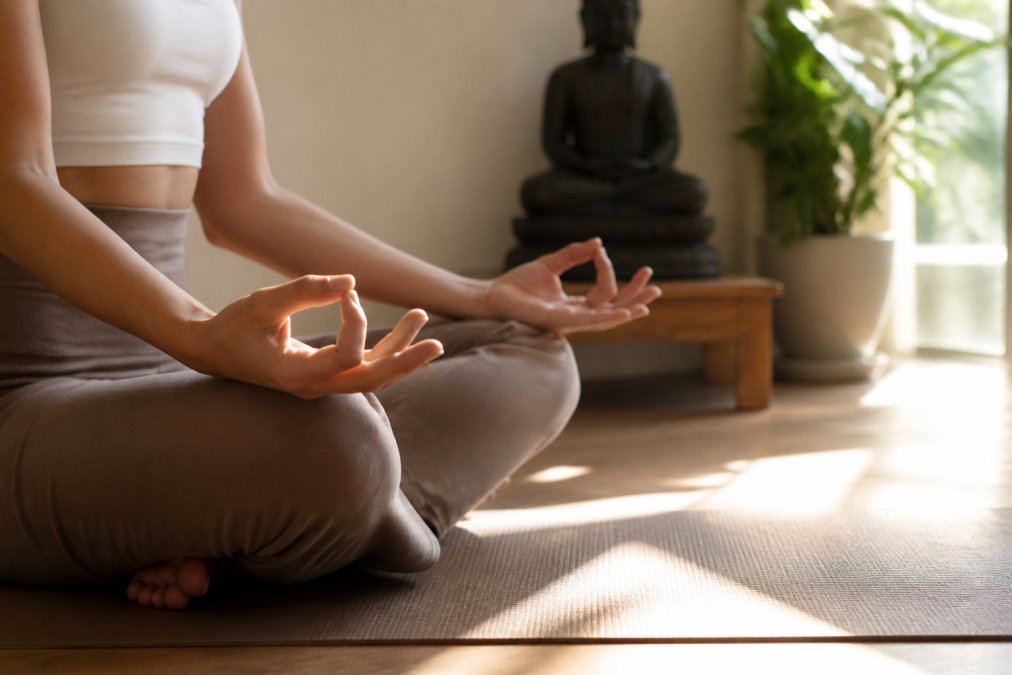
Most guides show you a mudra and tell you to hold it. That leaves a practical gap: how do you actually get there from a standing pose without dropping your hands awkwardly or losing your breath rhythm? The following sequences address that gap by providing the 'bridge' movements that connect each gesture to the flow. Each sequence is designed for easy integration, whether you practice for ten minutes or ninety.
Sequence 1: Grounding Flow for a Home Practice
This sequence moves from standing to seated, using the transition itself as part of the practice.
- Start in Tadasana (Mountain Pose). Stand tall with feet hip-width apart. As you inhale, sweep your arms overhead. As you exhale, fold forward into Uttanasana, keeping your spine long.
- Transition to Anjali Mudra (Prayer). From your forward fold, inhale to a flat back. On your next exhale, step or jump back to a low lunge. As your back knee lowers to the mat, bring your palms together at your heart center. The movement of the hands from the floor to the heart is the bridge; it should feel like you are scooping energy upward.
- Hold and Flow. Stay in this low lunge with Anjali Mudra for three full breaths. On an inhale, sweep your arms up and back to transition to a high lunge or Crescent pose, releasing the mudra. Exhale back to the low lunge and return to Anjali Mudra. Repeat this cycle three times, letting the mudra anchor each return to stillness.
- Move to the Floor. From your low lunge, step back to Downward-Facing Dog. Walk your feet forward to a seated position. As you sit, transition your hands from the mat into Pankaja Mudra (Lotus) by cupping them at your lower belly, palms up, thumbs gently touching. This gesture encourages openness and receptivity after the effort of the standing flow. Hold for five breaths here.
Sequence 2: Seated Clarity Sequence
This sequence is entirely on the floor and focuses on transitioning between two distinct mudras without losing the meditative thread.
- Begin in a Comfortable Seat. Sit in Sukhasana (Easy Pose) or Virasana (Hero Pose) on a block if needed. Rest your hands on your knees.
- Open with Gyan Mudra (Knowledge). Touch the tip of your index finger to the tip of your thumb, extending the other three fingers. This gesture promotes mental clarity and is ideal for opening a practice. Hold for five breaths, feeling the connection at the fingertips.
- Bridge to Vayu Mudra (Air). To transition, consciously release the Gyan Mudra and spread your fingers wide, stretching them gently for a moment. This 'shake-out' is a critical bridge that prevents stiffness. Then, fold the index finger of each hand to the base of the thumb and press the thumb over it, keeping the other fingers straight. This is Vayu Mudra, which helps balance energy and reduce restlessness. Hold for five breaths.
- Alternate with Intention. Move between Gyan and Vayu Mudra three times, using the finger stretch as your bridge each time. Notice how the energetic quality shifts with each position. The deliberate movement between gestures is a form of pranayama for the hands.
Sequence 3: Transitional Rest
Use this when you need a quick reset between meetings or during a break in a longer practice.
- Find Stillness. Sit in a chair or on the floor. Close your eyes.
- Use Anjali Mudra. Press the palms together at the heart center. This grounding gesture is perfect for transitioning between tasks. Hold for one to two minutes, focusing on the pressure of the palms.
- Release with Awareness. On an exhale, slowly lower your hands to your lap. Do not simply drop them; guide them down as if you are placing something precious on a table. This conscious release is the final bridge, signaling to your nervous system that the practice is complete.
Integrating Mudras With Asana and Pranayama
Integrating mudras with asana and pranayama creates an integrative practice that engages the body, breath, and mind simultaneously. The most accessible entry point is to choose a single mudra and hold it throughout a simple vinyasa, such as three sun salutations. Anchoring the hands in a gesture like Anjali mudra during a forward fold or lunge can dramatically increase your sense of centering.
The Mechanics of Holding a Mudra in Asana
Holding a mudra during asana is not about passive hand placement; it is an active engagement that requires attention to the shoulders and upper back. When you hold Gyan Mudra in a standing pose like Warrior II, the arms are extended, and the gesture must be maintained without collapsing the chest. The action is to press the thumb and index finger together with enough intention to feel the connection, while simultaneously drawing the shoulder blades down the back. This dual action, finger pressure and scapular stability, creates a full-body engagement that transforms a simple standing pose into a focused meditation.
Mudras for Specific Pranayama Practices
For pranayama, or breathwork, mudras amplify the effects of the breath. The most common pairing is Vishnu Mudra with Nadi Shodhana (Alternate Nostril Breathing). To form Vishnu Mudra, fold the index and middle fingers into the palm, leaving the ring finger and thumb extended. Use the thumb to close the right nostril and the ring finger to close the left. The precision of this hand position is what allows the breath to be directed with accuracy.
A less common but effective pairing is Chin Mudra with Ujjayi Breath. Chin Mudra is formed by touching the thumb and index finger, with the palms facing down on the knees. When practicing Ujjayi, the focus is on the sound of the breath in the throat. The downward-facing palms of Chin Mudra create a sense of grounding that complements the internal focus of Ujjayi. Hold this combination for five to ten minutes to experience a noticeable shift toward a deeper state of rest.
Sequencing Mudras with Breath Ratios
A practical way to integrate mudras with pranayama is to use the mudra as a timer for breath ratios. For example, in a 1:2 exhale ratio (inhale for four counts, exhale for eight), you can use the pressure of the thumb and index finger in Gyan Mudra to mark each count. Press slightly on the inhale, release on the exhale. This gives the mind a physical anchor for the breath count, preventing the mental drift that often occurs during extended exhales. This technique is particularly useful for practitioners who find it difficult to maintain a long exhale without distraction.
A Sample Integrated Sequence
This sequence combines asana, mudra, and pranayama into a single, cohesive practice.
- Warm-Up (5 minutes): Begin in a comfortable seat. Practice three rounds of simple Ujjayi breath with your hands in Chin Mudra on your knees. This establishes the breath pattern.
- Sun Salutations (5 minutes): Perform three rounds of Sun Salutation A. During the first round, hold Anjali Mudra at the heart in each pose. In the second round, transition to Gyan Mudra during the standing forward fold. In the third round, hold the mudra of your choice throughout the entire flow, focusing on maintaining the hand position without tension.
- Standing Poses (5 minutes): Move into Warrior I and Warrior II. Hold Gyan Mudra with the arms extended in Warrior II for five breaths per side. The active finger pressure will help you maintain focus in the legs.
- Seated Pranayama (10 minutes): Sit in a comfortable seat. Practice Nadi Shodhana with Vishnu Mudra for five minutes, then switch to Ujjayi breath with Chin Mudra for five minutes. Notice how the different mudras affect the quality of the breath.
- Cool Down (5 minutes): Lie in Savasana with your hands in a relaxed position, palms up. Allow the breath to return to its natural rhythm.
Common Mistakes and Anatomical Considerations
The most frequent mistake practitioners make is forcing the hands into uncomfortable positions, which creates tension rather than release. Mudras should feel effortless; if you experience strain in the wrists, thumbs, or fingers, ease the pressure. Unlike the guidance in many anatomy resources for yoga practitioners, there is no benefit to pain.
Anatomical contraindications are rarely discussed but matter for safe practice. Individuals with arthritis in the hands or recent wrist injuries should modify gestures or hold them for shorter durations. For those with carpal tunnel syndrome, keeping the hands resting on the thighs rather than holding them aloft reduces nerve compression. If you have circulatory issues, periodically wiggle the fingers between holds to maintain blood flow.
Conclusion
Building a home practice that honors both the physical and the spiritual requires more than just a mat and some time. It asks for intention, or Sankalpa, and a space that supports your focus. As you explore incorporating mudras into your yoga flow, consider the environment where you practice. A serene corner with a meaningful focal point can transform a routine into a ritual.
Frequently Asked Questions
Can you do mudras while holding yoga poses?
Yes, you can hold mudras while in yoga poses, especially in seated postures or static standing poses like Mountain Pose or Warrior II. In dynamic vinyasa flow, it is more practical to hold a mudra during slower holds or when transitioning through a sequence. The key is to maintain steady breath and alignment. If the mudra causes tension in your hands or breaks your focus, release the gesture and return to it during a more stable moment.
How do mudras affect energy flow in the body?
Mudras are hand gestures believed to direct Prana, or life force, through the subtle body's energetic pathways, called nadis. Each finger is associated with one of the five elements, and pressing them together is thought to balance these elements within the body. Practitioners report feeling more grounded, centered, and mentally clear after holding mudras. While scientific evidence is limited, the focused hand positioning does encourage body awareness and mindfulness, which supports a calmer nervous system.
Which mudras are best for beginners?
Gyan mudra, where the tip of the index finger touches the tip of the thumb, is often the best starting point because it is simple and promotes focus and calm. Chin mudra, similar but with the palm facing down, is also beginner friendly. Anjali mudra, pressing the palms together at the heart, is accessible to everyone and works well at the start or end of a flow. These three gestures are easy to hold and allow beginners to build body awareness without overcomplicating the practice.
How do I know if I am holding a mudra correctly?
You are holding a mudra correctly when your hands feel relaxed yet engaged, with no strain in the fingers, wrists, or shoulders. The touch between fingertips should be gentle, not pressing hard. Your breath should remain smooth and even, and you should be able to maintain your focus. If you feel tension or your mind wanders to the discomfort, soften the pressure or adjust the hand position. Correct practice feels natural, allowing the gesture to become a quiet anchor for your attention.
Creating a dedicated sanctuary for your practice is a journey worth investing in. HD Asian Art offers a carefully curated collection of Buddhist and Hindu statues, alongside Khmer and Southeast Asian sculptures, designed to enhance meditation spaces and refined spiritual home interiors. Browse our selection to find a piece that anchors your practice and brings a sense of peace to your personal sanctuary.
