



How to Clean Bronze Statue and Asian Sculpture Safely
How to Clean Bronze Statue and Asian Sculpture Safely
A common mistake collectors make is grabbing a cloth and polish the moment they spot a dull patch on their bronze Buddha or stone Ganesha. The wrong approach strips years of natural patina from a piece that may have taken centuries to develop that character.
Knowing how to clean bronze statue surfaces and care for stone sculptures correctly is the difference between preserving a treasure and accidentally damaging it. This guide covers everything from routine dusting to dealing with active bronze disease, with specific advice for the Buddhist and Hindu sculptures most commonly found in serious collections.
Table of Contents
Quick Takeaways
|
Key Insight |
Explanation |
|---|---|
|
Never use commercial metal polish on Asian bronzes |
Products like Brasso remove the aged patina that gives Buddhist and Hindu bronzes their value and visual depth. Stick to distilled water and a soft brush. |
|
Bright green powder signals bronze disease, not just patina |
Powdery, bright-green cuprite is an active corrosion that spreads. It must be addressed immediately, unlike the stable dark-green or brown patina that protects the metal. |
|
Stone sculptures need pH-neutral cleaning only |
Sandstone, limestone, and granite used in Cambodian and Indian sculpture are porous. Acidic or alkaline cleaners penetrate the surface and cause lasting damage. |
|
Wax is the correct final treatment for bronze, not lacquer |
A thin coat of microcrystalline wax (such as Renaissance Wax) protects without altering the patina or blocking the metal from breathing naturally. |
|
Humidity is the single biggest environmental threat |
Bronze disease activates above 60% relative humidity. Stone sculptures crack in environments with dramatic humidity swings. Target 45-55% RH consistently. |
|
Cotton gloves during handling prevent acid transfer |
The oils and salts in bare hands accelerate oxidation on bronze and leave permanent marks on porous stone. Always use clean cotton or nitrile gloves. |
|
Routine dusting prevents deeper cleaning from being necessary |
Dust traps moisture against the surface. A monthly dusting with a soft natural-bristle brush dramatically reduces the risk of corrosion and staining on both materials. |
Why Asian Sculptures Need Specialist Care
Asian religious sculptures are not decorative objects in the conventional sense. A Burmese Mandalay-style bronze Buddha or a Khmer sandstone Vishnu represents centuries of metallurgical and sculptural tradition, and the materials used reflect the regional geology and casting techniques of their origin countries. Treating a Thai bronze the same way you would treat a Victorian brass candlestick is a fundamental category error.
The bronzes sourced from Burma, Thailand, and Cambodia are typically copper-tin alloys with varying proportions depending on the period and workshop. Indian bronzes, particularly South Indian Chola pieces, tend to have higher copper content. Indonesian and Sri Lankan pieces often show different surface treatment histories. Each of these compositional differences affects how the metal reacts to cleaning agents, humidity, and light.
Stone sculptures add another layer of complexity. The pink sandstone of Rajasthan used in Indian temple sculptures behaves entirely differently from the grey-green schist of Gandharan pieces or the volcanic andesite used in Indonesian Javanese sculpture. A cleaning method that works safely on granite is potentially destructive on porous sandstone.
Understanding Bronze Patina Preservation
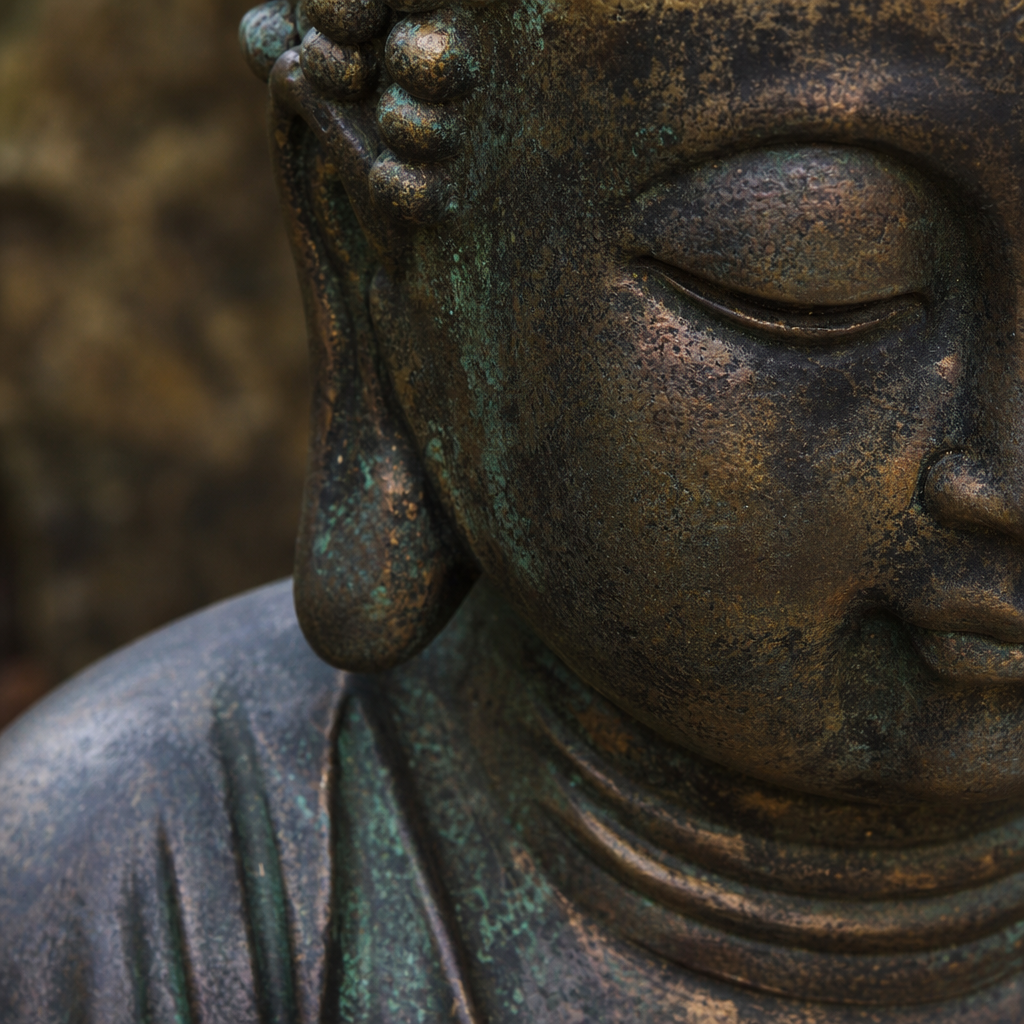
Bronze patina preservation is arguably the most misunderstood aspect of Asian sculpture care. Many new collectors see a dark or greenish surface and assume the piece needs to be brightened up. In practice, that surface layer is often the single most valuable physical feature of the object.
What Stable Patina Actually Is
Patina on Asian bronzes is a complex layer of copper oxides and carbonates that forms naturally over decades or centuries of exposure to air and moisture. A stable, healthy patina appears as a smooth, even coating in colours ranging from dark brown and black to muted greens and blues. It adheres firmly to the surface and does not flake or powder.
This layer is not just aesthetically important. It forms a chemical barrier between the copper alloy and the environment, slowing future oxidation. Removing it exposes raw metal that will oxidise rapidly and unevenly, and the resulting surface will never replicate the depth of an aged patina.
Artificial Patina Versus Natural Aging
Many contemporary sculptures from workshops in Nepal, Thailand, and India carry an artificially applied patina, often created with ammonia fumes, acids, or liver of sulphur. This is standard practice and not a sign of deception. However, artificial patinas are thinner and less stable than natural aging. They require more frequent wax protection and are more vulnerable to damage from inappropriate cleaning.
The practical test: run a clean white cloth very lightly across an inconspicuous area. If colour transfers readily, the patina is either very fresh or poorly sealed. A well-established natural patina leaves almost nothing on the cloth.
"The patina of a bronze is not a surface condition to be corrected. It is a historical document to be preserved." - Smithsonian Institution, Conservation and Scientific Research
Pro tip: Before doing anything to a piece you have just acquired, photograph it in natural light from multiple angles. These reference images are invaluable if you ever need professional conservation work, and they document the piece's condition at the time of purchase.
How to Clean a Bronze Statue Step by Step
The standard question collectors ask is how to clean a bronze statue without causing damage. The honest answer is that for most Asian bronzes in stable condition, the correct answer is: do very little. The goal is maintenance, not restoration. Restoration requires a professional conservator.
Materials You Will Need
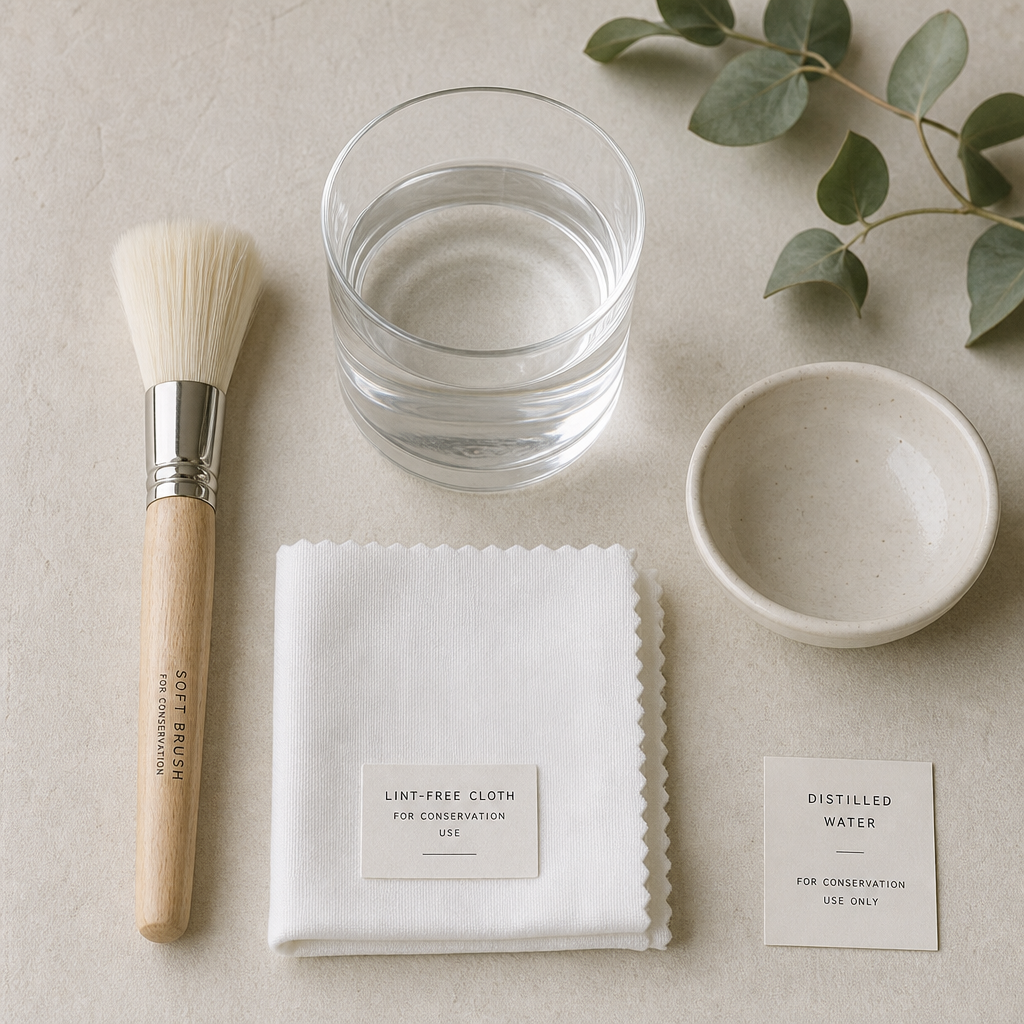
Gather these before you start: a soft natural-bristle brush (a clean, dry watercolour brush or a Japanese hake brush works well), distilled water, pH-neutral conservation soap such as Vulpex or Orvus Paste, clean cotton or lint-free cloth squares, Renaissance Wax or another microcrystalline wax, and cotton gloves. Do not use tap water, which contains chlorides and minerals that accelerate corrosion.
Step 1: Dry Dust First
Put on your cotton gloves before touching the piece. Using the dry soft-bristle brush, work gently across the entire surface to remove loose dust and debris. Pay attention to recessed areas around folds in robes, behind ears, and in the hair of Buddha figures. Dust trapped in these recesses holds moisture against the metal.
Step 2: Damp Cleaning Only If Needed
If dry dusting is insufficient, dampen a cotton cloth or cotton swab with distilled water. Work in small sections, using a light circular motion, and dry each area immediately with a second dry cloth. Do not let water sit on the surface. For grime that does not lift with plain distilled water, add a tiny amount of pH-neutral conservation soap to the water, apply, and rinse thoroughly with a cloth dampened only in distilled water.
Step 3: Dry Completely Before Waxing
Allow the piece to air dry for at least 24 hours in a dry environment before applying any wax. Even residual moisture trapped under a wax layer will promote corrosion. Do not use heat sources to speed drying as thermal shock can cause micro-cracking in some alloys.
Step 4: Apply Microcrystalline Wax
Renaissance Wax is the industry standard used by museum conservators worldwide. Apply a very thin layer using a soft cloth or a natural-bristle brush, working it into all recessed areas. Allow it to dry to a haze, then buff gently with a clean soft cloth. The result should be a subtle, even sheen, not a high gloss. Re-apply annually or when the surface starts to look dry.
Pro tip: For intricately carved pieces like a Cambodian Apsara figure or a multi-armed Durga, use a clean, soft toothbrush (dedicated solely to this purpose) to apply and buff wax in recessed areas. The bristles reach details that a cloth cannot.
Dealing with Bronze Disease
Bronze disease is a specific form of active corrosion caused by chloride contamination reacting with the copper alloy in the presence of moisture. It appears as bright, powdery, pale-green spots that are distinct from stable patina. Left untreated, it spreads and will physically destroy the surface of the sculpture over time.
In practice, bronze disease is most commonly found on pieces that have been buried at some point in their history, pieces from coastal or high-humidity storage environments, and pieces that have been handled repeatedly without gloves. It is more common in older acquired pieces than in freshly cast contemporary works.
Home Treatment for Minor Cases
For small, isolated spots of active corrosion, the standard first-line approach involves mechanically removing the loose powder with a wooden or bamboo skewer (never metal, which scratches), then treating the area with a dilute solution of sodium sesquicarbonate (approximately 5% in distilled water). This neutralises the chlorides driving the corrosion. Rinse, dry thoroughly, and monitor the area over the following weeks.
When to Call a Professional Conservator
If bronze disease covers more than a 2cm area, if it reappears after treatment, or if the sculpture has significant cultural or monetary value, stop and contact a professional conservator. The Institute of Conservation (ICON) in the UK maintains a directory of accredited conservators who specialise in metal objects. Attempting to treat extensive bronze disease without the right expertise frequently makes the problem worse.
Caring for Stone Asian Sculptures
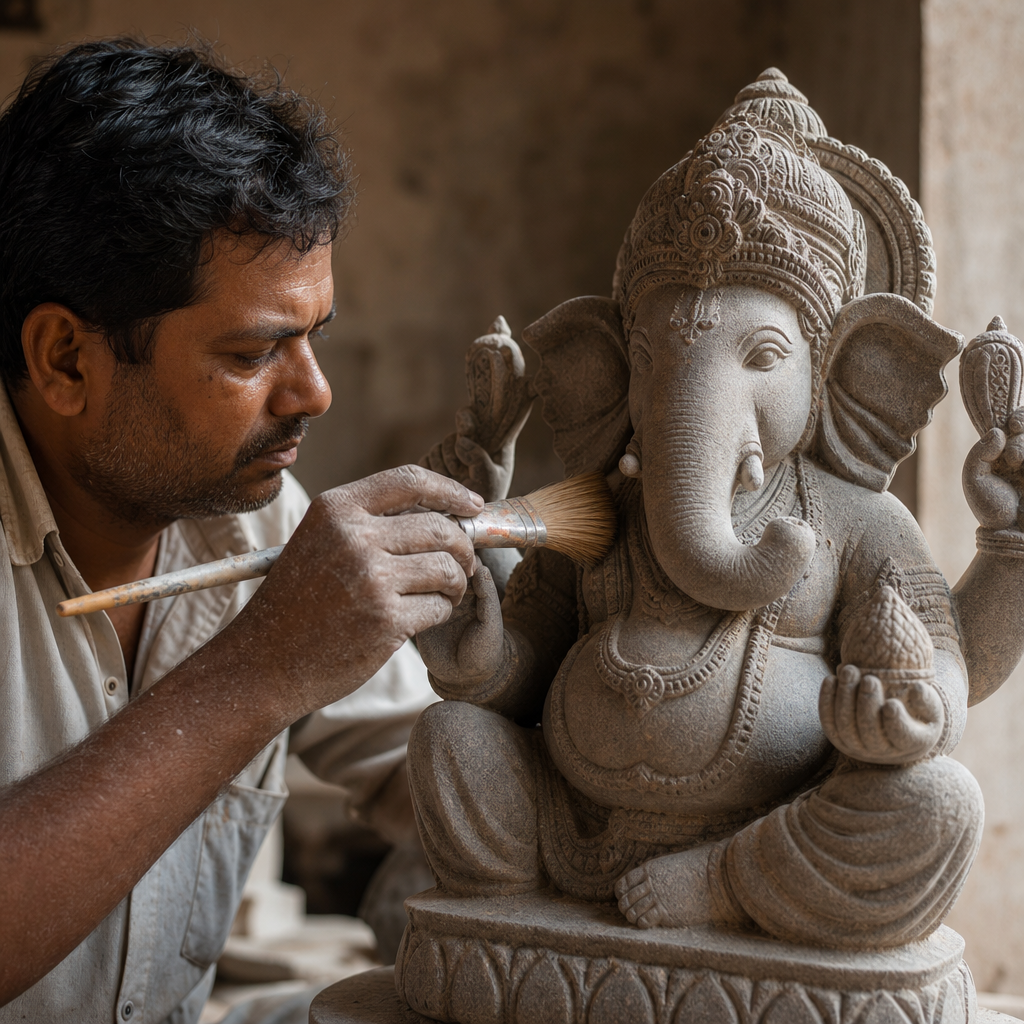
Stone sculptures from India, Cambodia, Indonesia, and other regions in the HD Asian Art collection present a different set of challenges. The primary risks are physical damage from improper handling, staining from inappropriate cleaning products, and cracking from environmental instability.
Routine Dusting for Stone
The same soft natural-bristle brush approach used for bronze works well for stone. Avoid compressed air canisters, which can force abrasive dust particles into the porous surface of sandstone or limestone under pressure and cause micro-abrasion. Dust monthly, more frequently if the piece is displayed in a high-traffic area.
Wet Cleaning Stone Safely
Only use distilled water for wet cleaning stone. Never use vinegar, lemon juice, or any acid-based household cleaner on limestone or marble, as these literally dissolve the calcium carbonate that forms the stone. For heavier soiling on granite or harder stones, a soft brush and distilled water with a pH-neutral soap is acceptable. Rinse thoroughly and dry with a lint-free cloth.
Consolidants and Sealants
Porous sandstone sculptures, particularly those from India or Cambodia, may benefit from a conservation-grade consolidant applied by a professional if the stone is friable or flaking. Avoid commercial stone sealers from hardware stores. These products are formulated for flooring and architectural stone, not for sculpture with fine carved detail, and they can trap moisture and alter the surface appearance permanently.
Comparison of Cleaning Approaches
Collectors frequently debate the right approach to cleaning, particularly when comparing home maintenance with professional conservation. The table below compares the three main approaches specifically in the context of Asian bronze and stone sculpture.
|
Approach |
Best For |
Key Risks and Limitations |
|---|---|---|
|
Routine home maintenance (dry dusting and annual waxing) |
Stable pieces in good condition with no active corrosion or staining. Suitable for all Asian bronzes and sealed stone sculptures as an ongoing practice. |
Will not address existing problems such as bronze disease, deep staining, or structural damage. Incorrect technique can still cause surface abrasion if brushes are too stiff. |
|
Targeted home treatment (damp cleaning, bronze disease spot treatment) |
Minor localised issues on pieces where professional conservation is not economically practical. Suitable for confident collectors with the correct materials. |
Risk of over-treating or spreading contamination if technique is wrong. Not appropriate for high-value antique pieces where any intervention carries risk of reducing value. |
|
Professional conservation |
All cases of significant bronze disease, friable or flaking stone, structural damage, or pieces of high antique value where preservation is the primary concern. |
Higher cost. Finding a conservator with specific experience in Asian religious sculpture requires research. The ICON register is the recommended starting point in the UK. |
Environmental, Storage, and Display Conditions
The most effective care routine in the world is undermined by poor display or storage conditions. Environmental factors drive the majority of long-term damage to both bronze and stone sculptures, and this is an area where collectors have significant control.
Humidity and Temperature
Target a relative humidity of 45 to 55 percent for a mixed collection of bronze and stone. Above 60 percent, bronze disease becomes an active risk. Below 40 percent, porous stone is vulnerable to desiccation cracking, particularly in pieces from tropical origins that have been acclimatised to high humidity over centuries. A digital hygrometer costs very little and removes all guesswork.
Temperature fluctuations are more damaging than a consistently cool or warm temperature. Avoid displaying sculptures near radiators, air conditioning vents, fireplaces, or exterior walls subject to significant temperature swings. The stone in Cambodian or Indian sculptures is particularly sensitive to thermal cycling.
Light Exposure
Direct sunlight causes differential heating across the sculpture surface, accelerating both stone fatigue and the breakdown of wax coatings on bronze. UV light also fades artificially applied patinas. Display pieces out of direct sunlight. If you use display lighting, LED sources with a low UV output are the correct choice. Avoid halogen spotlights mounted close to sculptures.
Display Surfaces and Supports
Stone sculptures should never sit directly on bare wood or metal surfaces without a buffer. Felt pads protect both the base of the sculpture and the display surface. For tall pieces, consider a conservation-grade museum gel or non-slip mat, particularly in seismically active regions. Bronze statues on metal stands should have felt or leather separating the two materials to prevent galvanic corrosion where dissimilar metals contact each other with moisture present.
Collectors who also maintain home altars with their pieces should be aware that incense smoke deposits acidic residues on bronze surfaces over time. If you burn incense near your Buddhist or Hindu sculptures, increase the frequency of dry dusting and annual waxing, and consider positioning the pieces slightly outside the direct smoke path when possible.
Frequently Asked Questions
Can I use olive oil or baby oil to shine my bronze Buddha statue?
No. Oils of any kind should not be applied to bronze sculpture. They attract dust, go rancid over time, and create a sticky residue that is very difficult to remove without damaging the patina. The correct product for bronze surface protection is microcrystalline wax such as Renaissance Wax. It protects without these drawbacks and is the standard choice in museum conservation.
My stone sculpture has a white powdery deposit on the surface. What is it?
This is almost certainly efflorescence, which is soluble salts migrating to the surface as moisture evaporates from the stone. It is very common on sandstone and limestone pieces. Brush off the powder gently with a dry soft brush. Do not wet it, as this pushes the salts back into the stone. If the deposits reappear repeatedly, you need to address the humidity conditions in your display environment and consider consulting a conservator.
How often should I clean my Asian bronze or stone sculpture?
Dry dusting should be done monthly. A thorough inspection for any signs of active corrosion or staining should happen every six months. Waxing for bronze pieces is needed annually under normal conditions, or every six months if the piece is displayed in a higher-humidity environment. Stone pieces generally need no wax treatment unless they are particularly porous and a conservator has recommended a specific consolidant.
Is the green colour on my bronze statue harmful or should I remove it?
It depends entirely on the type of green. A smooth, even, muted green layer that adheres firmly to the surface is stable patina and should be left completely alone. It is protective. A bright, powdery, pale green deposit that looks almost turquoise and appears in isolated spots or along cracks is bronze disease, which is active corrosion. Bronze disease must be addressed. If you are unsure which you are looking at, photograph the area in close-up and consult a conservator before doing anything.
Can I clean a Buddha statue that is used on an active altar with incense and offerings?
Yes, but you need to clean more frequently. Incense smoke deposits carbon and acids on the surface. Flower offerings and water in offering bowls increase localised humidity. Inspect the base and lower portions of the sculpture monthly for signs of moisture damage or corrosion. Dry dust after every incense session if possible. Annual waxing is essential for bronze altar pieces, and you should consider a protective barrier between stone pieces and any liquid offerings.
What is the safest way to clean a Burmese lacquerware piece from my collection?
Burmese lacquerware requires a completely different approach from bronze or stone. Use only a barely damp soft cloth with plain distilled water. Never submerge lacquerware in water or use any cleaning product. Keep it away from direct sunlight and dry heat sources, which cause the lacquer to crack and peel. Do not apply any wax or oil. If the lacquer is already flaking or lifting, this requires professional conservation immediately, as any further intervention risks detaching the decorative layer entirely.
We would love to hear from other collectors. Have you encountered a particularly challenging cleaning situation with an Asian bronze or stone sculpture, and what approach worked for you?
References
-
Smithsonian Institution resources on conservation science and museum object care practices
-
Metropolitan Museum of Art conservation department publications on Asian art materials and care
