



Buying Asian Art Online: 7 Questions to Ask First
Buying Asian Art Online: 7 Questions to Ask First
Most people who regret buying Asian religious art online made the same mistake: they asked the wrong questions, or none at all. The market for Buddhist and Hindu sculptures has grown significantly in the past decade, and with that growth has come a parallel rise in reproductions passed off as authentic, vague provenance claims, and retailers who know less about the pieces they sell than the buyers who purchase them.
If you are serious about buying Asian art online, whether you are a collector, a spiritual practitioner setting up a home altar, or someone furnishing a space with meaningful cultural objects, these seven questions will protect your investment and sharpen your eye.
Table of Contents
Quick Takeaways
|
Key Insight |
Explanation |
|---|---|
|
Origin matters more than aesthetics |
A Burmese alabaster Buddha and a Thai gilded bronze Buddha carry entirely different cultural, spiritual, and market values. Always confirm the country of origin before anything else. |
|
Iconographic accuracy signals quality |
Authentic Hindu and Buddhist sculptures follow strict iconographic rules. Errors in mudras, attributes, or proportions indicate a low-quality reproduction, not an artistic interpretation. |
|
Provenance protects your purchase |
Documented sourcing protects you legally under international cultural property law and significantly raises resale value for serious collectors. |
|
Material and casting method affect longevity |
Lost-wax bronze casting produces a fundamentally different result than sand casting or resin moulding. Knowing the method tells you about both craftsmanship and durability. |
|
Shipping method reveals retailer professionalism |
Heavy stone or bronze pieces require specialist crating. A retailer who ships a 20kg Ganesh statue in standard bubble wrap is not a specialist retailer. |
|
Return policies are a trust signal |
Retailers confident in their inventory offer clear return windows. Vague or no-return policies on high-value religious art are a red flag, not standard practice. |
|
Free shipping thresholds indicate pricing transparency |
A retailer offering free shipping on orders over a clearly stated amount (such as £35) is signalling transparent pricing, which correlates with broader business integrity. |
Where Was This Piece Made and by Whom?
This is the foundational question, and most buyers skip it. The geographic origin of a Buddhist or Hindu sculpture is not a minor detail. It determines the artistic tradition, the iconographic conventions used, the materials available to the artisan, and the cultural weight the object carries. A Cambodian sandstone Vishnu follows Khmer compositional rules that differ sharply from a South Indian Chola-style Vishnu cast in Panchaloha bronze.
Serious retailers who specialise in Asian religious art, such as HD Asian Art, source sculptures from specific countries including Burma, Cambodia, China, India, Indonesia, Japan, Laos, Sri Lanka, and Thailand, and they document that origin clearly. When a product listing says only "Asian Buddha statue" with no country identified, that vagueness is itself informative.
What to look for in a product description
A trustworthy listing will name the country of origin, the specific artistic tradition or period style (such as Sukhothai period, Qing dynasty, or Pagan era Burmese), and ideally the workshop or region within that country. If the artisan or workshop is named, that is a positive sign of supply chain transparency.
Pro tip: Cross-reference the country of origin stated in the listing against the visual style of the piece. A statue described as Tibetan Buddhist but showing Thai iconographic conventions is a mismatch worth querying directly with the seller before purchasing.
What Materials and Casting Methods Were Used?
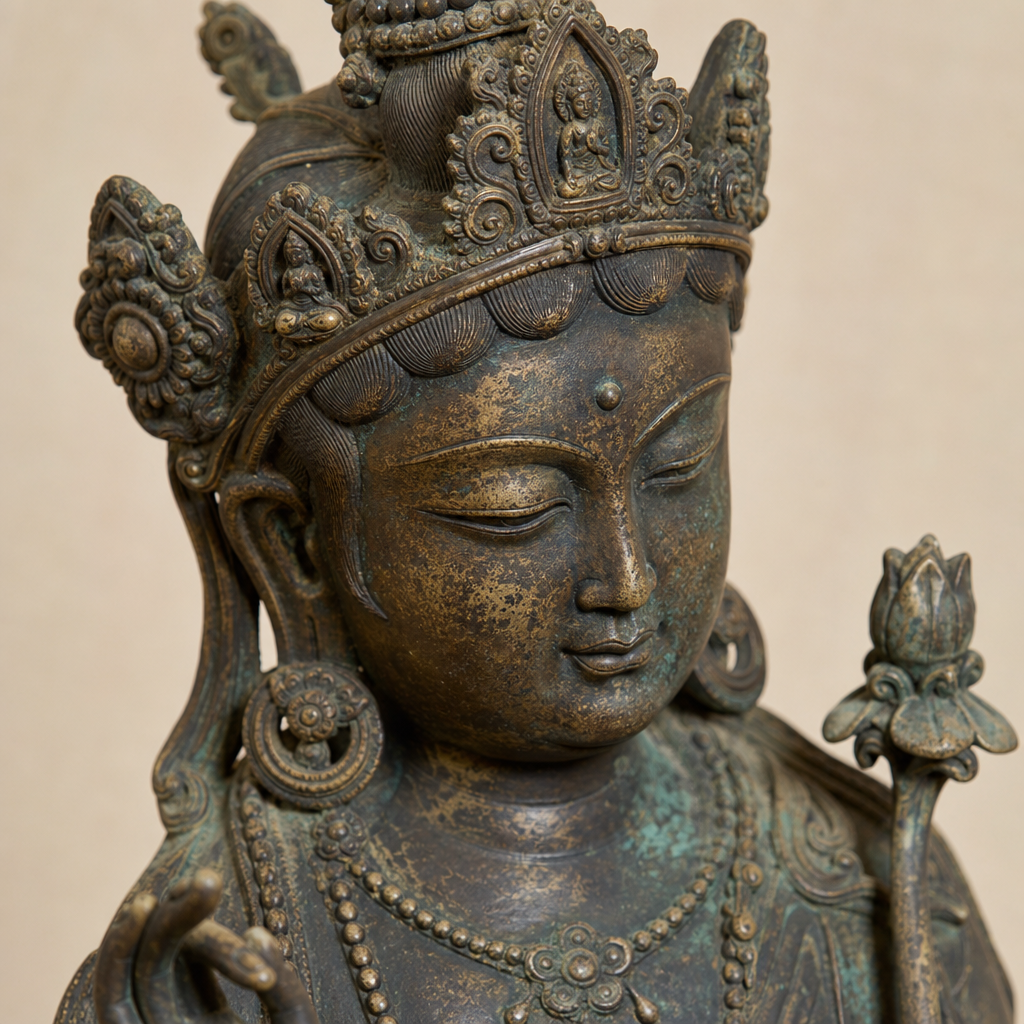
Material authenticity is one of the clearest quality indicators available to an online buyer. Authentic Asian religious sculptures are made from materials including bronze (cast by lost-wax or sand-cast methods), alabaster, sandstone, marble, teak, gilded wood, and lacquered composites. Resin reproductions exist at every price point, and some are sold without disclosure.
The lost-wax casting method (cire perdue) produces bronze work with fine surface detail, subtle variation in patina, and visible tool-finishing marks. Sand casting produces coarser grain and more uniform surfaces. Both are legitimate traditional methods, but they produce very different results and carry different market values. A retailer who cannot or will not specify which method was used is either uninformed or evasive.
Traditional lacquerware as a separate category
Burmese lacquerware is a specialist category that deserves its own scrutiny. Genuine traditional Burmese lacquerware is made from bamboo or wood coated with thitsi lacquer, built up in multiple layers and hand-decorated. The production is extremely labour-intensive. If a lacquerware piece is priced far below what that labour cost would justify, the material is almost certainly not authentic thitsi lacquer. Retailers like HD Asian Art's Burmese lacquerware collection provide detail on construction that separates genuine pieces from decorative imports.
A common mistake is equating weight with quality. While dense bronze and stone pieces are often heavier, some resin composites are manufactured to feel heavy deliberately. Weight alone is not a reliable authenticator without corroborating information about materials.
Can the Seller Provide Provenance or Documented Sourcing?
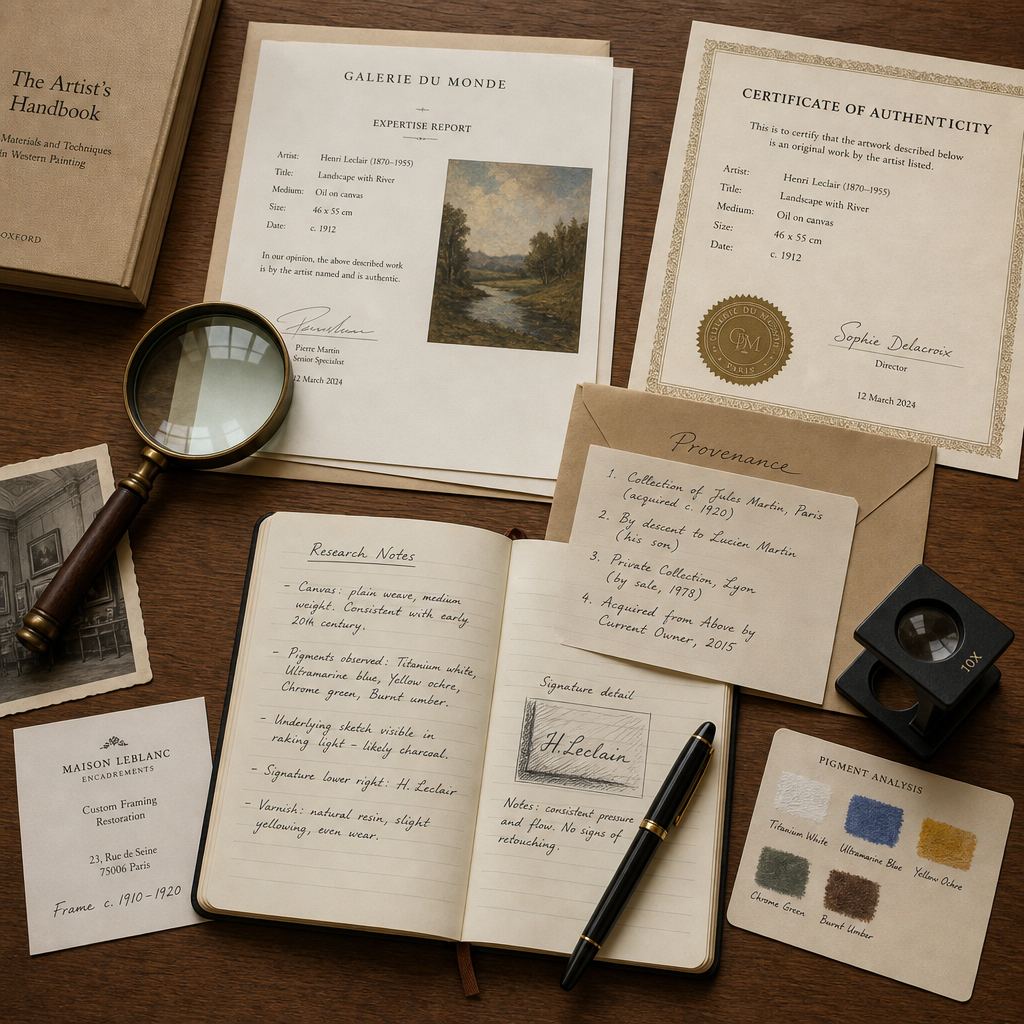
Provenance is the documented history of an object: where it was made, who owned it, how it was acquired, and how it arrived with the current seller. For contemporary artisan-made sculptures, provenance means supply chain transparency. For antique or vintage pieces, it means documented ownership history and ideally export compliance records.
This question matters legally as well as ethically. The 1970 UNESCO Convention on the Means of Prohibiting and Preventing the Illicit Import, Export and Transfer of Ownership of Cultural Property is the international benchmark for cultural property trade. Responsible retailers comply with its principles, meaning they do not trade in objects removed from archaeological sites or countries of origin without proper documentation.
"The illicit trade in cultural property is one of the most lucrative criminal enterprises in the world, estimated by some sources to be worth several billion dollars annually." UNESCO, Culture Sector
For buyers who want to buy Buddhist statue online with confidence, asking for documented sourcing is not an act of distrust toward the retailer. It is standard due diligence. A specialist retailer will have this information ready. A general marketplace seller may not.
Pro tip: For any piece described as antique or vintage (typically over 100 years old), ask explicitly whether the seller holds export documentation from the country of origin. If the answer is unclear, treat the piece as legally ambiguous regardless of how attractive it is aesthetically.
Is This Piece Iconographically Accurate?
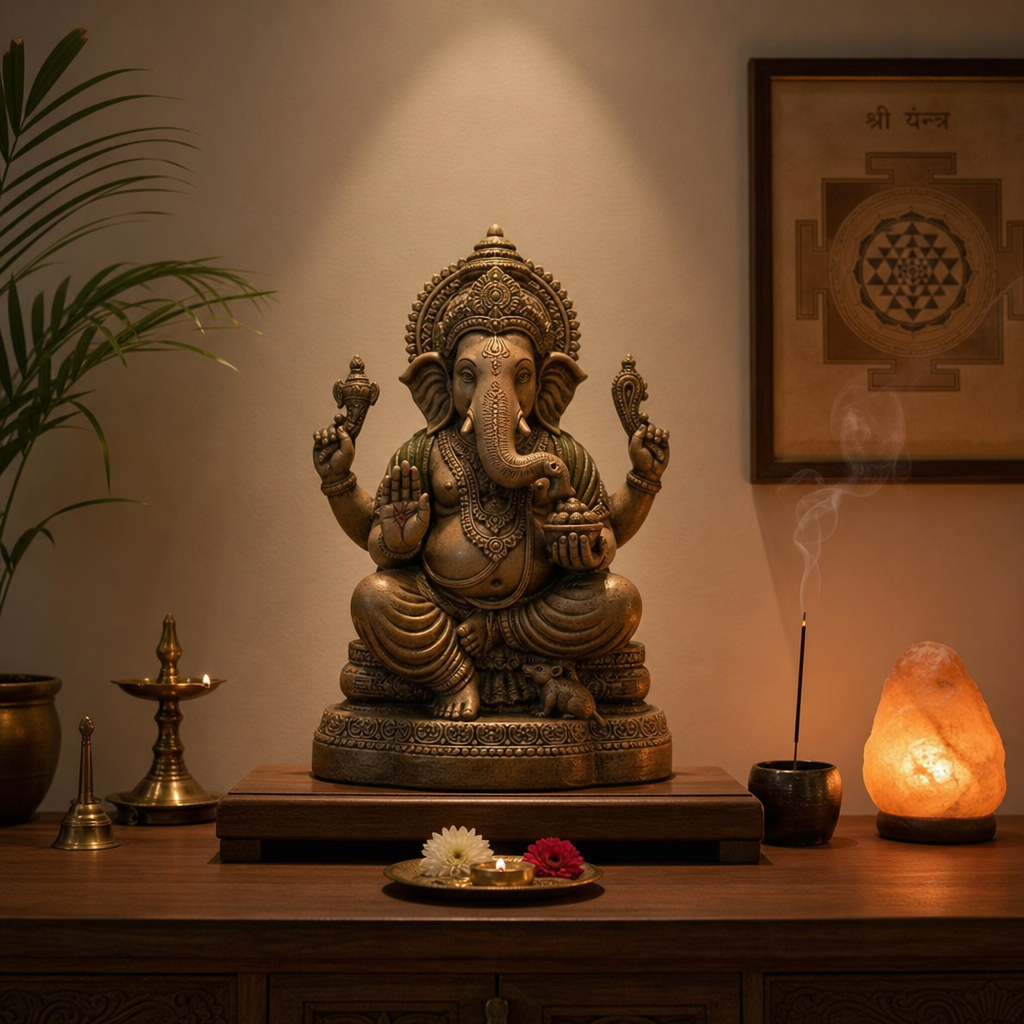
Buddhist and Hindu iconography is a precise visual language. Each deity, each mudra (hand gesture), each attribute (the objects held, the vehicle ridden, the crown worn) carries specific meaning codified over centuries. For spiritual practitioners setting up a home altar, iconographic accuracy is not pedantry. It determines whether the object functions as intended within a devotional context.
For collectors, iconographic accuracy also speaks directly to quality. Mass-produced pieces frequently show errors: a Ganesha with the wrong tusk broken, a Tara with incorrect hand positions, a Shakyamuni Buddha in a mudra that belongs to Amitabha. These are not artistic liberties. They are production shortcuts that indicate the manufacturer lacked the specialist knowledge to execute the form correctly.
Key iconographic markers to check before you buy
For Buddha statues, check the ushnisha (the cranial protrusion), the elongated earlobes, the specific mudra, and the position of the robes. For Hindu deities, verify the number of arms, the attributes held in each hand, the vehicle (vahana) if present, and the crown style. Resources such as university art history departments and museum collections online provide reliable iconographic reference points. The British Museum's online collection is freely searchable and includes detailed catalogue entries for South and Southeast Asian religious sculpture.
What Does Museum-Quality Actually Mean for This Seller?
"Museum-quality" is the most overused phrase in the online art and sculpture market. It appears in listings ranging from genuine masterwork bronzes to painted resin ornaments. Before accepting this description at face value, ask the seller to define it in specific, verifiable terms.
For a serious Asian religious art specialist, museum-quality typically means: materials and methods consistent with traditional craft standards, iconographic accuracy verified against authoritative sources, finish quality that would meet the display criteria of a major institution, and sourcing that could withstand institutional scrutiny. That is a high bar, and retailers who meet it can usually explain exactly how a given piece meets it.
The distinction matters particularly for Asian religious art collector purchases where resale or insurance valuation is a future consideration. Insurance underwriters and auction houses apply their own definitions of quality, and "museum-quality" as a marketing claim carries no weight in those contexts without supporting documentation.
How specialist retailers differ from general marketplaces
A retailer like HD Asian Art, which focuses exclusively on Buddhist and Hindu sculptures sourced from specific Asian countries, is positioned differently from a general home decor marketplace or a large multi-category art reseller. Specialisation creates accountability. When a business's entire reputation rests on the quality and authenticity of a single category, the incentive to maintain standards is structural, not incidental. Compare this to a large platform selling thousands of product categories, where individual listing accuracy is rarely verified at the category-expert level.
How Is the Piece Shipped and Insured?
Shipping logistics for religious sculptures are not trivial. A Burmese alabaster Buddha can weigh between 5kg and 50kg depending on size. A bronze Nataraja with extended limbs is extremely vulnerable to transit damage if packed without custom crating. The way a retailer handles shipping reveals a great deal about their operational professionalism.
Ask specifically whether large or fragile pieces are custom-crated, whether transit insurance is included in the purchase price or available as an add-on, and what the claims process looks like if a piece arrives damaged. A retailer offering free shipping on orders over £35 is absorbing a real cost, which means they have built that cost into their pricing structure, suggesting a sustainable, professionally run operation rather than a hobbyist seller.
In practice, the highest-risk transit scenario for religious art is the combination of fragile material (alabaster, terracotta, thin bronze work) with long international shipping routes and multiple handling transfers. Ask whether the retailer uses specialist art freight for high-value pieces, or standard courier services, and whether tracking is provided end-to-end.
What Is the Return and Authenticity Guarantee Policy?
A clear, written return policy is a basic consumer protection, but in the context of buying Asian religious art online it functions as something more: a signal of the retailer's confidence in their own inventory. Retailers who are uncertain about authenticity or condition tend to write restrictive return policies that protect them rather than the buyer.
Look for a return window of at least 14 days (the minimum required under UK Consumer Contracts Regulations for distance selling), a clear process for reporting damage or discrepancies, and an explicit statement about what happens if a piece is found to be materially different from its description. Some specialist retailers go further, offering authenticity guarantees that allow returns if an independent expert disputes the piece's description.
Under the UK Consumer Contracts Regulations 2013, buyers purchasing online have the right to cancel within 14 days of receiving goods and return them for a full refund in most circumstances. This is a legal floor, not a ceiling. A specialist retailer with confidence in their pieces will often exceed it.
Comparison of Buying Approaches
Not all approaches to buying Asian religious art online carry the same risk or reward profile. The table below compares three distinct purchasing routes against the criteria most relevant to collectors and spiritual practitioners.
|
Buying Approach |
Strengths |
Weaknesses |
|---|---|---|
|
Specialist retailer (e.g., HD Asian Art) |
Deep category expertise, documented sourcing, iconographic accuracy, clear return policies, free shipping thresholds, curated selection from specific Asian countries |
Smaller inventory breadth compared to large marketplaces; pieces may sell out without restocking |
|
Large general art marketplace (e.g., multi-category platforms) |
Wide selection, competitive pricing due to volume, buyer protection schemes through the platform |
Listing accuracy varies widely, seller expertise unverified, provenance documentation inconsistent, iconographic errors common in lower tiers |
|
Auction house (live or online) |
Strongest provenance documentation for antique pieces, expert catalogue notes, competitive price discovery, legal compliance generally rigorous |
Buyer's premiums add 20-25% to hammer price, availability of specific pieces unpredictable, not suitable for regular altar or decorative purchases |
The right approach depends on your primary purpose. For a spiritual practitioner seeking a specific form of Tara or Ganesha for a home altar, a specialist retailer offers the best combination of iconographic reliability and purchase confidence.
For a collector seeking a documented antique piece, an auction house with rigorous catalogue standards is worth the premium cost. General marketplaces suit buyers with low specificity of need and tolerance for variable quality.
Frequently Asked Questions
How do I verify that a Buddhist statue is made from genuine bronze rather than resin?
The most reliable at-home test is temperature: genuine bronze feels noticeably cold to the touch and takes longer to warm in your hand than resin, which warms quickly. Resin also tends to show uniform colour throughout any chips or edge damage, while bronze shows metal grain. Ask the retailer directly for material certification, and for higher-value pieces, an independent material assessment from a conservator is a legitimate request.
Is it disrespectful to buy Buddhist or Hindu statues for home decoration rather than religious use?
This question comes up frequently, and the honest answer is that context and care matter more than stated intention. Treating a sculpture with respect, displaying it appropriately (not on the floor, not in a bathroom), and understanding its iconographic meaning before purchase demonstrates a level of cultural awareness that offsets concerns about decorative use. Many specialist retailers actively serve both spiritual practitioners and home decorators without distinction, provided the buyer approaches the object with knowledge and care.
What countries of origin produce the highest-quality contemporary Buddhist sculptures?
Burma (Myanmar) has a particularly strong tradition of alabaster and lacquered Buddha statues, and Burmese artisans remain among the most skilled living practitioners of traditional Buddhist sculpture techniques. Thailand produces excellent gilded bronze work in the Sukhothai and Ayutthaya styles. India continues to produce exceptional bronze work from Tamil Nadu workshops following Chola-period traditions. The quality ceiling in all these countries is extremely high when you are buying from a retailer who sources directly from skilled workshops rather than mass-production factories.
What is the significance of the different hand gestures (mudras) on Buddha statues?
Mudras are precise symbolic gestures, each with a specific meaning in Buddhist iconography. The Bhumisparsha mudra (earth-touching gesture, right hand pointing downward) represents the moment of the Buddha's enlightenment. The Dhyana mudra (both hands resting in the lap) represents meditation. The Abhaya mudra (right hand raised, palm outward) represents protection and fearlessness. The Varada mudra (open hand facing downward) represents generosity. Choosing a mudra that aligns with your purpose for the statue is meaningful both spiritually and iconographically.
Are there legal restrictions on importing Asian religious sculptures into the UK?
The UK's cultural property legislation, including the Cultural Property (Armed Conflicts) Act 2017 and the Dealing in Cultural Objects (Offences) Act 2003, prohibits trading in cultural property that has been illegally excavated or exported from its country of origin. For contemporary artisan-made pieces purchased from legitimate specialist retailers, these restrictions do not apply. For antique pieces, particularly those predating 1970 (the UNESCO Convention benchmark year), buyers should request documentation confirming legal export from the country of origin. Reputable specialist retailers have this documentation available for relevant pieces.
How should I care for a bronze or stone religious sculpture after purchase?
Bronze sculptures should be dusted with a soft, dry cloth and kept away from high humidity, which accelerates patination in ways that may not be desirable. Applying a thin coat of Renaissance Wax (a microcrystalline wax used by museum conservators) annually protects the surface without altering appearance. Stone sculptures, including alabaster and sandstone, should never be cleaned with water-based products; dry dusting is safest. Lacquerware should be kept out of direct sunlight, which degrades the lacquer over time, and away from extreme temperature changes that can cause cracking.
If you have purchased or are considering purchasing Asian religious art online, share what questions or challenges you encountered in the process. Your experience helps other collectors and practitioners make better-informed decisions.
We would love your feedback and any insights you would share with others. What perspective would you add?
References
