


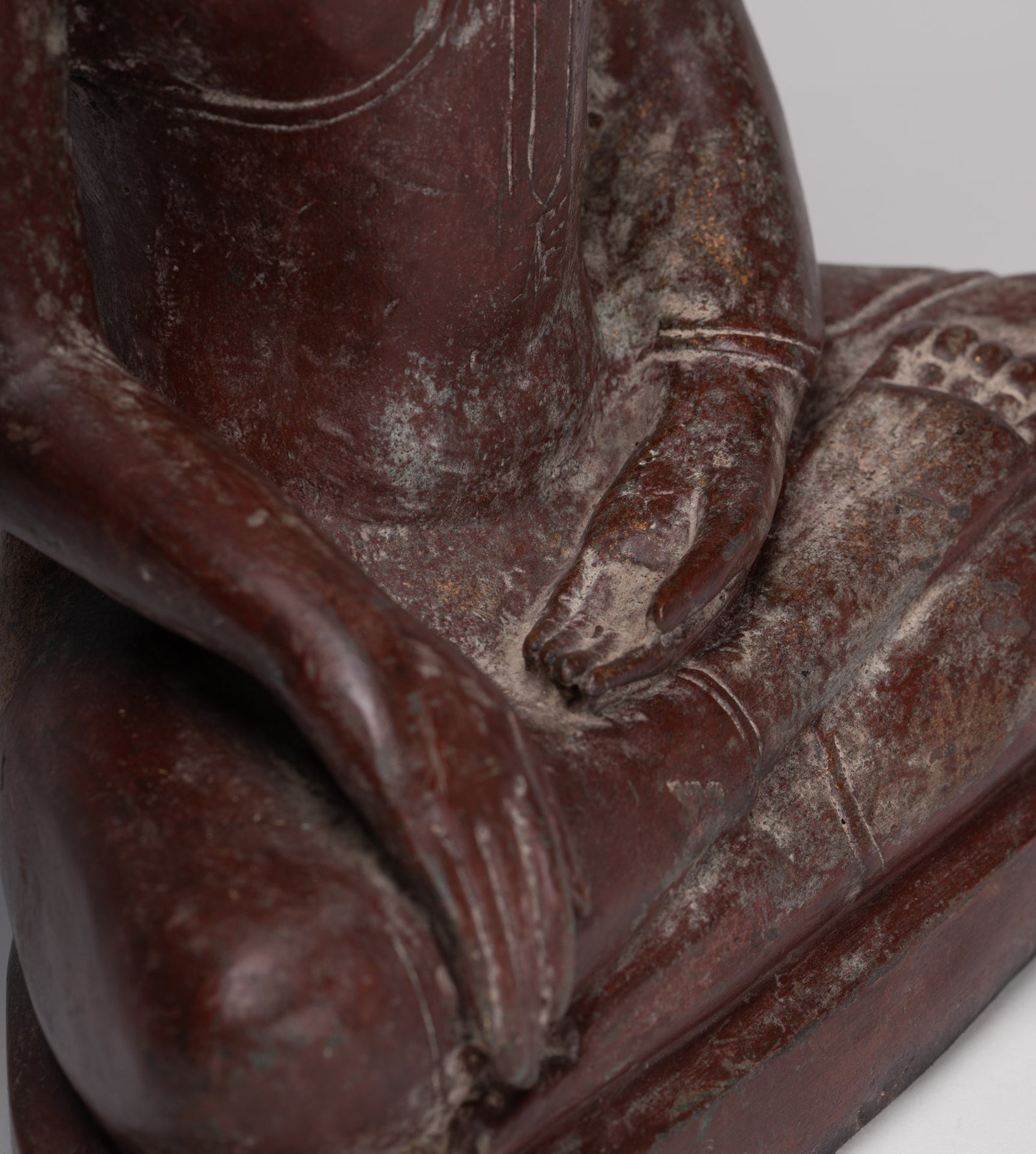
The Bhumisparsha Mudra: Touching the Earth in Witness
The Bhumisparsha Mudra: Touching the Earth in Witness
The Enlightenment Buddha is depicted in the moment of his great awakening under the Bodhi tree in Bodh Gaya, India. In this pivotal scene, Siddhartha Gautama—having renounced royal life and endured years of extreme asceticism—enters deep meditation. As he sits immovable, the demon Mara tries to distract him with fear, desire, and doubt.
In response, the Buddha touches the earth with his right hand, calling the Earth Goddess (Phra Mae Thorani in Thai) to bear witness to his countless past virtues. The earth shakes, Mara is defeated, and the Buddha attains enlightenment (bodhi)—freedom from suffering and the cycle of rebirth.
This gesture is known as the Bhumisparsha Mudra, or "earth-touching gesture," and it marks the very moment when Siddhartha becomes the Buddha.
Why This Image Is So Important in Thailand
1. Theravāda Tradition Emphasis on the Historical Buddha
Thailand is predominantly a Theravāda Buddhist country, a school that places strong emphasis on the life and teachings of the historical Buddha. The moment of his enlightenment—his complete awakening to the Four Noble Truths and the cessation of suffering—is seen as the defining spiritual achievement.
While Mahāyāna Buddhism (practiced in places like China and Japan) often features celestial or esoteric Buddhas, Thai Buddhism focuses on Gautama Buddha’s earthly life, especially his victory over Mara and the attainment of Nirvana. The Enlightenment posture represents this most revered moment.
2. A Symbol of Inner Triumph and Moral Purity
The Enlightenment Buddha embodies the values most cherished in Thai culture:
-
Perseverance in the face of adversity
-
Moral discipline and meditation
-
Victory of wisdom over ignorance
For Thai Buddhists, this image is not just a reminder of the Buddha’s story—it is a model of spiritual courage and ethical purity that devotees are encouraged to emulate in their own lives.
3. Phra Mae Thorani and Thai Folklore
In Thai artistic and spiritual imagination, the earth-touching scene is often accompanied by a uniquely Thai element—Phra Mae Thorani, the Earth Goddess. She is shown wringing water from her hair, washing away Mara’s army.
This detail reflects how Thai Buddhism integrates local mythology and folklore, making the image more resonant for Thai devotees. The Enlightenment Buddha is not just a religious figure but part of a cultural tapestry that combines Buddhist doctrine with ancient Thai beliefs.
4. National Symbol and Cultural Identity
In Thailand, the Enlightenment Buddha is more than a religious icon—it has become a national symbol of Thai Buddhism and identity. It represents:
-
Thailand’s moral and spiritual heritage
-
The central role of Buddhism in Thai society
-
The ideal of righteous leadership, especially as embodied by past monarchs who were viewed as dhammarajas (righteous kings)
It is common to see this Buddha image in homes, temples, offices, and even public institutions. It is a visual representation of Thailand’s deep-rooted commitment to the path of Dharma.
5. An Anchor for Meditation and Devotion
The Enlightenment Buddha also serves a practical role for Thai Buddhists. It is a focal point for:
-
Vipassanā meditation (insight meditation)
-
Daily chanting and devotion
-
Merit-making ceremonies
By contemplating the Enlightenment Buddha, devotees remind themselves of the goal of awakening, and the discipline required to overcome the "Maras" of modern life—distractions, greed, anger, and delusion.
Variations in Artistic Style: Thai Interpretations
Thai Enlightenment Buddhas are often crafted with distinctive features that reflect regional aesthetics:
-
Graceful, elongated limbs and a peaceful smile
-
The usnisha (cranial bump) symbolizing higher wisdom
-
A flame-like halo rising from the head (especially in Sukhothai-era statues)
-
Exquisite robes draped in flowing lines of carved or gilded fabric
Each image is not only a religious artifact but also a masterpiece of Thai craftsmanship and spiritual expression.
🕉️ From Our Collection: Enlightenment Buddha Statues
At HDAsianArt.com, we are honored to share a variety of authentic Enlightenment Buddha statues, each embodying this sacred moment of victory over illusion and the dawn of perfect clarity.
✨ Featured Pieces:
-
Thai Bronze Enlightenment Buddha
→ Cast using traditional lost-wax techniques, with delicate detail and serene presence. -
Sukhothai-Style Enlightenment Buddha
→ Known for elegant posture and the signature flame finial, reflecting grace and spiritual power. -
Stone Buddha in Bhumisparsha Mudra
→ Ideal for gardens or meditation spaces, grounding the spiritual energy of awakening.
These statues are more than decorations—they are windows into a timeless moment, offering spiritual focus and cultural connection.
Conclusion: A Gesture of Awakening, A Legacy of Light
The Enlightenment Buddha is so prevalent in Thailand because it speaks directly to the heart of the Thai Buddhist path—the triumph of mindfulness, compassion, and wisdom over illusion and suffering. It represents not only the Buddha's moment of awakening, but also the ever-present possibility of awakening within each of us.
Whether you see this image in a bustling Bangkok temple or in the quiet corner of a meditation room, it invites you to pause, breathe, and remember:
"As the Buddha touched the earth, he touched the truth. May we, too, awaken to what is real."
