



Best Hindu Statues for Home Altar: A Buyer's Guide
Best Hindu Statues for Home Altar: A Buyer's Guide
Best Hindu Statues for Home Altar: What to Know Before Buying
Selecting the best Hindu statues for your home altar requires understanding material quality, deity significance, and placement principles that honor spiritual traditions. This guide covers everything from choosing the right material to understanding Vastu Shastra principles, ensuring your home mandir becomes a genuine center for devotion.
Table of Contents
Why Material and Placement Matter
The physical substance of your deity statues influences how they weather daily puja rituals, seasonal humidity changes, and the passage of years. Material choice determines whether your statues become cherished heirlooms or require replacement within a few years.
Placement within your home carries equal importance. Vastu Shastra, the ancient Hindu architectural science, provides specific directional guidelines that many practitioners believe amplify spiritual benefits. Proper positioning affects how light interacts with your statues and how naturally your family gravitates toward the altar for daily devotion.
Best Material for God Idols at Home: Brass, Marble, and Wood Compared
Brass: Durability and Traditional Aesthetics
Brass has served Hindu households for centuries. This copper-tin alloy develops a natural patina over time, deepening in color with each year of use. Brass statues withstand daily handling, incense smoke, and ritual offerings without cracking or deteriorating. Hand-carved brass murtis display intricate detailing, the delicate curves of Krishna's flute, the multiple arms of Durga, the serene expression of Lakshmi. When properly maintained, brass develops a warm, honeyed patina that many devotees find spiritually resonant. High-quality brass idols with antique finishes are available at approximately ₹730 and upward, making them accessible for most households.
The primary consideration with brass is maintenance. Regular cleaning prevents tarnishing, though some practitioners appreciate the darkened patina as a sign of spiritual use.
Marble: Premium Elegance and Longevity
Marble statues represent the premium tier of home altar murtis. Natural marble creates a sense of permanence and refinement that appeals to those seeking heirloom-quality pieces. The longevity of marble is exceptional, unlike wood, it doesn't warp or crack, and unlike brass, it requires minimal maintenance beyond occasional gentle cleaning.
A marble murti purchased today will likely remain intact for your grandchildren's use. This durability justifies the higher investment, particularly for devotees who view their altar as a multi-generational spiritual inheritance. The trade-off with marble is weight and cost, requiring stable shelving and a substantially higher initial investment than brass alternatives.
Kadam Wood and Other Traditional Options
Kadam wood, also called Burflower-tree wood, holds special significance in Hindu tradition. Krishna is said to have played beneath kadam trees, making wooden statues carved from this material particularly meaningful for Krishna devotees. Wood offers warmth that neither brass nor marble provides, a tactile, organic quality that some find more personally connective.
Wooden statues require more careful maintenance than brass or marble. They're susceptible to moisture, insects, and warping in humid climates. Regular oiling preserves the wood and prevents cracking. For households in dry climates or with controlled indoor humidity, wooden murtis thrive.
Which Deities to Keep in Your Home Altar
Lord Ganesha: The Essential First Deity
Ganesha holds a unique place in Hindu practice, every puja begins with invoking Ganesha, the remover of obstacles. For home altars, a Ganesha murti should be your first purchase, positioned where it greets you as you approach the altar. The large ears represent receptivity to wisdom, the trunk symbolizes the sacred OM sound, and the rotund belly represents the cosmos and completeness.
Many households use a 6-8 inch brass Ganesha as their primary piece, with smaller additional murtis of other deities arranged around it. This creates visual hierarchy while honoring Ganesha's primary role in your spiritual practice.
Krishna, Shiva Lingam, Lakshmi, and Durga
After Ganesha, the choice of additional deities depends entirely on your personal spiritual inclinations and family traditions. Krishna attracts devotees drawn to bhakti, devotional love and surrender. A Krishna murti, whether depicting him as a playful child or a divine lover, brings joy and sweetness to your altar.
Shiva Lingam represents the formless divine in its most abstract form. The elegant oval or cylindrical stone serves as a meditation focus for those seeking connection to Shiva's transcendent nature. Unlike anthropomorphic murtis, a lingam requires minimal space and works beautifully on modest altars.
Lakshmi, the goddess of prosperity and abundance, resonates with households seeking blessings for financial wellbeing and flourishing. A seated Lakshmi murti, often depicted with lotus flowers and coins, brings warmth and nurturing energy to your altar space.
Durga, the fierce mother goddess, appeals to devotees seeking strength, protection, and courage. Her multi-armed form represents the triumph of good over evil, ideal for altars with sufficient space to honor her power.
How to Set Up a Hindu Home Altar: Placement and Vastu Shastra
Direction and Positioning Guidelines
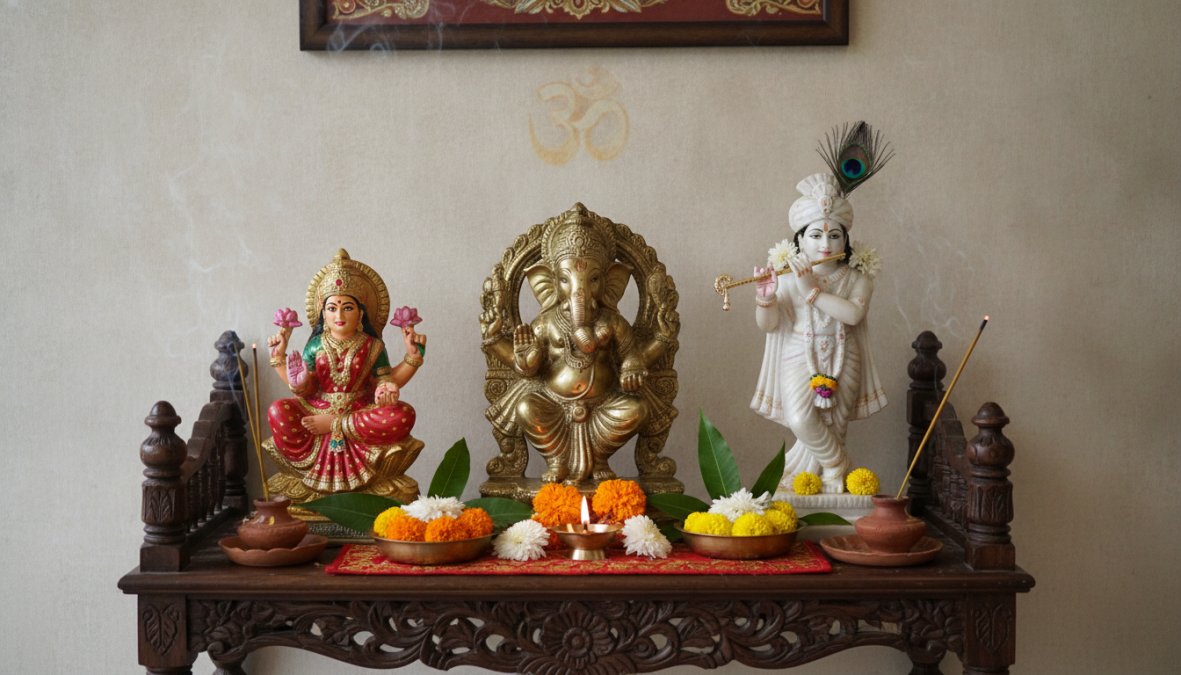
Vastu Shastra provides specific directional recommendations for altar placement. The northeast corner of your home is traditionally considered the most auspicious location for a mandir, as this direction is associated with purity, spirituality, and divine connection. If your home layout doesn't permit a northeast placement, the north or east walls serve as acceptable alternatives.
Avoid placing your altar in the southwest corner, which Vastu associates with heaviness and stagnation. Similarly, bathrooms, bedrooms, and kitchens are considered inappropriate locations.
Height matters significantly. Your altar should position deity statues at or slightly above eye level when you're seated for meditation or prayer. Most home altars work best on shelves or tables standing 30-42 inches from the ground. Soft, warm-toned lighting enhances the murtis' appearance and creates an inviting atmosphere.
Creating a Sacred Space for Ritual and Puja
Begin by clearing the altar area completely. Remove dust, old flowers, or any items unrelated to worship. Arrange your murtis thoughtfully, placing Ganesha in the center or slightly forward. Add natural elements: fresh flowers, tulsi plant if space permits, or simple green leaves. Include ritual essentials within arm's reach: a small bell, incense holder, oil lamp or candles, a water vessel for offerings, and a cloth for wiping murtis.
Rules for Hindu Idols at Home: Care, Consecration, and Maintenance
Cleaning and Ritual Care for Deity Statues
Your murtis deserve regular, respectful care that acknowledges their sacred status. For brass statues, gentle cleaning with a soft cloth removes dust and incense residue. Marble and stone murtis require even gentler handling, a soft, slightly damp cloth removes dust; avoid soaking or submerging marble pieces. Wooden statues benefit from occasional oiling with coconut oil or sesame oil, applied sparingly with a soft cloth.
The ritual of cleaning itself becomes a form of worship. Many devotees approach murti care as a meditation, moving slowly and treating each statue with reverence.
Consecration and Spiritual Activation
A newly acquired murti traditionally undergoes consecration, a ritual that awakens its spiritual presence. While consecration practices vary across regions and traditions, the underlying principle remains consistent: the murti transitions from an object of stone, brass, or wood into a vessel for divine energy.
Many households perform a simple home consecration using mantras, water, flowers, and incense. Some devotees prefer professional consecration at a temple, where priests with formal training conduct elaborate pujas. Even without formal consecration, regular worship activates a murti's spiritual significance through your consistent engagement with it.
Ethical Sourcing and Authentic Hand-Carved Statues
Supporting Artisan Communities and Fair Trade
The global market for Hindu statues includes both ethically produced pieces and those made under exploitative conditions. Choosing ethically sourced murtis supports artisan communities, preserves traditional carving techniques, and ensures fair compensation for skilled craftspeople. Look for retailers who openly discuss their artisan relationships and demonstrate genuine investment in craftspeople's wellbeing.
Budget-Friendly vs. Heirloom Quality Options
Not every household can afford premium marble or hand-carved pieces, and this reality shouldn't prevent anyone from establishing a meaningful home altar. A simple brass Ganesha from a reliable retailer, costing under $50, serves your spiritual needs as effectively as a $500 marble piece if your intention and practice are sincere.
The distinction between budget-friendly and heirloom quality isn't about spiritual efficacy but about longevity and aesthetic refinement. Consider your long-term commitment. If you're establishing your first altar, starting with affordable pieces makes sense. As your practice deepens, upgrading to heirloom-quality pieces becomes meaningful.
Understanding Symbolism and Pose in Hindu Murti Selection
The physical form of each deity carries layers of symbolic meaning that deepen your spiritual connection. Ganesha's trunk curves toward his mouth, representing the consumption of worldly distractions. His four arms hold different objects, a modak, an axe, a rope, and a blessing gesture, each representing distinct spiritual principles.
Krishna's poses vary significantly depending on which divine moment the murti depicts. A Krishna playing his flute represents divine love and attraction. Krishna dancing on the serpent Kaliya represents triumph over ego and evil. Selecting a Krishna murti whose pose resonates with your spiritual aspirations creates deeper personal connection.
Lakshmi is traditionally depicted in a seated lotus position, often with coins or lotus flowers in her hands, representing stability, abundance, and spiritual grounding. Durga's fierce, dynamic pose represents active spiritual power and the willingness to engage in spiritual warfare against ignorance and evil.
When selecting a murti, study photographs carefully and consider which pose speaks to your spiritual heart. Your choice should reflect which aspect of the deity's nature you most need to cultivate in your own spiritual practice.
Bringing Spiritual Devotion Into Your Home
Establishing a meaningful home altar requires thoughtful selection of murtis that honor both tradition and your personal spiritual path. With careful attention to material, placement, and regular practice, your altar becomes a genuine center for daily devotion that deepens your spiritual practice for years to come.
Frequently Asked Questions
Which Hindu god statue is best to keep first in a home altar?
Lord Ganesha is traditionally the first deity to install in any Hindu altar or sacred space. Known as Vinayaka, Ganesha removes obstacles and brings auspiciousness. Most devotees begin their home mandir with a Ganesha murti before adding other deities like Krishna, Shiva Lingam, Lakshmi, or Durga. This follows Hindu ritual tradition and ensures spiritual blessings flow into your home.
What is the best material for god idols at home, brass, marble, or wood?
Brass offers durability and traditional aesthetics ideal for daily puja rituals, requiring moderate maintenance. Marble provides premium elegance and longevity, perfect for heirloom-quality pieces, though it's heavier and more delicate. Kadam wood is lightweight and spiritually significant in Hindu tradition. Choose based on your space, budget, and devotional frequency. Brass suits active worship; marble suits display-focused altars.
Are there specific rules for keeping Hindu statues at home?
Yes. Hindu tradition recommends placing deity statues facing east or north (Vastu Shastra principles), at eye level or higher, in a clean, elevated space. Avoid placing them on the floor. Statues should be cleaned regularly with respectful intention, and many devotees perform consecration rituals before use. Never discard broken murtis carelessly, immerse them respectfully in water. Maintain your altar as a sacred space for daily puja.
How do I set up a Hindu home altar correctly according to Vastu Shastra?
Position your home mandir in the northeast or north corner of your room, facing east if possible. Place the primary deity (often Ganesha) at the center or back, with secondary deities arranged thoughtfully. Ensure the altar is elevated, clean, and free from clutter. Use natural materials when possible. Light a lamp or incense during puja for spiritual activation. Avoid placing the altar in bedrooms or bathrooms. This arrangement creates an optimal sacred space for devotional practice.
