



Durga-Statue: Ikonographie, Mythologie und Sammeln
Durga-Statue: Ikonographie, Mythologie und Sammeln
Die meisten Sammler, die ein kaufen Durga-Statue Wählen Sie zum ersten Mal ein Produkt allein aufgrund der Ästhetik aus und wünschen Sie sich dann jahrelang, sie hätten verstanden, was sie sehen, bevor sie es kaufen. Durga ist nicht einfach „eine Göttin mit vielen Armen“. Sie ist eine präzise kodierte theologische Aussage, die in Stein, Bronze oder Holz wiedergegeben wird, und jede Waffe, jede Haltung, jedes Tier als Reittier ist eine bewusste Entscheidung, die die Bedeutung des Stücks völlig verändert.
Ganz gleich, ob Sie einen Hausaltar bauen, eine ernsthafte Sammlung hinduistischer Kunst hinzufügen oder sich einfach nur von ihrer beeindruckenden Präsenz angezogen fühlen: Zu wissen, wie man eine Durga-Skulptur liest, macht den Unterschied zwischen dem Besitz von etwas Bedeutsamem und dem Besitz teurer Dekoration aus.
Inhaltsverzeichnis
Schnelle Imbissbuden
| Wichtige Erkenntnisse | Erklärung |
|---|---|
| Durgas Name trägt ihren Zweck | Ihr Name leitet sich von den Sanskrit-Wurzeln ab und bedeutet „schwer zu bewältigen“. Übersetzt bedeutet ihr Name „diejenige, die Schwierigkeiten beseitigt“. Das ist keine dekorative Mythologie. Es definiert ihre Rolle und warum Anhänger ihr Bild suchen. |
| Das Zählen der Arme ist eine theologische, keine künstlerische Laune | Zehn Arme symbolisieren Allgegenwart und die Fähigkeit, gleichzeitig aus allen Richtungen zu schützen. Skulpturen mit weniger Armen weisen auf regionale oder konfessionelle Unterschiede hin, nicht auf minderwertige Handwerkskunst. |
| Das Löwen- oder Tiger-Reittier ist nicht austauschbar | Das Reittier repräsentiert beherrschtes Ego und rohe Kraft. Sowohl Löwe als auch Tiger werden in hinduistischen Texten erwähnt, aber die Wahl beeinflusst die ikonografische Tradition, zu der das Stück gehört. |
| Mahishasuras Präsenz ist der bestimmende Erzählmarker | Eine Durga-Skulptur, die zeigt, wie sie Mahishasura, den Büffeldämon, niedertrampelt oder besiegt, stellt speziell die Mahishasura-Mardini-Form dar. Dies ist der narrativ vollständigste und symbolisch kraftvollste Typ, den man sammeln kann. |
| Materielle Angelegenheiten für spirituelle und Sammelzwecke | Durga-Statuen aus Bronze tragen die längste Tradition der rituellen Weihe in der südasiatischen Praxis. Steinstücke, insbesondere aus dem Süden Indien, repräsentieren die hohe Tradition der Tempelschnitzerei. Jedes Material signalisiert eine andere Herkunft und Verwendung. |
| Die Waffen, die sie trägt, sind göttliche Leihgaben | Laut Devi Mahatmya im Markandeya Purana wurde jede Waffe von einer bestimmten Gottheit geschenkt. Der Dreizack stammt von Shiva, der Diskus von Vishnu, die Muschel von Varuna. Die Identifizierung dieser Waffen in einer Skulptur bestätigt die ikonografische Richtigkeit. |
| Ihr gelassener Gesichtsausdruck lässt sich am schwersten gut vortäuschen | Meisterschnitzer und Zauberer wissen, dass Durgas Gesicht mitten im Kampf absolute Ruhe vermitteln muss. Stücke, bei denen das Gesicht angespannt oder wütend aussieht, weisen unabhängig vom Preis auf eine minderwertige Produktion hin. |
Wer ist Durga: Mythologie und Herkunft
Die Entstehungsgeschichte von Durga gehört zu den strukturell komplexesten Mythen der hinduistischen Tradition. Es ist keine Geschichte über eine Göttin, die immer da war. Es ist eine Geschichte über eine Göttin, die war zusammengebaut als Reaktion auf eine Krise, die keine einzelne Gottheit allein lösen konnte.
Wie in der aufgezeichnet Devi Mahatmya, einem Text im Markandeya Purana, hatte der Dämon Mahishasura die Gabe erhalten, dass ihn kein Mensch töten könne. Er überrannte die drei Welten. Die Götter, einzeln machtlos gegen ihn, bündelten ihre vereinten Energien in einer einzigen lodernden Gestalt. Diese Form war Durga. Jede Gottheit trug zu ihr bei: Shiva gab seinen Dreizack, Vishnu seinen Diskus (das Sudarshana Chakra), Varuna seine Muschelschale, Agni seinen Speer. Mit himmlischen Ornamenten geschmückt, in Rot gekleidet und auf einem Löwen sitzend, forderte sie Mahishasura direkt heraus.
Die Schlacht dauerte neun Nächte. Durga zerstörte systematisch seine Armeen und tötete schließlich selbst den Büffeldämon. Dieser Neun-Nächte-Sieg ist die mythologische Grundlage für beides Navratri und Durga Puja, zwei der am häufigsten begangenen Hindu-Feste. Wenn Sie eine Durga-Statue betrachten, sehen Sie die visuelle Aufzeichnung dieser Erzählung.
Durga ist keine Gottheit, die zur Macht geboren wurde. Sie wurde aus der vereinten Kraft aller Götter im Pantheon geschmiedet, als das Universum keine andere Lösung hatte. Dieser Ursprung ist der Grund, warum ihre Ikonographie so bewusst zusammengesetzt ist.
Im Shaktismus, einer der wichtigsten Traditionen des Hinduismus, gilt Durga als eine Form des höchsten Wesens, Para Brahman, nicht nur als mächtige Gottheit, sondern als die ultimative Realität selbst. Diese theologische Position erhebt sie weit über die Rolle einer „Kriegergöttin“, eine Beschreibung, die zwar zutreffend ist, aber die Tiefe ihrer Bedeutung in der Praxis und in der Bildhauertradition unterschätzt.
Ikonographie der Durga-Skulptur: Jedes Attribut lesen
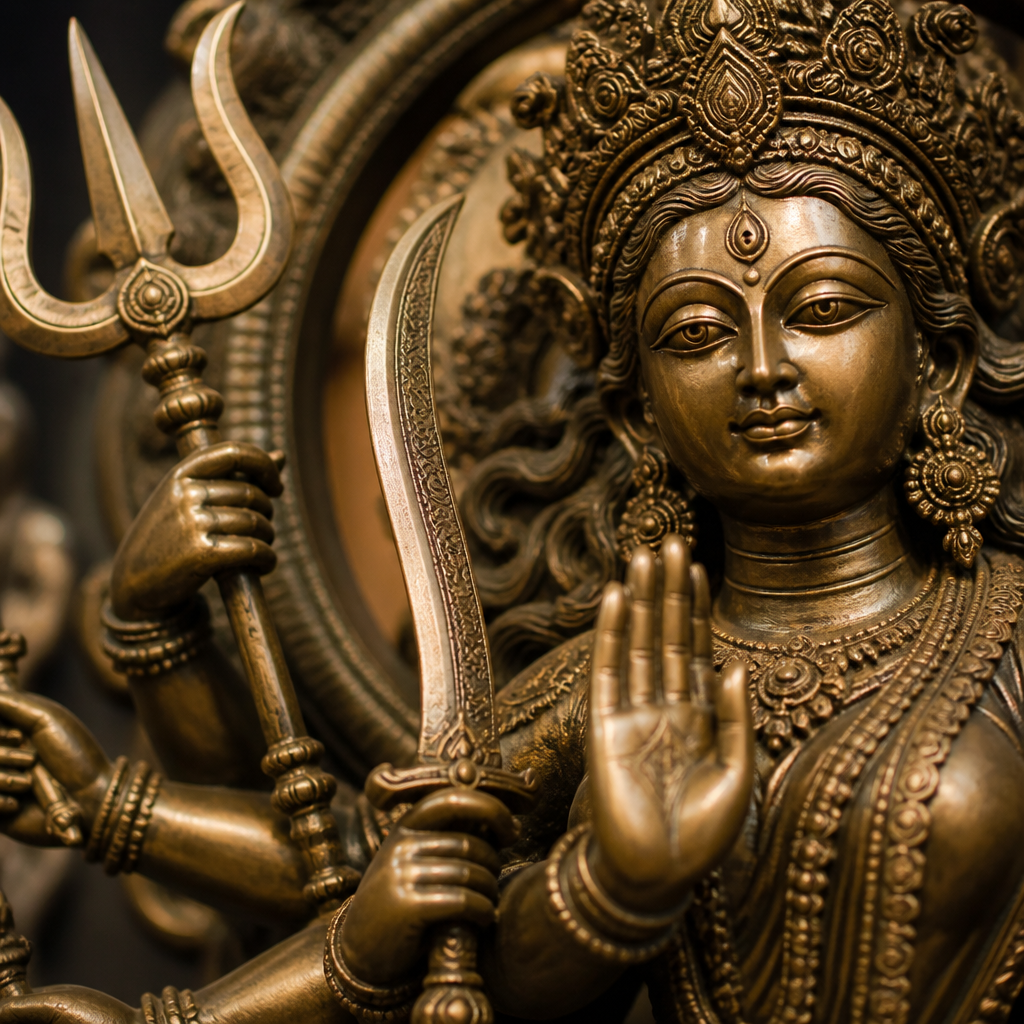
Lesen Ikonographie der Durga-Skulptur ist eine Fähigkeit, die sich bei jedem Stück auszahlt, dem Sie jemals begegnen werden. Die Attribute sind nicht dekorativ. Es handelt sich um eine über Jahrhunderte entwickelte visuelle Sprache, und jedes Element steht in Verbindung mit einem bestimmten Lehr- oder Erzählpunkt.
Die zehn Waffen und was jede Waffe signalisiert
Die zehn Arme in der ikonografischen Standardform repräsentieren Allgegenwart und Allmacht, die Fähigkeit, gleichzeitig in alle Richtungen zu wirken. Jede gehaltene Waffe wurde von einer bestimmten Gottheit gegeben, weshalb die korrekte Identifizierung der Waffen in einer Skulptur Aufschluss darüber gibt, ob der Künstler die Tradition verstanden hat oder nach einer vereinfachten Vorgabe gearbeitet hat.
Die Dreizack (Trishula) von Shiva stellt die drei Gunas dar: Sattva (Harmonie), Rajas (Aktion) und Tamas (Trägheit), Kräfte, die Durga regiert, anstatt von ihnen regiert zu werden. Die Diskus (Chakra) von Vishnu repräsentiert den ewigen Kreislauf der Zeit und des geschulten Geistes. Die Muschelschale aus Varuna trägt den Urklang „Om“. Das Schwert schneidet durch die Unwissenheit. Pfeil und Bogen stehen für Energie und Potenzial im Gleichgewicht. Der Lotus signalisiert spirituelles Erwachen inmitten des weltlichen Chaos.
Ein häufiger Fehler, den Sammler machen, ist die Annahme, dass ein Durga-Stück unvollständig sei, wenn es weniger als zehn Arme habe. Regionale Traditionen, insbesondere aus bestimmten Perioden der südindischen Tempelskulptur, brachten vier- oder achtarmige Durga-Formen hervor, die völlig kanonisch sind. Die Anzahl der Arme signalisiert die spezifische Text- oder Regionaltradition, nicht die Qualität des Stücks.
Das Reittier: Löwe oder Tiger
Sowohl ein Löwe als auch ein Tiger erscheinen in verschiedenen Texten und regionalen Traditionen als Durgas Fahrzeug (Vahana). Die Halterung ist nie nur dekorativ. Es repräsentiert rohe Kraft und Ego, die Durga vollständig beherrscht. Ihre Haltung über dem Tier ist eine direkte visuelle Aussage darüber, dass sie die Kräfte beherrscht, von denen die meisten Lebewesen beherrscht werden.
Das Gesicht: Das am schwierigsten umzusetzende Element
Jeder erfahrene Bildhauer, der in dieser Tradition arbeitet, versteht, dass Durgas Gesicht das emotionale und spirituelle Zentrum des Stücks ist. Sie befindet sich mitten im kosmischen Kampf und ihr Gesichtsausdruck muss absolut gelassen sein. Diese besondere Kombination aus heftiger Aktion und völliger innerer Ruhe ist die ikonografische Signatur der Mahishasura-Mardini-Form und eines der Dinge, die in jedem Medium am schwierigsten umzusetzen sind.
Wenn Sie eine Durga-Statue auf Qualität prüfen, sollten Sie als Erstes das Gesicht beurteilen, vor den Waffen, vor der Haltung, vor dem Finish. Ein angespannter oder verärgerter Gesichtsausdruck weist entweder auf einen Nachwuchshandwerker oder auf ein Produktionsstück hin, das eher zu einem bestimmten Preis als zu einem Standard hergestellt wurde.
Profi-Tipp: Bedecken Sie bei jeder Durga-Skulptur, die Sie in Betracht ziehen, die Waffen und die Halterung mit Ihrer Hand und schauen Sie nur auf das Gesicht. Wenn sich die Gelassenheit ohne Kontext deutlich lesen lässt, hat der Bildhauer die Tradition verstanden. Wenn es nur dann richtig gelesen wird, wenn man es in die vollständige Komposition einrahmt, hat der Künstler eher mechanisch als aus echtem Verständnis heraus gearbeitet.
Regionale Stile: Wie die Geographie die Form prägt
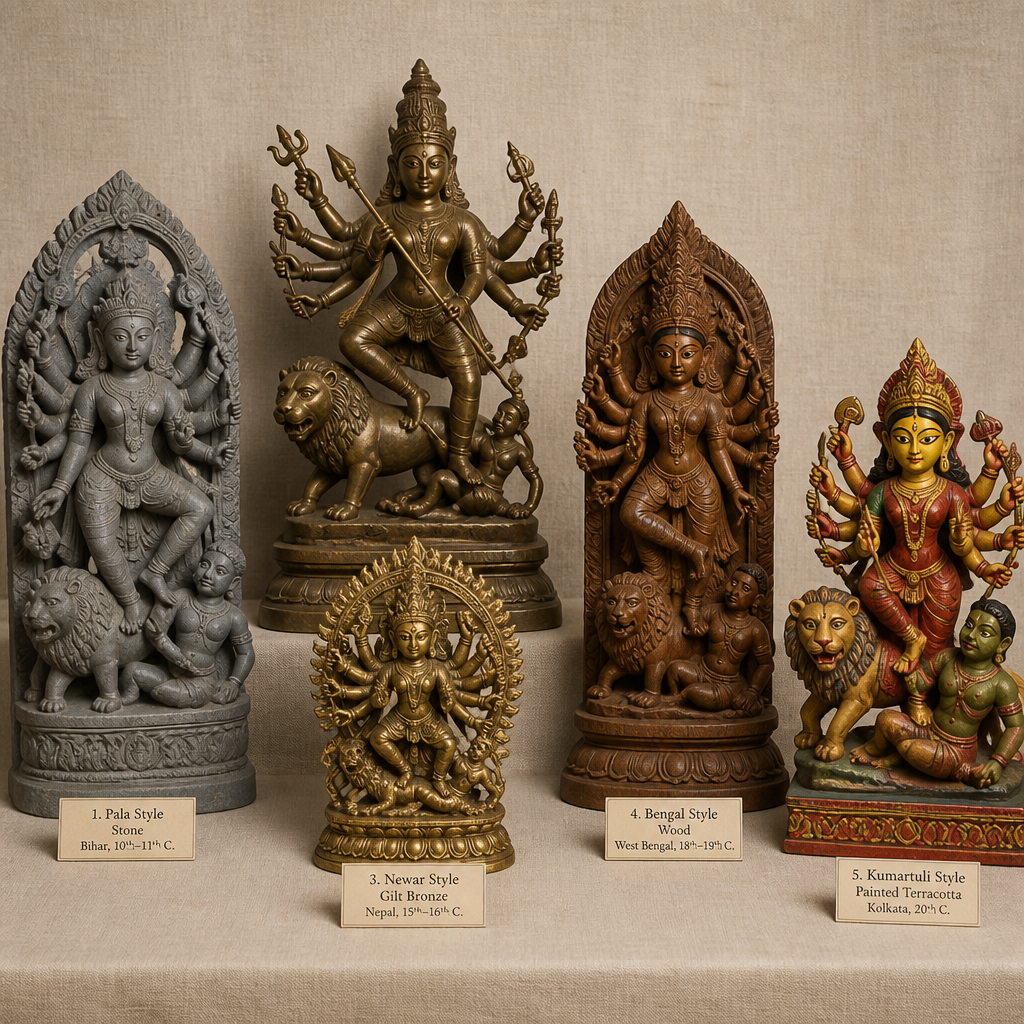
Die Hindu-Göttin Durga wurde in einem weiten geografischen Bereich verehrt, und die bildhauerischen Traditionen, die sich zu ihrer Darstellung entwickelten, unterscheiden sich je nach Region, Epoche und Material erheblich. Das Verständnis dieser Unterschiede ist für jeden ernsthaften Sammler von entscheidender Bedeutung, da der regionale Stil einer der Hauptindikatoren für Herkunft und Epoche ist.
Südindische Bronze- und Steintraditionen
Süden Indien, Insbesondere die mit Tamil Nadu und der Chola-Zeit verbundenen Traditionen brachten einige der technisch raffiniertesten Hindu-Skulpturen hervor, die jemals geschaffen wurden. Der Bronzeguss im Wachsausschmelzverfahren (cire perdue) wurde auf ein außergewöhnliches Niveau gebracht. Durga-Skulpturen aus dieser Tradition zeichnen sich in der Regel durch längliche Proportionen, sehr detaillierten Schmuck und Kronen sowie ein außergewöhnliches Maß an Oberflächenartikulation aus. Der Gesichtstyp ist spezifisch und erkennbar, wenn man genügend Beispiele gesehen hat.
Steinschnitzereien aus dem Süden Indien stellen eine parallele Tradition dar, wobei Durga oft im Hochrelief als Mahishasura-mardini dargestellt wird, ihr Fuß auf dem besiegten Büffeldämon. Diese Stücke wurden für den dauerhaften Einbau hergestellt und haben eine monumentale Qualität, die runde Bronzestücke nicht haben.
Nordindische und bengalische Traditionen
Aus der bengalischen Tradition entstanden die aufwändigen Durga-Puja-Formen, in denen die Göttin oft mit ihrer gesamten Familiengruppe dargestellt wird, flankiert von Lakshmi, Saraswati, Karttikeya und Ganesha. Diese Form hat einen narrativeren und festlicheren Charakter als die einzelnen, waffentragenden Formen des Südens Indien. Nordindische Steinskulpturen, insbesondere aus dem Mittelalter, weisen in Proportion und Gesichtstyp deutliche Unterschiede zu südlichen Werken auf.
Nepalesische und Himalaya-Varianten
Nepalesische Metallarbeiten in der Repoussé- und Wachsausschmelztradition brachten Durga-Bilder hervor, die hinduistisches und Vajrayana-buddhistisches ästhetisches Vokabular miteinander verbinden. Diese Stücke zeichnen sich oft durch eine höhere Dichte an dekorativen Oberflächendetails und eine besondere Behandlung der Krone und des Schmucks aus. Für Sammler, die sich für den Treffpunkt hinduistischer und buddhistischer Kunsttraditionen interessieren, ist die nepalesische Durga-Skulptur ein besonders lohnendes Gebiet.
Sammeln von Durga-Statuen: Was wirklich zählt
Das ernsthafte Sammeln von Durga-Statuen bedeutet, sich eine Meinung über einige Dinge zu bilden, über die die meisten Käufer erst dann nachdenken, wenn sie mehrere Käufe getätigt haben, die sie später bereuen.
Ikonografische Vollständigkeit versus dekorative Vereinfachung
Es besteht ein erheblicher Unterschied zwischen einer Durga-Statue, die von jemandem entworfen wurde, der die Texttradition kennt, und einer Statue, die von jemandem entworfen wurde, der auf einer visuellen Referenz basiert, ohne zu verstehen, was die visuelle Referenz bedeutet. Die zweite Kategorie ist auf dem kommerziellen Reproduktionsmarkt üblich. Zu den Zeichen einer dekorativen Vereinfachung gehören Waffen, die allgemein „waffenförmig“ sind und nicht als spezifische göttliche Attribute erkennbar sind, ein Reittier, das auf eine vage Katzenform reduziert wurde, und ein Gesicht, das eher generische Autorität als die spezifische Gelassenheit im Kampf der kanonischen Durga-Ikonographie vermittelt.
Profi-Tipp: Fragen Sie einen Einzelhändler, ob der Bildhauer, der ein Stück geschaffen hat, einen bestimmten Text oder eine ikonografische Referenz für den Auftrag hatte. Ein Einzelhändler, der von Kunsthandwerkern handelt, die in der lebendigen Tradition arbeiten, wird diese Frage beantworten können. Beim Verkauf von Produktionsstücken wird dies nicht der Fall sein.
Material und Verarbeitung
Bronze bleibt in der südasiatischen Tradition der Goldstandard sowohl für Rituale als auch für Sammelzwecke. Die Patina einer gut gefertigten bronzenen Durga-Statue, ob antik oder zeitgenössisch, enthält Informationen über die Geschichte und Handhabung des Stücks, die bei Stein- und Harzstücken nicht vorhanden sind. Steinstücke, insbesondere solche aus Schiefer, Granit oder Sandstein, tragen das Gewicht der Tempeltradition in sich und eignen sich hervorragend für Sammler, die sich von dieser monumentalen Qualität angezogen fühlen.
Reproduktionsstücke aus Kunstharz und Polystone haben ihren Platz als zugängliche Einstiegspunkte für spirituelle Praktizierende, die ein Durga-Bild für den Andachtsgebrauch wünschen, ohne die Investition, die ein Bronze- oder Steinstück erfordert. Der ehrliche Standpunkt ist, dass es sich nicht um mit Bronze oder Stein vergleichbare Sammelobjekte handelt, unabhängig davon, wie gut sie bemalt oder bearbeitet sind.
Maßstab und Präsenz
Durga ist eine Göttin, die mit Macht und Schutz assoziiert wird. Eine Durga-Statue, die zu klein ist, um als Präsenz in einem Raum registriert zu werden, verfehlt ihren eigenen ikonografischen Zweck. In der Praxis werden Stücke unter etwa 20 cm eher als Dekorationsobjekte denn als Andachts- oder Sammelschwerpunkte gelesen. Für einen Hausaltar oder eine Vitrine sind 30–60 cm der Bereich, in dem die Form beginnt, den Raum zu beherrschen, den sie einnimmt, so wie es die Ikonographie erfordert.
Vergleich der Durga-Statuentypen für Sammler
| Typ | Am besten für | Wichtige Überlegungen |
|---|---|---|
| Durga aus Bronze (Wachsausschmelzguss) | Seriöse Sammler, Stücke für eine langfristige Investition, rituelle Altarnutzung durch engagierte Praktiker | Höchste Eintrittskosten. Patina und Gussqualität sind die wichtigsten Qualitätsmerkmale. Stellen Sie sicher, dass die Ikonographie vollständig ist und die Waffen identifizierbar sind. Südindische und nepalesische Traditionen haben die stärkste Erfolgsbilanz in puncto Qualität. |
| Stein Durga (geschnitzt, Sandstein, Granit oder Schiefer) | Sammler, die sich für die Tempelskulpturentradition, großformatige Ausstellungen, Gärten oder architektonische Umgebungen interessieren | Gewicht und Größe sind wichtige praktische Faktoren. Steinstücke zeigen die Mahishasura-Mardini-Erzählung oft als Relief und nicht vollständig rund. Die Schnitzqualität im Gesicht und an den Waffen sollte vor dem Kauf sorgfältig geprüft werden. |
| Reproduktion aus Kunstharz oder Polystone | Spirituelle Praktizierende und Innenarchitekten suchen Andachtsbilder zu erschwinglichen Preisen | Kein ernsthaftes Sammelangebot, aber durchaus für den Andachtsgebrauch geeignet. Suchen Sie nach Stücken, bei denen die Ikonographie aus Gründen der Produktionseffizienz ernst genommen und nicht vereinfacht wurde. Auch auf dieser Ebene ist das Gesicht immer noch der wichtigste Qualitätsindikator. |
Platzieren einer Durga-Statue: Altar und Heimdekoration
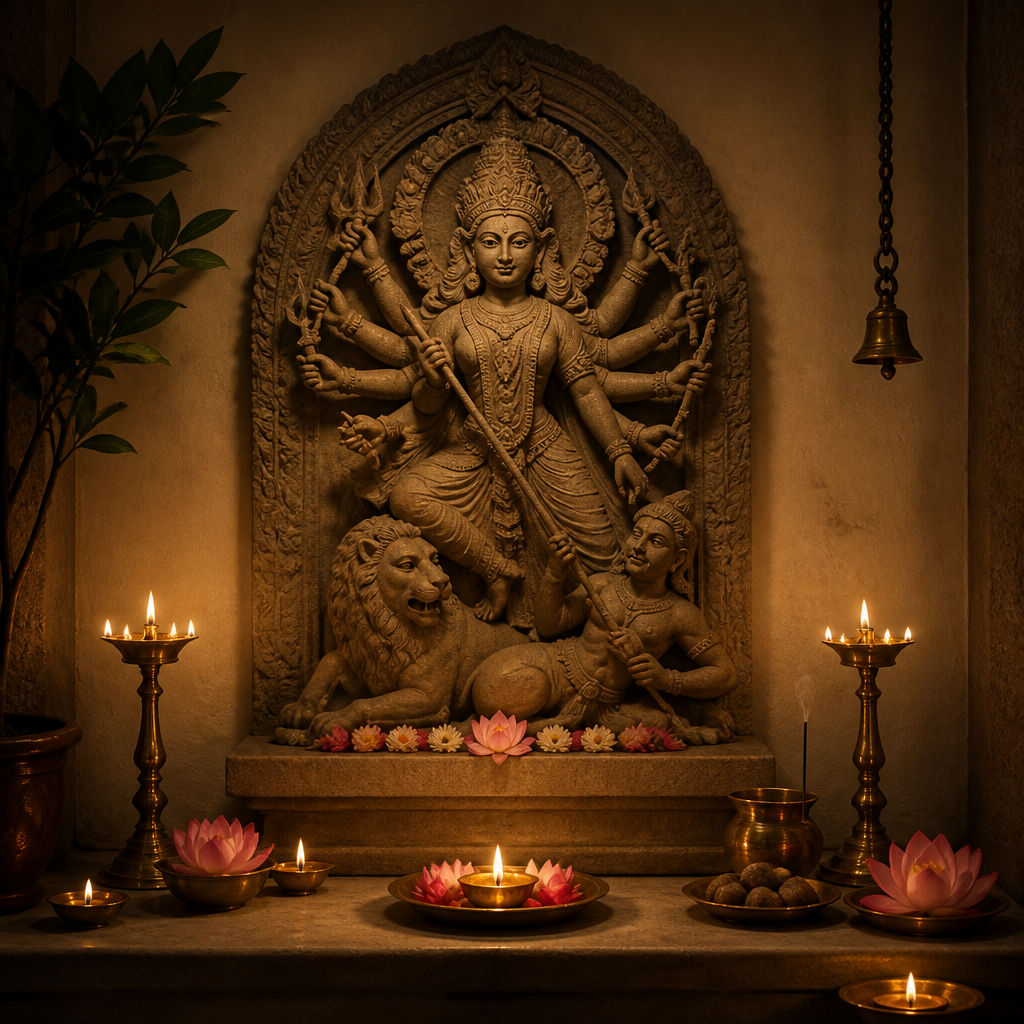
Wo und wie Sie eine Durga-Statue platzieren, ist keine untergeordnete dekorative Entscheidung, insbesondere wenn das Stück einem Andachtszweck dient. Der traditionelle Ansatz in der hinduistischen Praxis besteht darin, das Bild der Göttin auf einer Höhe zu platzieren, in der ihr Blick auf Augenhöhe trifft oder diese leicht überschreitet, wenn Sie im Gottesdienst sitzen oder im Raum stehen. Das Platzieren eines Gottheitsbildes auf dem Boden oder in Knöchelhöhe kehrt die visuelle Hierarchie um, die die Ikonographie etablieren soll.
Bei Hausaltären ist die nach Osten ausgerichtete Ausrichtung in der hinduistischen Praxis für die Platzierung von Gottheiten traditionell, aber im häuslichen Kontext sind praktische Überlegungen zu Beleuchtung und Sichtlinien wichtiger als eine strikte Ausrichtung nach Himmelsrichtungen. Das Wichtigste ist, dass das Bild so platziert wird, dass es gut sichtbar ist und die visuelle Aufmerksamkeit aller Personen erregt, die den Raum betreten.
In einem säkularen Sammelkontext ist die Beleuchtung die größte Variable für die Wirkung einer Durga-Statue. Skulpturale Stücke, insbesondere solche mit komplexer Ikonographie, benötigen gerichtetes Licht, das Schatten erzeugt und Tiefe offenbart. Flache Deckenbeleuchtung zerstört die Dimensionalität, die eine gut gemachte Durga aus Bronze oder Stein sehenswert macht. Eine einzelne fokussierte Lichtquelle, die etwa 45 Grad über und an einer Seite des Stücks positioniert ist, trägt mehr zu einer guten Skulptur bei als jede Menge zusätzlicher Kontext oder Präsentation.
Für Sammler unter HD Asian Art, Die Sammlung hinduistischer Gottheitsskulpturen umfasst mehrere Traditionen und Materialtypen und bietet Ihnen die Möglichkeit, regionale Stile und ikonografische Ansätze direkt zu vergleichen. Die Betrachtung von Stücken im Kontext einer kuratierten Sammlung und nicht isoliert ist durchweg der schnellste Weg, ein Auge für Qualität und Authentizität in diesem Bereich zu entwickeln. Die HD Asian Art Sammlung hinduistischer Gottheiten Enthält Statuen aus ganz Süd- und Südostasien mit der regionalen Vielfalt, die ein ernsthafter Vergleich erfordert.
Häufig gestellte Fragen
Was ist der Unterschied zwischen einer Durga-Statue und einer Mahishasura-Mardini-Statue?
Mahishasura-mardini, was „diejenige, die Mahishasura getötet hat“ bedeutet, ist eine spezifische ikonografische Form von Durga, die sie beim Sieg über den Büffeldämon darstellt. Alle Mahishasura-Mardini-Statuen sind Durga-Statuen, aber nicht alle Durga-Statuen sind Mahishasura-Mardini. Eine Durga-Statue könnte einfach die Göttin stehend oder sitzend mit ihren Waffen darstellen, ohne das narrative Element des besiegten Dämons. Die Mahishasura-Mardini-Form ist erzählerisch am umfassendsten und wird im Allgemeinen von Sammlern bevorzugt, die die volle mythologische Bedeutung in das Bild integrieren möchten.
Wie viele Arme sollte eine Durga-Statue haben?
Die kanonische und am weitesten verbreitete Form hat zehn Arme und symbolisiert die Allgegenwart und die Fähigkeit, Waffen zu führen, die von allen großen Gottheiten verliehen wurden. Vier- und achtarmige Durga-Formen sind jedoch innerhalb spezifischer regionaler und textlicher Traditionen völlig legitim. Eine vierarmige Durga ist keine unvollständige zehnarmige Durga. Es gehört zu einer anderen ikonografischen Spezifikation, und Sammler sollten lernen, diese Unterscheidungen zu verstehen, anstatt davon auszugehen, dass mehr Wappen immer vollständiger oder korrekter bedeuten.
Ist eine Durga-Statue für nicht-hinduistische Sammler und Innenarchitekten geeignet?
Ja, mit Bewusstsein. Durga-Statuen werden seit weit über einem Jahrhundert in Museen und Privatsammlungen weltweit gesammelt, ausgestellt und außerhalb der hinduistischen Religionspraxis geschätzt. Die respektvolle Position für einen Nicht-Praktizierenden besteht darin, zu verstehen, was Sie zeigen, und nicht, es sich gedankenlos anzueignen, aber dieses Verständnis ist genau das, was ikonografisches Wissen bietet. Eine Durga-Statue im Wissen um ihre Bedeutung zur Schau zu stellen, ist grundsätzlich respektvoller als sie als rein exotisches Objekt zur Schau zu stellen.
Worauf sollte ich bei einer hochwertigen Durga-Skulptur achten?
Beginnen Sie mit dem Gesicht. Der gelassene Ausdruck im Kampf ist das am schwierigsten umzusetzende Element und der deutlichste Indikator für einen Handwerker, der die Tradition versteht. Untersuchen Sie dann die Waffen: Sind sie als die spezifischen göttlichen Attribute identifizierbar, die in den Textquellen beschrieben werden, oder sind sie generisch? Beurteilen Sie dann das Reittier: Hat der Löwe oder Tiger eine bildhauerische Überzeugung oder wirkt es wie ein nachträglicher Einfall? Betrachten Sie abschließend das Finish: Achten Sie bei einem Bronzestück auf einen gleichmäßigen Guss mit sauberen Oberflächendetails. Achten Sie bei einem Steinstück auf saubere Kanten und eine gleichmäßige Schnitztiefe in der gesamten Komposition.
Welche Bedeutung haben Durgas rote Gewänder in der ikonografischen Tradition?
Rot wird in der ikonografischen Tradition von Durga mit Macht, Aktion und der Energie der Schöpfung und Zerstörung in Verbindung gebracht. Der Devi Mahatmya beschreibt Durga als in rote Gewänder gekleidet, als sie zum Kampf gegen Mahishasura auftaucht. Bei skulpturalen Stücken kommt dies am deutlichsten durch bemalte oder emaillierte Bronzestücke zum Ausdruck und nicht durch Steinschnitzereien, bei denen die Farbkonventionen variieren. Wenn Sie eine Durga-Statue mit roter Pigment- oder Emailarbeit sehen, bezieht sie sich speziell auf diese Textbeschreibung ihrer Kampfform.
Wie unterscheidet sich eine Durga-Statue von Statuen anderer Hindu-Göttinnen wie Kali oder Parvati?
Durga, Kali und Parvati sind im hinduistischen Denken theologisch verwandt, wobei Kali oft als eine Form von Durga und Parvati als verwandte Manifestation derselben göttlichen weiblichen Kraft (Shakti) beschrieben wird. Ikonografisch sind sie jedoch deutlich voneinander zu unterscheiden. Durga erscheint typischerweise vielarmig, auf einem Löwen oder Tiger sitzend, mit gelassener Miene. Kali wird mit dunkler Hautfarbe, hervorstehender Zunge, einem Kranz aus abgetrennten Köpfen und einem insgesamt viel wilderen Charakter dargestellt. Parvati erscheint typischerweise zweiarmig als Shivas Gemahlin, ohne Kampfwaffen. Sie in einer Sammlung zu verwechseln, ist ein ikonografischer Fehler, nicht nur ein stilistischer.
Haben Sie kürzlich eine Durga-Statue zu Ihrer Sammlung oder Ihrem Altar hinzugefügt und hat das Verständnis der Ikonographie Ihre Beziehung zu dem Stück verändert? Teilen Sie unten Ihre Erfahrungen mit.
