



Bronze Buddha Statues: A Complete Buyer's Guide
Bronze Buddha Statues: A Complete Buyer's Guide
What makes one bronze Buddha statue worth careful collecting while another is just a decorative casting? The answer is rarely the face alone. It sits in the alloy, the finish, the gesture, the regional style, and the paper trail behind the object.
Table of Contents
- Understanding Bronze Buddha Statues
- Distinguishing Finishes and Alloys
- Exploring Regional Style Variations
- Identifying Quality and Age
- Care and Cleaning Guidelines
- Recommended Home Placement
- Buying Considerations and Advice
- Frequently Asked Questions
Understanding Bronze Buddha Statues
What makes one bronze Buddha statue worth careful collecting while another reads as a decorative casting? The answer is rarely the face alone. It lies in the alloy, the finish, the gesture, the regional style, and the paper trail behind the object.
Bronze Buddha statues are not a single category with one look or one history. UK museum collections show a wide field, from an early 7th-century standing Śākyamuni Buddha in the British Museum to later Thai and Cambodian examples in the V&A and the Science Museum Group collections (British Museum record, V&A collection record, Science Museum Group object record). That range matters because it shows bronze Buddhist sculpture as a long, changing craft tradition rather than a fixed decorative formula.
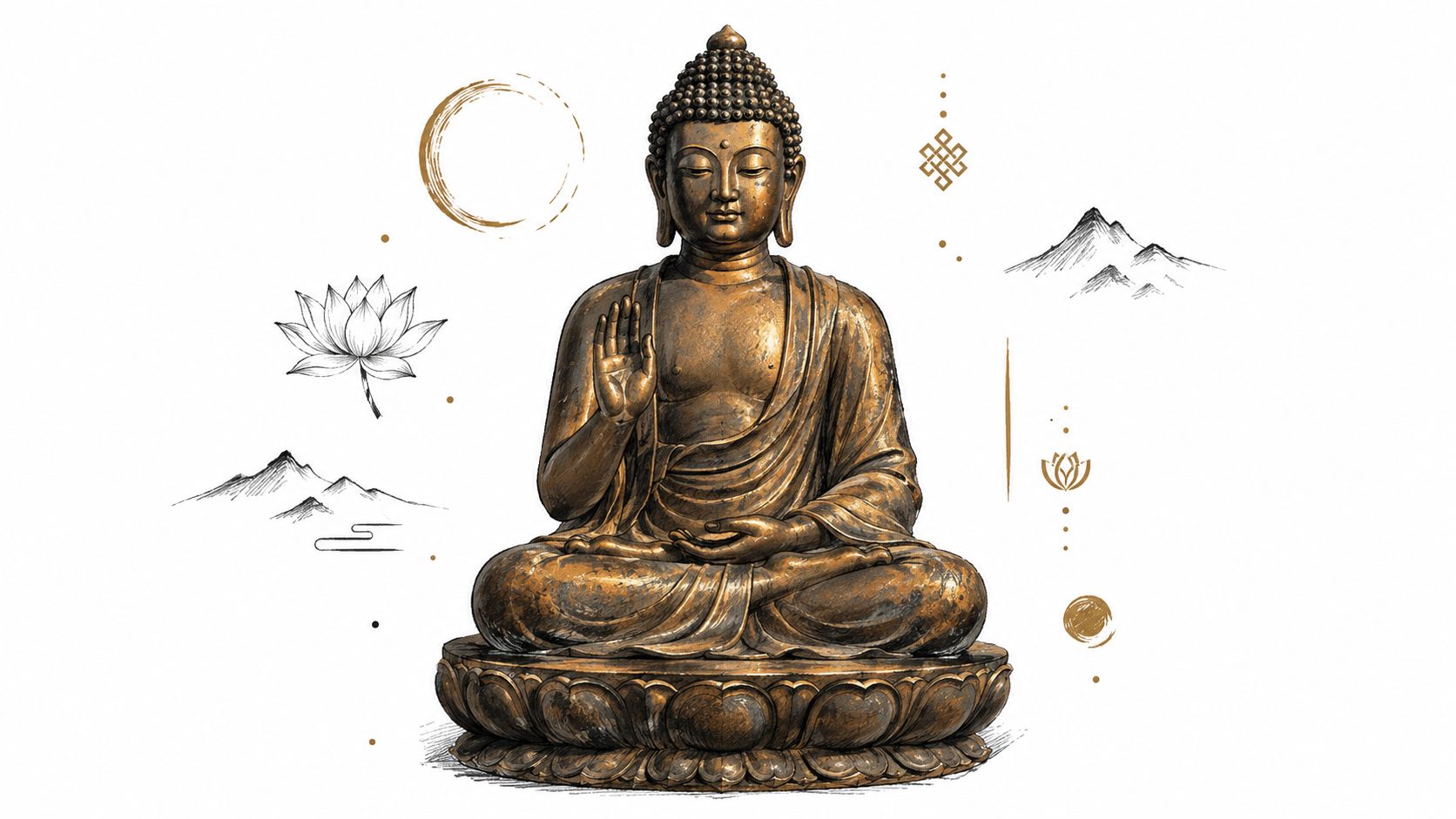
What collectors are really buying
A serious buyer is not only purchasing a devotional image or a home object. They are judging material, casting quality, iconography, and provenance as separate questions. A statue can be old and well made, yet still be a poor fit if the region, gesture, or surface history does not support the story being told about it.
The British Museum's standing Śākyamuni Buddha is a useful example because it brings several forms of evidence together, including the copper-alloy body, the abhayamudrā right hand, and a modern collecting history that includes joint purchase by the British Museum and the Victoria and Albert Museum in March 2004 (British Museum record). That is the level of detail a collector should expect, not just a pleasing silhouette.
Practical rule: if the seller can only say “antique” or “bronze,” the basic facts are still missing.
Why bronze keeps its appeal
Bronze holds detail well and withstands handling better than many softer materials. It also accepts surface treatment in ways that can support a devotional finish, a museum display finish, or a later restoration layer. That flexibility is one reason bronze Buddha sculpture appears in so many forms across Asia and across the centuries.
The V&A records, for example, include a bronze Buddha from Nagapattinam in southern India dated to the 11th–12th centuries, a Cambodian bronze Buddha head dated to about the 13th century, and a gilt-bronze Buddha made in Bangkok during the 16th century (V&A collection record). Those records show how bronze can carry sharply different regional identities while still belonging to the same broad sculptural family.
Distinguishing Finishes and Alloys
The first mistake many buyers make is treating every dark or golden surface as the same thing. A bronze Buddha may be bronze, a copper alloy, gilt bronze, lacquered, or a mix of those treatments, and the surface you see may be original, later, or partly restored. Catalogue wording from museum records separates bronze, copper alloy, gilt bronze, and hollow cast objects for a reason, because each term points to different making and finishing choices.
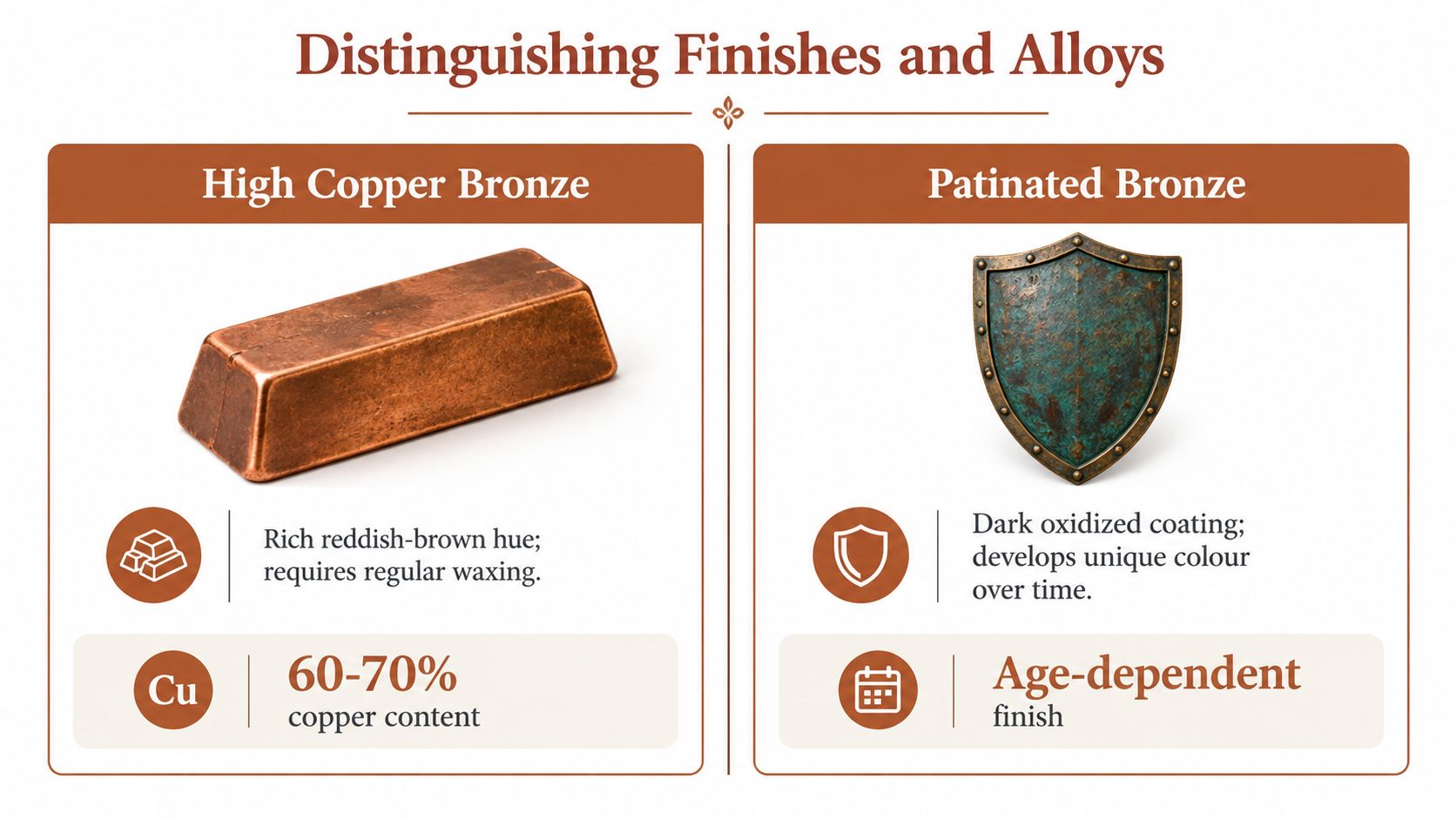
Reading the metal, not just the colour
Colour alone can mislead. A reddish-brown tone may indicate a high-copper alloy, but it can also come from surface work, wax, lacquer, or age-related oxidation. A smooth brown finish can still hide surviving gilding, pigment, or lacquer layers, so surface inspection matters more than a glossy appearance.
For a useful cross-check on how metal accents behave in interior pieces, Critelli Furniture on metal detailing shows the same basic rule, finish tells you as much as form does. With a bronze Buddha, surface loss is more consequential because it can erase historical evidence.
Solid cast, plated, or assembled
A genuine bronze statue usually shows the logic of casting in its structure. Historic England notes that cast bronze statues commonly use lost-wax or sand-casting methods and may contain assembled sections (Historic England bronze statue guidance). Seams, joins, and base construction are part of the object's history, not automatically defects.
Wear should make sense. Check the places that would naturally be touched, lifted, or cleaned. Fake ageing often fails at the edges, joins, and underside.
Patina, gilding, and what not to polish away
The surface layer is often where the value sits. Historic England warns that cleaning can remove historically significant surface layers, including original patination and coatings, and advises against harsh chemicals, abrasives, metal dips, and acidic household cleaners (Historic England bronze statue guidance). That matters for buyers, because an over-polished Buddha may look brighter while being materially poorer.
If you see surviving gilding, paint, or lacquer, treat that as evidence, not decoration. Those layers can identify later work, devotional use, or regional finishing habits, and they should be assessed before any cleaning or purchase.
Exploring Regional Style Variations
Can you read a bronze Buddha by region? You should be able to, because the first clues are usually in proportion, gesture, and surface treatment. UK collections show clear differences across India, Cambodia, and Thailand, and they help separate a coherent regional work from a figure assembled from mixed references (V&A collection record).
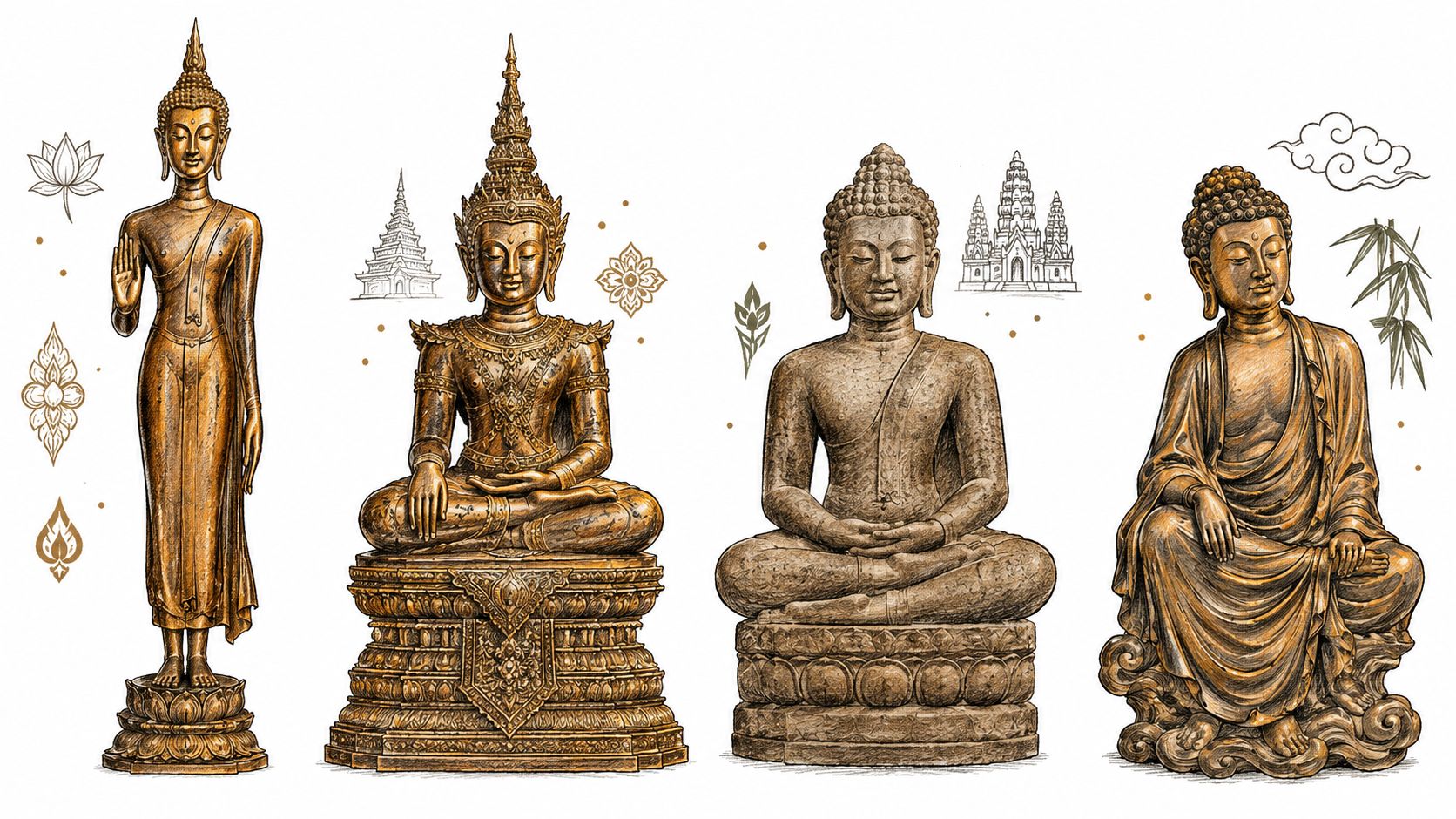
Thai, Indian, and Cambodian clues
Thai bronzes often favour poise, elongation, and controlled elegance. The V&A's Thai gilt-bronze Buddha and a related early Thai copper-alloy figure in a UK museum collection show how the tradition can range from refined courtly work to more restrained devotional casting (V&A collection record). On Thai figures, the hand gesture can carry the identification even when wear has reduced finer details.
Cambodian bronze tends to read differently. Head shape, facial treatment, and the balance of the body often matter more than a highly decorative surface. The V&A's Cambodian bronze Buddha head dated to approximately the 13th century shows how a fragment can still preserve a recognisable regional language (V&A collection record).
Indian examples sit in another register again. The V&A's Nagapattinam bronze of the 11th–12th centuries has a different handling of drapery and proportion, and that difference is useful for buyers who need to judge whether a figure's style is internally consistent (V&A collection record).
Why the same icon can look different
The same Buddha subject may be standing, seated, teaching, reassuring, or walking. That variation reflects devotional use as much as regional practice. Some bronzes are made for intimate shrine worship, others for courtly display, and the form changes with that purpose.
Cross-regional collecting also appears in UK holdings beyond the main South and South-East Asian group. The Science Museum Group's Tibetan bronze of Vajrabairawa shows how Buddhist bronze can follow a distinct iconographic tradition, with its own modelling priorities and collection history (Science Museum Group object record).
Regional style is a first filter, not a verdict. If the proportions, gesture, and surface language do not belong together, keep looking.
Identifying Quality and Age
Quality shows up first in the casting and finishing. A good bronze Buddha has crisp but believable modelling, coherent joins, and a surface that still reads as hand-worked under close inspection. Poor reproductions often look over-sanded, oddly symmetrical, or mechanically finished in a way that flattens the figure.
Antique and modern pieces do not age the same way
Old bronze usually wears unevenly. Hands, edges of robes, projecting fingers, and the base often reveal more than the face. Vulnerable points such as hands, aureoles, joins, and bases need close attention because damage, corrosion, and repairs tend to show there first.
Modern reproductions often imitate colour without reproducing process. The surface may look uniformly distressed, while the joins, internal construction, and finer details remain too tidy. Close photography, a weight check, and underside images help here, because they show whether the object's construction matches the seller's description.
What strong workmanship looks like
Good casting is not just sharpness. It is the way folds, fingers, and facial transitions are resolved without stiffness. A dated bronze can be a useful comparison point: the British Museum's copper-alloy Buddha shows controlled modelling and an assured finish that early and later workshop traditions do not always share (British Museum record).
For a more practical checklist, the HD Asian Art authentication guide sets out the questions a serious listing should already answer. Date, region, alloy, and any repair history should be stated clearly. If those details are absent, the seller is asking you to trust the object before the object has earned that trust.
The age test that matters most
Patina and wear should agree with the object's supposed age. If the finish looks newly forced, or the high points are artificially darkened while the recesses stay unnaturally clean, the surface may have been manipulated. That does not automatically make the piece worthless, but it does change how you assess it and what you should pay for it.
A statue can still be attractive and be a weak purchase if its age story does not hold up under inspection.
Care and Cleaning Guidelines
A bronze Buddha rewards restraint. Keep the original surface wherever you can, because the patina carries both history and visual coherence. Bronze is durable, yet poor cleaning, damp storage, and overhandling can still damage the finish and weaken the object over time.
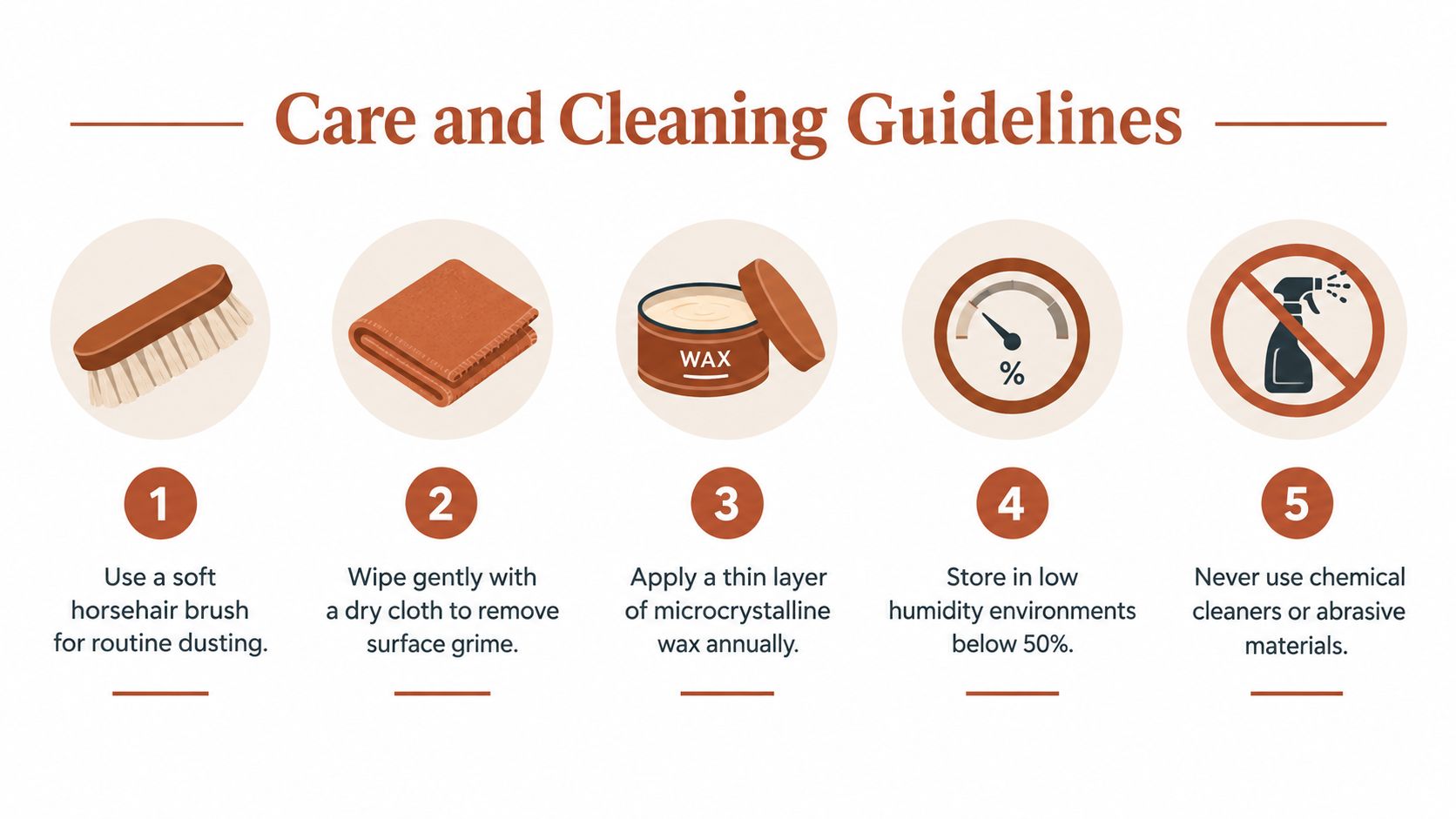
Daily and seasonal care
Dust with a soft brush or a dry cloth. That simple habit keeps grit from acting like an abrasive when the statue is touched or moved. Store the figure away from damp conditions, and handle it with two hands over a clear, stable surface.
For selective cleaning, start in a hidden area and work lightly. Protective wax coatings can be renewed where suitable, but only after checking that the surface is stable and the existing finish will not be disturbed. A practical outline for home care is set out in the bronze sculpture care guide, which is useful because it keeps the focus on gentle maintenance rather than surface alteration.
What to avoid
Do not use abrasive polish, chemical dips, acidic household cleaners, or any product sold as a quick metal shine. These products can strip wax, flatten detail, and remove patina that should remain in place. If the statue includes gilding, lacquer, or paint, the risk is higher, because those layers can be hidden beneath an apparently uniform brown surface.
When a conservator should step in
If you see active corrosion, unstable joins, failing coatings, or looseness in the structure, stop handling it and speak to an accredited metalwork conservator. Professional repair or repatination is the correct route for serious damage, and this is especially important for collectors who want to preserve both condition and value. The Historic England bronze statue guidance is a sound reference for selective cleaning, wax maintenance, and professional treatment.
Practical rule: if force, heat, or a chemical smell is needed to “clean” the statue, the method is wrong.
Recommended Home Placement
A bronze Buddha works best when it is given room, height, and respect. In a home, the placement should support stillness rather than clutter, and the surrounding objects should not compete with the figure's outline. That is true whether the statue sits on a dedicated altar, a sideboard, or a meditation shelf.
A simple placement example
In a quiet living room, a bronze Buddha placed on a stable stand at eye level reads differently from one tucked low into a bookcase. The higher placement creates visual authority and avoids the sense that the figure is being used as casual décor. In a meditation room, the same statue can become a focal point, especially when the surroundings are restrained and the lighting is soft.
For interior styling, compare natural decor ideas if you want to see how wood, stone, and muted textiles can support a calm visual field without overpowering the sculpture. The best setting is usually the one that keeps attention on the Buddha, not the furniture.
What works and what doesn't
A bronze Buddha benefits from clean lines, stable support, and a background that doesn't fight the silhouette. Strong patterned wallpaper, crowded shelves, and reflective clutter can all weaken the object's presence. If the statue has a standing pose, leave enough visual breathing space around the feet and base.
Some collectors keep the figure facing into the room, others prefer a private devotional orientation. Either can work, but the placement should feel deliberate rather than accidental. If the piece is part of a shrine, keep surrounding elements tidy and avoid mixing in objects that have no clear relation to the setting.
Choosing a respectful location
A home altar, study, or meditation corner is usually more convincing than a busy hallway. The figure should be visible, protected from knocks, and never placed where cleaning equipment or household traffic can damage it. If children or pets are present, height and stability matter more than aesthetics.
Buying Considerations and Advice
Buy the object for what it can prove, not for a vague claim of “antique character”. Ask for the date, material, region, condition notes, and provenance before you commit. For a bronze Buddha, those details shape authenticity, display value, and whether the piece can be moved across borders without trouble.
What to request before you pay
A credible seller should supply clear photographs, including the base, the back, close-ups of joins, and the surface in natural light. They should also state whether the statue is bronze, copper alloy, gilt bronze, or a composite object, because those distinctions affect both valuation and care. If the piece has passed through private ownership or a collection, ask for that in writing.
For a structured way to question a listing, the HD Asian Art buying guide is a useful reference. A checklist is more reliable than a seller's adjective-heavy description.
UK buyers need to think beyond the sale
For mainland Great Britain, importing cultural objects generally does not require a UK import licence, but the shipment still has to comply with the exporting country's rules. UK government guidance also says export controls can apply to cultural objects more than 50 years old, subject to exemptions (UK government guidance on cultural objects, UK export of cultural goods guidance). That matters if you later resell, lend, or move the statue into the EU, where documentation requirements may apply to covered cultural goods.
If you want a practical point of comparison, HD Asian Art is one specialist seller that lists bronze Buddha figures across regional traditions. If you are comparing furniture as well as sculpture, browse bronze bed frames belongs in a different search entirely, which is a useful reminder to stay focused on the object you want.
One final buying habit
If the piece looks too polished, too neat, or too anonymous, pause. The strongest bronze Buddha statues usually show a balance of age, finish, and readable iconography, not a surface overworked into sameness.
Frequently Asked Questions
Do you need to be Buddhist to own a bronze Buddha statue? No. Ownership is a matter of context and respect. Display it thoughtfully, and treat its cultural origin with care.
How should I read the hand gesture? Start with the gesture before the ornament. As described in Understanding Bronze Buddha Statues, the abhayamudrā is traditionally linked with reassurance or protection, and that iconographic detail often tells you more than surface style alone.
Can I import one into the UK and later move it elsewhere? You can, but the paperwork is not always straightforward. UK export rules are detailed in the previous section, and other jurisdictions may treat the same statue very differently, especially if it is later resold or lent.
HD Asian Art curates bronze Buddha statues alongside other Buddhist and Hindu sculpture, so it is a practical place to compare region, finish, and form in one catalogue. Judge the piece by its alloy, patina, provenance, and style, not by vague sales language.
