



So praktizieren Sie Anjali Mudra zu Hause: Eine Schritt-für-Schritt-Anleitung
So praktizieren Sie Anjali Mudra zu Hause: Eine Schritt-für-Schritt-Anleitung
Inhaltsverzeichnis
Was ist Anjali Mudra und warum übt man es zu Hause?
Anjali oder Anbetungs-Mudra, auch bekannt als Grußsiegel oder Namaskar-Mudra, ist eine der zugänglichsten und zugleich zutiefst bedeutungsvollsten Handpositionen des Yoga. Bei dieser Geste drücken Sie Ihre Handflächen auf Brusthöhe zusammen, die Finger zeigen nach oben. Erstellen eines symmetrische Ausrichtung das Respekt, Dankbarkeit und innere Ausgeglichenheit signalisiert. Die Schönheit von Anjali Mudra liegt in seiner Einfachheit. Es kann in wenigen Minuten erlernt und in jede Yoga-Sequenz oder Meditationspraxis integriert werden. Das Üben zu Hause bietet deutliche Vorteile: Ihr persönlicher Raum wird zu einem Zufluchtsort, in dem Sie diese Geste ohne Ablenkung erkunden, sich in Ihrem eigenen Tempo bewegen und eine echte Verbindung zu ihrer Bedeutung entwickeln können.
Das Anredesiegel: Bedeutung und Symbolik
Der Begriff „anjali“ stammt aus dem Sanskrit und bedeutet „Opfergabe“ oder „Anrede“, während „Mudra“ eine symbolische Handbewegung bezeichnet. Zusammengenommen verkörpert Anjali Mudra das Prinzip, das Göttliche in dir selbst und anderen zu ehren. In der Yoga-Philosophie stellt Anjali Mudra das Zusammentreffen von Yin- und Yang-Energien dar. Das Zusammentreffen Ihrer beiden Handflächen symbolisiert die Integration männlicher und weiblicher Prinzipien, der linken und rechten Gehirnhälfte sowie der materiellen und spirituellen Welt. Das Brustbein sitzt direkt hinter der Stelle, an der sich Ihre Handflächen treffen, und positioniert dieses Mudra direkt über dem Herzraum.
Verbindung zum Herzzentrum und Anahata Chakra
Anjali Mudra aktiviert das Anahata-Chakra, das Energiezentrum in Ihrem Herzen. Im Sanskrit bedeutet „Anahata“ „ungeschlagen“ oder „ungeschlagen“ und bezieht sich auf den ewigen Klang des Universums. Dieses Chakra regelt Liebe, Mitgefühl, Vergebung und emotionales Gleichgewicht. Wenn Sie Ihre Handflächen auf Brusthöhe zusammendrücken, leiten Sie Prana oder Lebensenergie in Richtung Ihres Herzzentrums. Das Herzzentrum stellt die Brücke zwischen Ihren unteren Chakren (die das Überleben und die persönliche Macht steuern) und Ihren oberen Chakren (die die Kommunikation und das spirituelle Bewusstsein regeln) dar.
Anatomie und Biomechanik: Handposition und -ausrichtung verstehen
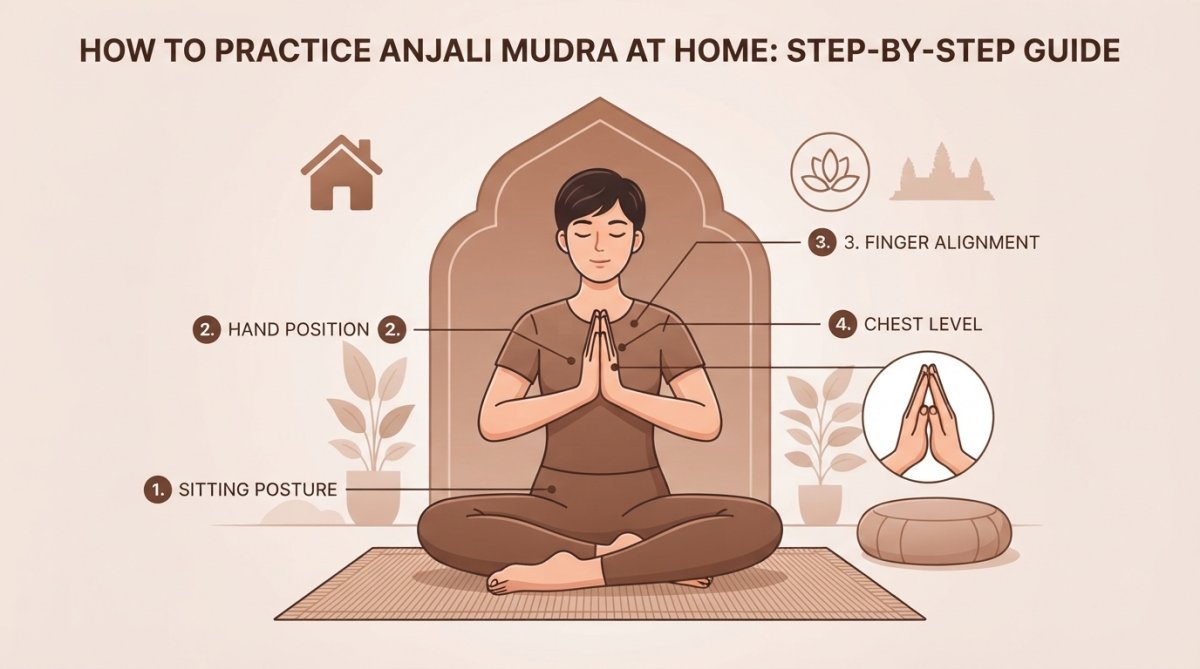
Für die richtige Ausrichtung beim Anjali Mudra ist es erforderlich, die spezifischen anatomischen Beziehungen zwischen Ihren Händen, Fingern, Ihrem Brustbein und Ihrer Wirbelsäule zu verstehen. Drücken Sie Ihre Handflächen mit gleichem Druck auf beiden Seiten zusammen, sodass ein perfekt symmetrischer Kontakt entsteht. Ihre Handflächen sollten sich in einem 90-Grad-Winkel zu Ihren Unterarmen treffen, wobei die Finger etwa in einem 45-Grad-Winkel zur Vertikalen nach oben zeigen. Deine Hände sollten es tun direkt davor sitzen von dir Brust Die Daumen zeigen zum Kinn und die Ellbogen ragen etwa im 45-Grad-Winkel zu den Rippen nach außen.
Fingerkuppen, Brustbein und richtige Symmetrie
Symmetrie ist in der Anjali-Mudra-Praxis von großer Bedeutung. Wenn Ihre rechte Hand nach vorne drückt, während Ihre linke nach hinten zieht, entsteht ein Ungleichgewicht, das den Energiefluss stört. Überprüfen Sie Ihre Ausrichtung, indem Sie auf Ihre Hände schauen. Ihre Handflächen sollten wie Spiegelbilder mit gleichem Abstand auf beiden Seiten erscheinen. Viele Praktizierende spannen unbewusst ihre Schultern an, während sie Anjali Mudra halten. Ihre Schulterblätter sollten entspannt und leicht nach unten gezogen bleiben und nicht in Richtung Ihrer Ohren gebeugt sein. Durch diese Entspannung kann sich Ihre Wirbelsäule auf natürliche Weise verlängern.
Schulterblatteingriff und Wirbelsäulenverlängerung
Ihre Schulterblätter spielen eine entscheidende Rolle bei der Unterstützung der richtigen Anjali-Mudra-Ausrichtung. Wenn Ihre Schulterblätter flach an Ihrem Brustkorb anliegen und leicht nach unten gezogen sind, verlängert sich Ihre gesamte Wirbelsäule auf natürliche Weise und Ihr Herz hebt sich nach vorne. Ziehen Sie sie über Ihren Rücken, als ob Sie Platz zwischen Ihren Ohren und Schultern schaffen würden. Diese Aktion öffnet Ihre Brust und verhindert das Vorwärtsrunden, das oft mit handfokussierten Übungen einhergeht.
Schritt-für-Schritt-Anleitung: Wie man Anjali Mudra zu Hause übt
Um Anjali Mudra zu Hause zu praktizieren, sind nur ein ruhiger Raum, ein paar Minuten und eine klare Absicht erforderlich.
Bereiten Sie Ihren Platz und Ihre Sitzposition vor
Beginnen Sie mit der Erstellung eines spezieller Meditationsraum in Ihrem Zuhause, eine Ecke Ihres Schlafzimmers, ein ruhiger Platz im Wohnzimmer oder sogar ein kleiner Schrank funktionieren perfekt. Nehmen Sie eine bequeme Sitzposition auf einem Meditationskissen ein, wobei Ihre Hüften etwas höher als Ihre Knie sind, oder auf einem festen Stuhl, der eine aufrechte Haltung fördert. Ihre Füße sollten hüftbreit auseinander flach auf dem Boden stehen. Entspannen Sie Ihre Schultern von Ihren Ohren und atmen Sie drei Mal tief durch. Spüren Sie, wie sich Ihr Körper in die richtige Position bringt.
Das Mudra mit der richtigen Ausrichtung ausführen
Bringen Sie Ihre Hände aus sitzender Position auf Herzhöhe an Ihre Brust. Drücken Sie Ihre Handflächen mit festem, gleichmäßigem Druck zusammen, nicht so fest, dass Ihre Hände zittern, aber mit genügend Kontakt, dass Sie die Verbindung zwischen beiden Seiten Ihres Körpers spüren. Ihre Ellbogen sollten in einem Winkel von etwa 45 Grad zu Ihren Rippen nach außen geneigt sein. Richten Sie Ihre Finger in einem leichten Winkel nach oben in Richtung Ihres Körpers, etwa im 45-Grad-Winkel zur Vertikalen, wobei die Daumen in Richtung Ihres Kinns zeigen.
Machen Sie Ihren Blick sanfter und richten Sie Ihre Aufmerksamkeit auf den Punkt, an dem sich Ihre Handflächen treffen. Spüren Sie, wie sich zwischen Ihren Händen Wärme und Energie aufbauen. Behalten Sie diese Position für 5–10 Atemzüge bei und verlängern Sie die Dauer schrittweise, wenn Sie Ihre Übung vertiefen. Ihre Atmung sollte natürlich und ungezwungen bleiben. Wenn Sie zum Loslassen bereit sind, legen Sie Ihre Hände einfach sanft auf Ihren Schoß.
| Schritt | Dauer | Schwerpunkt |
|---|---|---|
| Bereiten Sie Ihren Raum vor | 2-3 Minuten | Schaffen Sie eine ruhige, ungestörte Umgebung |
| Nehmen Sie eine sitzende Position ein | 1-2 Minuten | Erden Sie sich mit einer stabilen Haltung |
| Bringen Sie die Hände zur Herzmitte | 30 Sekunden | Richten Sie die Handflächen mit gleichmäßigem Druck aus |
| Halten Sie Anjali Mudra | 5-10 Atemzüge | Behalten Sie Symmetrie und Entspannung bei |
| Loslassen und beobachten | 1-2 Minuten | Beachten Sie verbleibende Empfindungen und Energie |
Vorteile von Anjali Mudra: Körperlich und spirituell
Körperlich verbessert Anjali Mudra die Haltung und Schulterausrichtung, indem es auf natürliche Weise die Verlängerung der Wirbelsäule und die Öffnung der Brust fördert und so der Vorwärtsrundung, die das moderne Leben mit sich bringt, entgegenwirkt. Viele Praktiker berichten von weniger Kopfschmerzen und einer verbesserten Schlafqualität, nachdem sie Anjali Mudra in ihren Alltag integriert haben. Emotional und spirituell aktiviert die Geste Ihr parasympathisches Nervensystem, den Zweig, der für Ruhe und Wiederherstellung verantwortlich ist, reduziert Ängste und erzeugt ein Gefühl der Ruhe, das über Ihre Übungssitzung hinaus anhält.
Zentrierung, Erdung und Energiefluss
Die Zentrierung durch Anjali Mudra erfolgt durch die Konvergenz Ihrer Aufmerksamkeit, Ihres Atems und Ihrer Körperhaltung. Wenn Sie Ihre Handflächen an Ihrem Herzen zusammenführen und sich auf das Berührungsgefühl zwischen ihnen konzentrieren, kommt Ihr Geist auf natürliche Weise zur Ruhe. Die Erdung geschieht, wenn Sie Ihren sitzenden Körper bewusst mit der Erde unter Ihnen verbinden, spüren, wie sich Ihre Sitzknochen in Ihr Kissen drücken und Ihre Füße den Boden berühren. Der Energiefluss im Anjali Mudra verläuft bidirektional: Prana fließt von Ihren erhobenen Händen durch Ihr Herz und in die Erde, während Erdenergie durch Ihre Füße und Beine aufsteigt und Ihr Herzzentrum nährt.
Anjali Mudra in der Meditation: Integration mit Atemarbeit und Achtsamkeit
Die Kombination von Anjali Mudra mit Meditation und Pranayama-Praxis vervielfacht seinen Nutzen. Beginnen Sie Ihre Meditation mit drei Runden bewusster Atmung, bevor Sie Ihre Hände in die Anjali-Mudra einführen. Atmen Sie durch die Nase ein und zählen Sie bis vier, halten Sie die Luft an, bis Sie vier zählen, und atmen Sie aus, bis Sie bis vier zählen. Sobald sich Ihr Atem beruhigt hat, führen Sie Ihre Handflächen zusammen und setzen Sie dieses Atemmuster einige Minuten lang fort. Wenn Sie Ihre Meditation vertiefen, lassen Sie Ihren Atem zu seinem natürlichen Rhythmus zurückkehren, während Sie Ihre Aufmerksamkeit auf das Gefühl richten, wie sich Ihre Handflächen aneinander drücken.
Atembewusstsein und Prana-Kultivierung
Bei der Anjali-Mudra-Praxis geht es darum, die Atemwahrnehmung wahrzunehmen, indem man die subtilen Empfindungen wahrnimmt, die jedes Ein- und Ausatmen begleiten. Stellen Sie sich beim Einatmen vor, dass Prana durch Ihre Nasenlöcher eindringt, Ihre Wirbelsäule hinunterfließt und sich in Ihrem Herzzentrum niederlässt. Spüren Sie beim Ausatmen, wie dieselbe Energie von Ihrem Herzen in alle Richtungen ausstrahlt. Die Prana-Kultivierung erfolgt auf natürliche Weise durch konsequente Praxis. Je mehr Sie Anjali Mudra halten und dabei die Atemwahrnehmung aufrechterhalten, desto sensibler werden Sie für subtile Energieflüsse in Ihrem Körper. Viele Praktizierende berichten, dass sich ihre Hände während des Trainings warm anfühlen oder kribbeln, ein Zeichen dafür, dass Prana auf ihre konzentrierte Aufmerksamkeit reagiert.
Handmudras für Anfänger: Anjali Mudra Variationen und Modifikationen
Während Anjali Mudra in seiner Grundform für die meisten Praktizierenden geeignet ist, gibt es verschiedene Variationen und Modifikationen, um verschiedenen Körpertypen, Verletzungen und Übungszielen gerecht zu werden.
Variationen von Anjali Mudra für verschiedene Yoga-Haltungen
Anjali Mudra lässt sich wunderbar auf verschiedene Yogastellungen übertragen. Wenn Sie in stehenden Posen wie Tadasana Ihre Hände in die Anjali-Mudra an Ihrem Herzen bringen, entsteht Erdung und Zentriertheit. In Vorwärtsbeugen und Wiederherstellungshaltungen können Sie Ihre Hände mit zusammengelegten Handflächen hinter Ihren Rücken legen und Ihre Brust sanft in Richtung Ihrer Oberschenkel drücken. Während der Sitzmeditation bleibt Anjali Mudra auf Herzhöhe die Standardvariante, obwohl einige Praktizierende es vorziehen, ihre Hände mit zusammengelegten Handflächen in den Schoß zu legen und die Finger nach unten zur Erde zu zeigen.
Modifikationen für Verletzungen und körperliche Einschränkungen
Für Praktiker mit Schulterverletzungen, Arthritis oder eingeschränkter Mobilität gibt es mehrere Modifikationen, die Anjali Mudra zugänglich machen. Wenn das Zusammendrücken Ihrer Handflächen auf Herzhöhe Unbehagen verursacht, versuchen Sie, Ihre Hände in einer tieferen Position, am Solarplexus oder sogar auf Ihrem Schoß zusammenzuführen. Wenn das Zusammendrücken Ihrer Handflächen zu Beschwerden am Handgelenk führt, versuchen Sie es mit einer sanfteren Variante, bei der Ihre Hände leicht aneinander liegen, anstatt fest zu drücken. Für Praktizierende mit schweren Schulter- oder Armeinschränkungen können Sie Anjali Mudra mental ohne physischen Handkontakt praktizieren, indem Sie sich vorstellen, wie Ihre Hände an Ihrem Herzen zusammengepresst sind.
Häufige Fehler und visuelle Fehlerbehebung
Der häufigste Fehler besteht darin, die Ellenbogen zu nah am Körper oder zu weit weg zu positionieren. Wenn die Ellbogen zu eng an die Rippen gedrückt werden, wird die Brust komprimiert und die Atmung eingeschränkt, während zu weit nach vorne gestreckte Ellbogen unnötige Spannungen in den Schultern erzeugen. Die richtige Position ist etwa 45 Grad von Ihrem Körper entfernt. Asymmetrie entsteht oft unbewusst, wenn eine Körperseite dominiert. Korrigieren Sie dies, indem Sie jeweils eine Hand bewusst anpassen, bis Ihre Hände perfekt ausgerichtet erscheinen. Das Gleichgewicht zwischen Anstrengung und Leichtigkeit ist ein weiterer subtiler, aber wichtiger Gesichtspunkt. Ein fester, gleichmäßiger Druck, der sich weder angestrengt noch träge anfühlt, sorgt für die optimale Wirkung.
Vorsichtsmaßnahmen und wann man Anjali Mudra meiden sollte
Anjali Mudra eignet sich für die meisten Praktizierenden, doch unter bestimmten Bedingungen ist Vorsicht geboten oder man sollte sie vorübergehend meiden. Praktizierende mit kürzlich erlittenen Schulter- oder Armverletzungen sollten Anjali Mudra modifizieren oder vermeiden, bis die Heilung abgeschlossen ist. Konsultieren Sie Ihren Arzt oder Physiotherapeuten, bevor Sie dieses Mudra wieder aufnehmen, wenn Sie eine schwere Schulterverletzung, Probleme mit der Rotatorenmanschette oder kürzlich eine Operation erlitten haben. Schwere Arthritis in den Händen, Handgelenken oder Schultern kann das traditionelle Anjali Mudra unangenehm machen. Verwenden Sie stattdessen die oben beschriebenen modifizierten Variationen. Angst- oder Panikstörungen verschlimmern sich gelegentlich durch auf die Brust fokussierte Übungen wie Anjali Mudra. Wenn Sie bemerken, dass es Angst auslöst, Ihre Aufmerksamkeit auf Ihr Herzzentrum zu richten, experimentieren Sie damit, das Mudra in einer niedrigeren Position zu halten, oder üben Sie mit offenen Augen und sanftem Blick.
Wenn Sie Anjali Mudra zu Hause praktizieren, verwandelt sich Ihr Meditationsraum in einen Zufluchtsort für herzzentriertes Bewusstsein und spirituelle Entwicklung. Diese einfache, aber tiefgreifende Geste mit ihren symmetrischen Handflächen, der zentrierten Ausrichtung und der direkten Verbindung zu Ihrem Anahata-Chakra bietet einen einfachen Einstieg in eine tiefere Yoga-Praxis. Die Vorteile des Mudras häufen sich durch konsequentes Üben allmählich und führen zu Veränderungen in Ihrer Körperhaltung, Ihrer emotionalen Belastbarkeit und Ihrer spirituellen Verbindung, die weit über Ihr Meditationskissen hinausgehen.
Bei HD Asian Art, Wir verstehen, dass die Schaffung einer sinnvollen Heimpraxis mehr als nur Technik erfordert, sondern eine Umgebung, die Ihre spirituellen Absichten unterstützt. Unsere sorgfältig kuratierte Sammlung buddhistischer und hinduistischer Statuen, handverlesener antiker und zeitgenössischer Stücke sowie von Tempeln inspirierter Dekoration verwandelt Ihren Meditationsraum in einen eleganten Zufluchtsort. Ob Sie auf der Suche nach einem sind wunderschöner Altar-Brennpunkt Oder Sie möchten einfach nur die Energie Ihres Übungsbereichs steigern, unsere Khmer- und südostasiatischen Skulpturen bringen authentische spirituelle Kunst in Ihr Zuhause. Stöbern Sie noch heute in unserer Sammlung und schaffen Sie den heiligen Raum, den Ihre Anjali-Mudra-Praxis verdient.
Häufig gestellte Fragen
Was ist Anjali Mudra und wie unterscheidet es sich von Namaste?
Anjali Mudra, auch Grußsiegel genannt, ist eine Handbewegung, bei der die Handflächen in der Herzmitte zusammengepresst werden. Während Namaste eine Begrüßung ist, die Anjali Mudra mit einer Verbeugung beinhaltet, ist Anjali Mudra selbst die spezifische Handhaltung, die bei Meditation, Yoga-Stellungen und spiritueller Praxis verwendet wird. Das Mudra aktiviert das Anahata-Chakra und symbolisiert Gleichgewicht, Ehrfurcht und die Einheit der Yin- und Yang-Energien im Körper.
Wie lange sollte ich Anjali Mudra während der Meditation halten?
Es gibt keine feste Dauer für das Halten von Anjali Mudra. Anfänger können mit 1-2 Minuten beginnen und die Übung mit zunehmendem Komfort schrittweise ausdehnen. Viele Praktizierende halten es während der gesamten Meditationssitzung oder Yoga-Sequenz. Konzentrieren Sie sich auf die Aufrechterhaltung der richtigen Ausrichtung und des Atembewusstseins und nicht auf die Dauer. Wenn Ihre Hände oder Schultern ermüden, machen Sie eine kurze Pause und fahren Sie fort, wenn Sie bereit sind.
Kann ich Anjali Mudra im Stehen praktizieren oder muss ich sitzen?
Anjali Mudra kann sowohl im Sitzen als auch im Stehen geübt werden. In einer sitzenden Position gewinnen Sie Stabilität und eine tiefere Erdung. Stehende Übungen, beispielsweise in Tadasana (Berghaltung), integrieren die Mudra in Ihre gesamte Yoga-Sequenz und verbessern die Wirbelsäulenverlängerung. Wählen Sie basierend auf Ihrem Komfort und Ihren Trainingszielen. Für Anfänger ist es oft einfacher, im Sitzen zu üben, um die richtige Ausrichtung und das Atembewusstsein aufrechtzuerhalten.
Was sind die Hauptvorteile des Praktizierens von Anjali Mudra zu Hause?
Regelmäßige Anjali-Mudra-Übungen fördern die Zentrierung, Erdung und Achtsamkeit. Es verbessert den Energiefluss durch das Herzzentrum und aktiviert das Anahata-Chakra, wodurch emotionales Gleichgewicht und innerer Frieden unterstützt werden. Das Mudra fördert außerdem die Symmetrie im Körper, reduziert Stress und vertieft die Meditation. In Kombination mit Atemübungen und Yoga-Stellungen stärkt es Ihre Yoga-Praxis zu Hause und schafft eine heilige, vom Tempel inspirierte Atmosphäre für die spirituelle Entwicklung.
