



Authentische kambodschanische Stein-Buddha-Statuen: Kaufratgeber
Authentische kambodschanische Stein-Buddha-Statuen: Kaufratgeber
Die meisten Käufer suchen authentische Buddha-Statuen aus Stein von Kambodscha Machen Sie den gleichen Fehler: Sie konzentrieren sich fast ausschließlich auf den Preis und das Erscheinungsbild der Oberfläche und übersehen die ikonografischen und materiellen Details, die tatsächlich darüber entscheiden, ob ein Stück echt ist. Eine massenproduzierte Kunstharzreplik, die wie Sandstein bemalt ist, wird ein zufälliges Auge täuschen.
Eine echte kambodschanische Steinskulptur, die in der Tradition der Khmer-Kunsthandwerker geschnitzt wurde, erzählt durch ihre Haltung, ihre Handgesten, die Qualität ihres Steins und die Proportionen ihres Gesichts eine ganz andere Geschichte. Dieser Leitfaden vermittelt Ihnen das spezifische Wissen, das Sie benötigen, um mit Zuversicht zu kaufen, egal ob Sie ein ernsthafter Sammler sind, ein spiritueller Praktiker, der einen Hausaltar baut, oder einfach jemand, der ein Stück haben möchte, das es wert ist, es zu besitzen.
Inhaltsverzeichnis
Schnelle Imbissbuden
|
Wichtige Erkenntnisse |
Erklärung |
|---|---|
|
Ikonographie ist Ihr erster Filter |
Authentische kambodschanische Buddha-Statuen folgen strengen Khmer-Konventionen für Mudra, Krone, Gesichtszüge und Throndesign. Zufällige oder gemischte Attribute sind ein klares Warnzeichen. |
|
Die Art des Steins ist ebenso wichtig wie die Qualität der Schnitzerei |
Echte Khmer-Skulpturen wurden traditionell in Sandstein oder Schiefer geschnitzt. Glatte, homogene Oberflächen auf einem „Stein“-Stück weisen oft auf einen Kunstharz- oder Verbundguss hin. |
|
Museumsqualität bedeutet nicht immer alt |
A Buddha in Museumsqualität bezieht sich auf den Standard der Schnitzerei, Proportionen und Verarbeitung, nicht unbedingt auf das Alter. Zeitgenössische Meisterschnitzwerke können diesen Standard erfüllen. |
|
Gesichtsmerkmale sind äußerst diagnostisch |
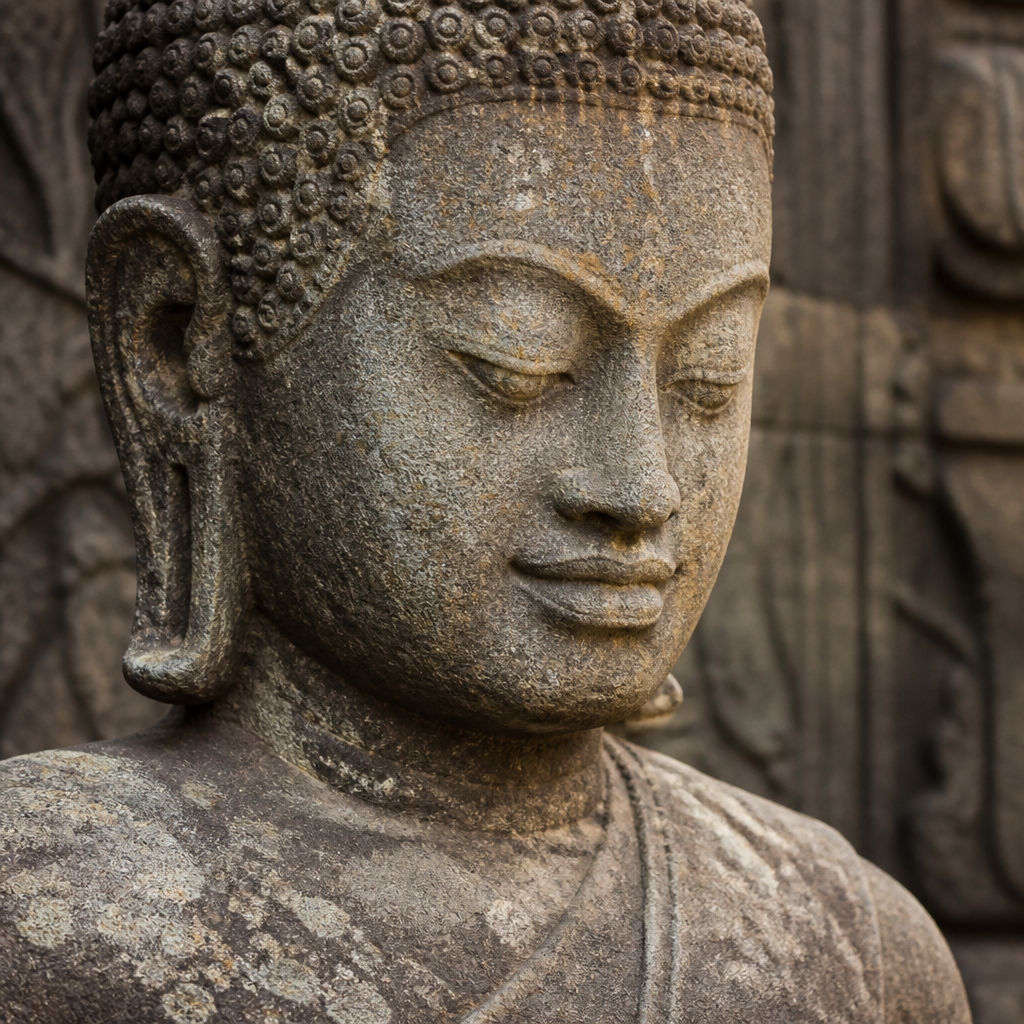
Khmer-Buddha-Gesichter zeigen typischerweise eine breite Stirn, leicht gesenkte Augen mit schweren Lidern, eine flache, breite Nase und ein heiteres, fast unmerkliches Lächeln. Allgemeine „asiatische“ Features sind nicht qualifiziert. |
|
Die Dokumentation der Provenienz bietet einen echten Mehrwert |
Wenn du Buddha-Statue kaufen Stücke aus dem Fachhandel, die Dokumentation von Herkunft, Alter und Stillinie schützt Ihre Investition und bestätigt die Echtheit. |
|
Die legale Beschaffung ist nicht verhandelbar |
Kambodscha Es gelten strenge Gesetze zum Export von Kulturerbe. Jedes Stück aus der Zeit vor 1970, für das keine dokumentierte Exportgeschichte vorliegt, sollte von Käufern im Vereinigten Königreich und in der EU mit großer Vorsicht behandelt werden. |
|
Gewicht und Patina sind Anhaltspunkte für die physische Authentifizierung |
Echter Stein hat eine Dichte und ein Gewicht, die Harz nicht überzeugend nachbilden kann. Natürliche Verwitterung und Patina entwickeln sich anders als künstlich durchgeführte Alterungsbehandlungen. |
Was kambodschanische Steinbuddha-Statuen so besonders macht?
Die kambodschanische buddhistische Skulptur steht in der künstlerischen Tradition der Khmer, einer der anspruchsvollsten in der gesamten südostasiatischen Kunstgeschichte. Das Khmer-Reich mit Sitz in Angkor schuf über etwa fünf Jahrhunderte hinweg Skulpturen, deren Ergebnisse visuelle Konventionen begründeten, die kambodschanische Kunsthandwerker bis in die Gegenwart fortgeführt haben. Was diese Stücke von thailändischen, burmesischen oder srilankischen Äquivalenten unterscheidet, ist nicht nur die Geographie, sondern auch ein spezifisches visuelles Vokabular.
Khmer-Buddha-Bilder sind in der Regel architektonischer gestaltet als ihre thailändischen oder burmesischen Gegenstücke. Der Körper ist aufrecht und in sich geschlossen, die Drapierung ist minimal und mit oberflächlicher Präzision geschnitzt, und der Gesamteindruck ist eher von zurückhaltender Kraft als von dekorativer Eleganz. Die Naga-Thron, in dem der Buddha auf den Windungen einer mehrköpfigen Schlange sitzt oder steht, deren Hauben sich über ihm ausbreiten, ist eine der ikonischsten Khmer-Kompositionen, die in anderen regionalen Traditionen weitaus seltener zu finden ist.
Das Khmer-Lächeln ist auch eine anerkannte künstlerische Signatur. Es ist subtil, innerlich und völlig anders als das breite Grinsen eines chinesischen lachenden Buddhas oder die ausdrucksvolleren Gesichter einiger japanischer Figuren. Käufer, die Zeit mit echten Khmer-Stücken verbracht haben, entwickeln ein Gespür für diese Ausdrucksqualität, die Kopien sofort als falsch kennzeichnet, noch bevor sie sich mit technischen Details befassen.
Die Rolle des Theravada-Buddhismus in der Khmer-Ikonographie
Kambodscha übernahm den Theravada-Buddhismus als seine vorherrschende Tradition, die die Art der erzeugten Bilder prägt. Sie werden Darstellungen von Shakyamuni, dem historischen Buddha, viel häufiger begegnen als den kunstvollen Bodhisattva-Formen, die in Mahayana-Traditionen üblich sind. Zu den wichtigsten Mudras gehören das Bhumisparsha Mudra (Erdberührungsgeste), das mit dem Moment der Erleuchtung verbunden ist, und das Dhyana Mudra (Meditationsgeste) mit im Schoß gefalteten Händen. Zu verstehen, welche Geste Sie betrachten, ist ein grundlegender, aber wesentlicher Teil der korrekten Lektüre eines Khmer-Buddha.
Die Ushnisha, der Schädelvorsprung oben auf dem Kopf des Buddha, der höchste Weisheit symbolisiert, wird in kambodschanischen Werken typischerweise als konischer oder flammenförmiger Punkt dargestellt. Dies unterscheidet sich deutlich von der runderen Ushnisha vieler chinesischer Figuren und ist eines der deutlichsten regionalen Merkmale, die bei der Beurteilung einer Figur zu beachten sind.
So identifizieren Sie authentische Buddha-Statuen aus Stein
Identifizieren authentische Buddha-Statuen aus Stein kambodschanischer Herkunft erfordert die Untersuchung mehrerer Merkmale in Kombination. Kein einzelnes Detail ist für sich genommen endgültig; Bei der Authentifizierung handelt es sich immer um eine Konvergenz der Beweise. In der Praxis entwickeln erfahrene Sammler eine Checkliste, die sie systematisch abarbeiten.
Mudra und Haltung
Beginnen Sie mit der Handbewegung und der Sitz- oder Stehposition. Ein Khmer-Meditationsbuddha zeigt normalerweise das Dhyana-Mudra, wobei beide Hände mit der Handfläche nach oben auf dem Schoß liegen. Ein Erleuchtungsbuddha zeigt das Bhumisparsha-Mudra, wobei die rechte Hand nach unten reicht, um die Erde zu berühren. Auch das Abhaya-Mudra, bei dem eine oder beide Hände als Geste des Schutzes oder der Furchtlosigkeit mit der Handfläche nach außen erhoben werden, kommt häufig vor. Wenn die Geste nicht einem anerkannten buddhistischen Mudra entspricht, stimmt etwas mit dem Stück oder seiner Beschreibung nicht.
Die Haltung ist gleichermaßen wichtig. Sitzende Buddhas der Khmer sitzen im vollen oder halben Lotussitz mit gerader, würdevoller Wirbelsäule. Die Proportionen der Beine, des Rumpfes und des Kopfes folgen konsistenten inneren Verhältnissen, die im Laufe der Jahrhunderte der künstlerischen Praxis der Khmer entwickelt wurden. Stücke, bei denen der Kopf zu groß erscheint oder die Beine unverhältnismäßig kurz sind, sind in der Regel spätere Kopien, die ohne Bezug zum ursprünglichen Skulpturenkanon angefertigt wurden.
Gesichtsmerkmale, die für die Arbeit der Khmer spezifisch sind
Das Gesicht ist der Ort, an dem die Khmer-Skulptur am ehesten erkennbar ist. Achten Sie auf eine breite, leicht konvexe Stirn, längliche Augen mit nach unten gerichtetem Blick, eine breite und relativ flache Nase, volle Lippen mit einer leichten Aufwärtswölbung an den Ecken und ein gut definiertes Kinn. Die Ohren sind verlängert und spiegeln das Gewicht der königlichen Juwelen wider, die der historische Buddha als Prinz vor seiner Entsagung trug.
Ein häufiger Fehler, den Käufer machen, besteht darin, jedes ruhige asiatische Gesicht als „Kambodschaner“ zu akzeptieren. Die thailändischen Sukhothai-Buddha-Buddhas haben zum Beispiel die heitere Qualität gemeinsam, unterscheiden sich jedoch deutlich in der Flammen-Ushnisha, der längeren Nase und dem geschwungenen Körperumriss. Diese Unterscheidungen sind wichtig, wenn Sie gezielt nach einem authentischen kambodschanischen Stück suchen.
Authentizität in der buddhistischen Skulptur lässt sich am besten nicht als Zeichen des Alters verstehen, sondern als Treue zu einer bestimmten ikonografischen Linie. Eine Statue, die ihre Tradition korrekt verkörpert, ist authentischer als ein altes Stück, das falsch identifiziert oder verändert wurde.
Profi-Tipp: Wenn Sie einen Khmer-Buddha untersuchen, schauen Sie sich die Rückseite des Stücks genauso genau an wie die Vorderseite. Bei Massenexemplaren ist oft nur die Vorderseite detailliert, während die Rückseite flach oder grob bearbeitet ist. Echte geschnitzte Steinstücke zeigen auf allen sichtbaren Oberflächen konsistente Handwerkskunst.
Steinarten und was sie Ihnen sagen
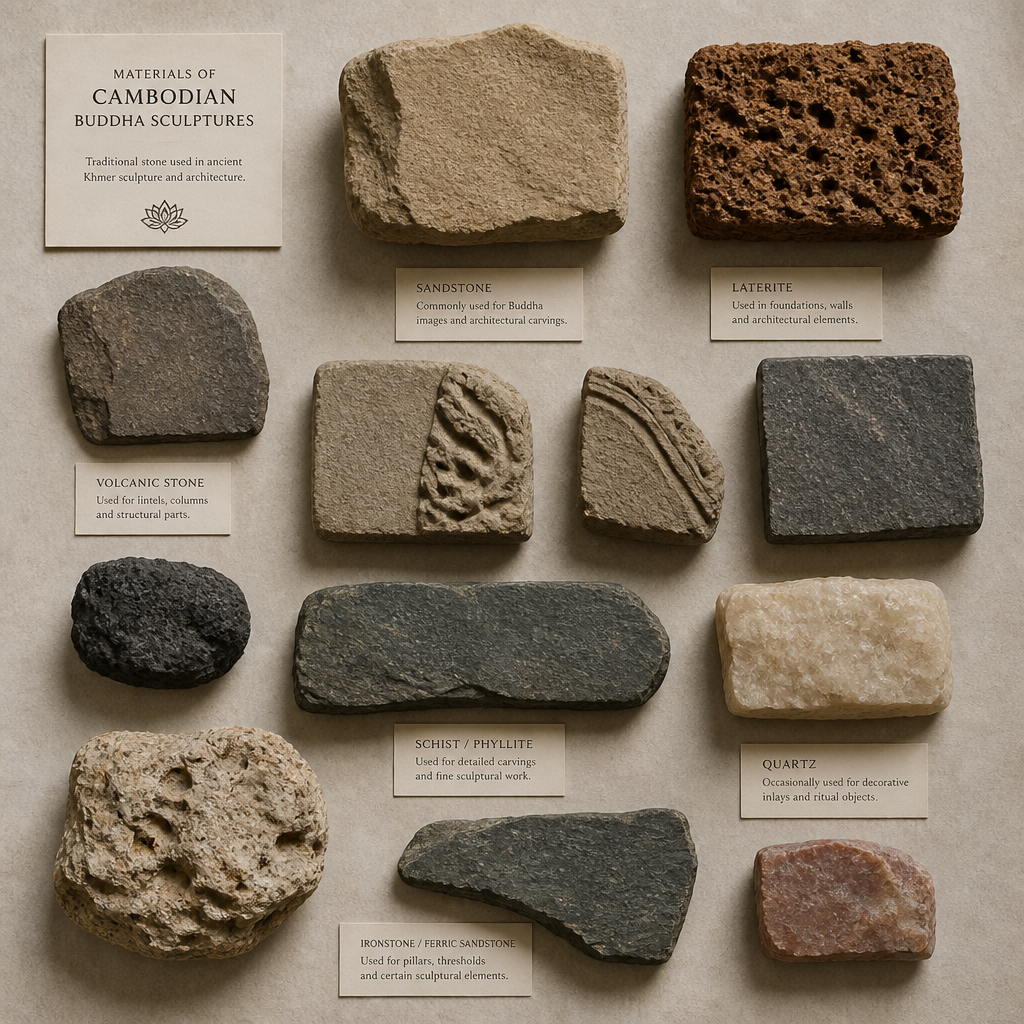
Das Material einer kambodschanischen Buddha-Statue ist nicht nur ein praktisches Detail; Es ist ein historischer und Authentizitätsmarker. Khmer-Bildhauer arbeiteten hauptsächlich mit zwei Steinarten: Sandstein und Schiefer (manchmal auch Grauwacke genannt). Für jeden ernsthaften Käufer ist es wichtig, den Unterschied zwischen diesen Materialien und zwischen echtem Stein und modernen Imitationen zu verstehen.
Sandstein: Das dominierende Khmer-Medium
Sandstein war das Hauptbau- und Schnitzmaterial der Angkor-Tempel, und viele der berühmtesten Bildhauertraditionen der Khmer gingen aus der Arbeit mit diesem Stein hervor. Es hat eine warme, körnige Textur, die auf charakteristische Weise verwittert und Oberflächenfärbungen und Mikroerosionsmuster entwickelt, die sich nur äußerst schwer überzeugend nachahmen lassen. Echte alte Sandsteinstücke weisen Kornvariationen, natürliche Einschlüsse und ein Verwitterungsprofil auf, das über die gesamte Oberfläche hinweg gleichmäßig ist, nicht nur an den freiliegenden Kanten.
Neue Schnitzereien aus echtem Sandstein sind ebenfalls erhältlich und als Sammlerobjekte durchaus legitim. Ein zeitgenössischer kambodschanischer Kunsthandwerker, der im traditionellen Khmer-Stil und mit echtem Sandstein arbeitet, schafft ein Stück mit echter materieller und künstlerischer Integrität. Es ist zu unterscheiden zwischen neuen echten Steinschnitzereien und synthetischen Kopien, die alt aussehen sollen.
Schiefer und andere Steine
Schiefer, ein dunkleres und feinkörnigeres metamorphes Gestein, wurde insbesondere für Figuren verwendet, die feinere Gesichts- und Oberflächendetails erfordern. Wenn Sie auf einen dunkelgrauen oder fast schwarzen Khmer-Buddha mit fein geschnitzten Gesichtszügen stoßen, ist Schiefer wahrscheinlich das Material. Es verfügt über eine geschichtete Innenstruktur, die sich an gebrochenen oder abgenutzten Kanten zeigt.
Harz und Verbundstein sind die am häufigsten verwendeten Materialien für Reproduktionen im Massenmarkt. Harzstücke sind für ihre Größe sofort leichter als echter Stein, haben eine zu gleichmäßige und glatte Oberfläche und fühlen sich oft etwas warm an, anstatt kühl wie echter Stein. Jeder „Stein“-Buddha, der sich ungewöhnlich leicht anfühlt, sollte getestet werden, indem man seine Basis auf Gussnähte untersucht, die ein eindeutiger Hinweis auf einen geformten und nicht geschnitzten Ursprung sind.
Profi-Tipp: Legen Sie Ihre Handfläche 30 Sekunden lang flach auf die Oberfläche des Stücks. Echter dichter Stein bleibt durchgehend kühl. Harz erwärmt sich spürbar durch Körperwärme. Dies ist kein perfekter Test, aber eine nützliche erste Prüfung, wenn ein Verkäufer einen Stein reklamiert und Sie Zweifel haben.

Vergleichen Sie Ihre Kaufoptionen
Der Markt für kambodschanische Buddha-Statuen aus Stein erstreckt sich über mehrere unterschiedliche Kanäle, die jeweils echte Unterschiede in der Qualität, der Verantwortlichkeit und der Art des Käufers aufweisen, den sie bedienen. Nachfolgend finden Sie einen direkten Vergleich der drei Hauptansätze, denen die meisten Sammler und spirituellen Praktizierenden begegnen.
|
Kaufoption |
Stärken |
Schwächen |
|---|---|---|
|
Auf asiatische Kunst spezialisierte Einzelhändler (z. B HD Asian Art) |
Kuratierte Auswahl mit Experten-Sourcing; Stücke mit genauen ikonografischen Details beschrieben; klare Rückgabe- und Versandrichtlinien; Verantwortung, wenn ein Stück falsch beschrieben wird; Kostenloser Versand für qualifizierte Bestellungen |
Die Auswahl ist enger als auf einem allgemeinen Marktplatz. Sie verlassen sich auf das Fachwissen des Einzelhändlers, daher sind dessen Wissen und Integrität von enormer Bedeutung |
|
Allgemeine Online-Marktplätze (Auktionsseiten, Amazon) |
Enormes Angebotsvolumen; wettbewerbsfähige Preise am unteren Ende; oberflächlich ähnliche Stücke leicht zu vergleichen |
Fast keine ikonografische Fachkenntnis in Auflistungen; Beschreibungen sind häufig ungenau oder allgemein; keine sinnvolle Haftung für Falschdarstellungen; hoher Anteil an Kunstharzkopien, die als Stein verkauft werden; keine fachliche Unterstützung |
|
Auktionshäuser und Antiquitätenhändler |
Ältere Stücke mit dokumentierter Provenienz; fachmännische Katalogisierung bedeutender Lose; Ausschreibungen können den wahren Marktwert offenbaren |
Hoher Mindestpreis für authentifizierte antike Stücke; Käuferprämien tragen erheblich zu den Kosten bei; nicht praktisch für Käufer, die dekorative oder praktische Stücke zu erschwinglichen Preisen suchen |
Der obige Vergleich macht deutlich, dass der Fachhandel einen wirklich sinnvollen Mittelweg einnimmt. Sie bieten die ikonografische Genauigkeit und Beschaffungsverantwortung, die allgemeine Marktplätze nicht bieten können, und das zu Preisen, die weitaus zugänglicher sind als der Auktionsmarkt der Spitzenklasse. Für Käufer, die ein Buddha in Museumsqualität korrekt identifiziert, zu angemessenen Preisen angeboten und zuverlässig versendet wird, ist ein Einzelhändler mit echter regionaler Expertise der logische Ausgangspunkt.
HD Asian Art Quellen direkt aus ganz Asien, einschließlich Kambodscha, und beschreibt Stücke mit einer Detailliertheit, die es einem Käufer ermöglicht, vor dem Kauf eine fundierte Entscheidung zu treffen. Diese Besonderheit, einschließlich Herkunftsland, Material, Bezug zur Stilperiode und ikonografischer Identität, unterscheidet einen seriösen Spezialisten von einem allgemeinen Geschenkeladen mit Inventar im buddhistischen Stil.
Warnsignale und Fälschungen: Was Sie vermeiden sollten
Der Markt für dekorative Buddha-Statuen ist übersät mit Stücken, die falsch beschrieben, falsch identifiziert oder völlig gefälscht sind. Die Kenntnis der Warnzeichen schützt Ihre Investition und Ihre Fähigkeit, dem zu vertrauen, was Sie kaufen.
Ikonografische Inkonsistenzen
Ein kambodschanischer Buddha mit Attributen, die einer anderen Tradition angehören, ist eine klare Warnung. Beispielsweise handelt es sich bei einer sitzenden Figur, die als Khmer beschrieben wird, aber aufwändigen Schmuck und eine hoch aufragende Krone trägt, eher um einen Bodhisattva oder eine hinduistische Gottheit und nicht um einen Buddha. Buddhas in der Theravada-Tradition erscheinen nach ihrem Verzicht im Allgemeinen ohne Ornamente. Wenn ein Verkäufer nicht erklären kann, was eine Handbewegung bedeutet, oder nicht weiß, welcher Buddha dargestellt wird, ist diese Unwissenheit selbst ein Warnsignal.
Ein besonderes Problem in der Massenproduktion ist die gemischte Ikonographie. Hersteller kombinieren Gesichtszüge aus einer Tradition, Handgesten aus einer anderen und dekorative Elemente aus einer dritten und stellen so Figuren her, die vage „buddhistisch“ aussehen, aber keiner wirklichen Tradition angehören. Dabei handelt es sich um rein dekorative Objekte, was in Ordnung ist, wenn Sie das möchten, aber sie sollten nicht als authentische Buddha-Statuen aus Stein einer bestimmten Tradition verkauft oder gekauft werden.
Künstlich angewandtes Altern
Verkäufer, die versuchen, neue Stücke als alt auszugeben, verwenden häufig künstliche Patinierung, Farbanstriche oder chemische Behandlungen, um das Alter zu simulieren. Zu den verräterischen Anzeichen gehören: Patina, die gleichmäßig verteilt und nicht in Nischen und geschützten Bereichen konzentriert ist; Verfärbung, die bei Betrachtung einer abgebrochenen oder abgenutzten Kante nicht in die Steinoberfläche eindringt; und ein Gesamteindruck von bewusster Verschmutzung statt echter Verwitterung. Das tatsächliche Alter führt zu einer ungleichmäßigen, komplexen Oberflächengeschichte. Gefälschtes Alter wirkt tendenziell theatralisch.
Rechtliche und ethische Überlegungen
Dies ist der Bereich, in dem Käufer manchmal nicht genügend Fragen stellen. Kambodscha wurde erheblich durch die Plünderung und den Handel mit Kulturgütern beeinträchtigt, insbesondere mit Stücken, die in Konfliktzeiten aus Tempelanlagen mitgenommen wurden. Jedes Stück, das aus der Zeit vor 1970 stammt und keine eindeutige und dokumentierte Exportgeschichte nachweisen kann, sollte vermieden werden, sowohl aus rechtlichen Gründen gemäß den Kulturgutvorschriften des Vereinigten Königreichs und der EU als auch aus einfachen ethischen Gründen. Seriöse Fachhändler geben völlige Transparenz über den rechtlichen Status und die Herkunft ihrer Bestände. Wenn ein Verkäufer diese Informationen nicht bereitstellen kann oder will, sollten Sie nicht kaufen.
Platzierung, Pflege und Anzeige
Ein echter kambodschanischer Steinbuddha verdient eine Platzierung und Pflege, die sein materielles und kulturelles Gewicht widerspiegelt. In der Praxis ist das einfacher, als es sich anhört, aber ein paar spezifische Punkte sind wichtig.
Positionierung und Höhe
In der buddhistischen Tradition werden Buddha-Statuen beim Sitzen auf oder über Augenhöhe platziert, niemals auf dem Boden oder in Positionen, die den Eindruck erwecken, dass die Figur dem Betrachter untergeordnet ist. Für den Heimaltar ist ein Regal oder ein spezieller Tisch auf Augenhöhe des Sitzenden geeignet. Bei der dekorativen Präsentation im Wohnraum gilt in der Praxis das gleiche Prinzip: Die Platzierung der Figur in einer angenehmen Betrachtungshöhe schenkt dem Objekt den gebührenden Respekt und bringt es auch optisch optimal zur Geltung.
Buddha-Statuen aus Stein sollten auf stabilen Untergründen aufgestellt werden. Stein ist schwer und eine Figur, die kopflastig ist oder auf einer unebenen Oberfläche steht, stellt ein echtes Sicherheits- und Konservierungsrisiko dar. Es lohnt sich, für jedes bedeutende Stück in einen speziell angefertigten Holz- oder Steinsockel oder eine Ausstellungshalterung in Museumsqualität zu investieren.
Reinigung und Konservierung
Echter Sandstein und Schiefer sind poröse Materialien, die nicht mit chemischen Mitteln gereinigt oder in Wasser eingeweicht werden sollten. Mit einer trockenen oder sehr leicht angefeuchteten weichen Bürste abstauben. Wenn sich in den Nischen eines Teils über viele Jahre hinweg Schmutz angesammelt hat, wenden Sie sich an einen Restaurator, anstatt zu versuchen, es selbst zu reinigen. Durch übermäßiges Reinigen werden Patina und Oberflächengeschichte entfernt, die sowohl zur Ästhetik als auch, bei älteren Stücken, zu deren Wert beitragen. Weniger Eingriffe sind fast immer besser.
Vermeiden Sie es, Steinfiguren längere Zeit direktem Sonnenlicht auszusetzen, insbesondere wenn sie bemalt sind oder Spuren von Originalpigmenten aufweisen. UV-Strahlung beeinträchtigt die Oberflächenbeschaffenheit und kann im Laufe der Zeit bei großen Steinstücken zu Schäden durch Temperaturwechsel führen. Ein gut beleuchteter Standort, der stundenlang am Tag keiner direkten Sonneneinstrahlung ausgesetzt ist, ist sowohl für die Präsentation als auch für die Aufbewahrung ideal.
Wenn Sie einen Hausaltar bauen und Beratung dazu benötigen, welche Teile aus der kambodschanischen und breiteren südostasiatischen buddhistischen Tradition gut zusammenpassen, ist das Team von HD Asian Art kann Ihnen dabei helfen, Stücke zu identifizieren, die ikonografisch kohärent sind und sich optisch ergänzen. Die Sammlung bei hdasianart.com Spannweiten Kambodscha, Birma, Thailand, und andere regionale Traditionen, die Ihnen eine Bandbreite bieten, mit der Sie arbeiten können.
Häufig gestellte Fragen
Was ist der Unterschied zwischen einem Khmer-Buddha und einer thailändischen Buddha-Statue?
Die sichtbarsten Unterschiede bestehen in den Gesichtszügen und der Ushnisha. Khmer-Buddhas haben ein breiteres, flacheres Gesicht mit einem subtilen, nach innen gerichteten Lächeln, und die Ushnisha ist typischerweise konisch. Thailändische Sukhothai-Buddhas haben ein länglicheres, eleganteres Gesicht, eine flammenförmige Ushnisha und einen geschwungeneren Körperumriss. Auch die Gewandungskonventionen unterscheiden sich: Khmer-Roben sind in der Regel mit minimalen, flachen Falten geschnitzt, während thailändische Stile oft eine aufwändigere Robenbehandlung aufweisen. Dies sind allgemeine Unterscheidungen; Es gibt auch erhebliche regionale und zeitliche Unterschiede innerhalb beider Traditionen.
Wie kann ich feststellen, ob es sich bei einer steinernen Buddha-Statue um echten Stein oder um Kunstharz handelt?
Die zuverlässigsten physikalischen Kontrollen sind Gewicht, Oberflächentemperatur und Oberflächenbeschaffenheit. Echter Stein ist bei gleichem Volumen deutlich schwerer als Harz, fühlt sich unabhängig von der Raumtemperatur kühl an und weist bei genauer Betrachtung Kornvariationen und natürliche Einschlüsse auf. Harzstücke sind leichter, erwärmen sich durch Körperwärme und haben typischerweise eine zu gleichmäßige und glatte Oberfläche. Auch die Überprüfung des Sockels auf Gussnähte ist ausschlaggebend: Nähte deuten auf eine geformte Herkunft hin, was einen handgeschnitzten Stein ausschließt.
Ist es legal, kambodschanische Buddha-Statuen in Großbritannien zu kaufen?
Der Kauf neu hergestellter oder legal exportierter kambodschanischer Buddha-Statuen aus Stein ist im Vereinigten Königreich völlig legal. Der wichtige Unterschied besteht in der Herkunfts- und Exportdokumentation für ältere Stücke. Stücke, die vor 1970 entstanden sind und für die kein dokumentierter legaler Export nachgewiesen werden kann Kambodscha sollten vermieden werden, da sie möglicherweise sowohl im Vereinigten Königreich als auch in der EU unter die Vorschriften zum Schutz von Kulturgut fallen. Seriöse Fachhändler sind diesbezüglich transparent und führen nur Artikel mit eindeutigem Rechtsstatus.
Was bedeutet Museumsqualität, wenn man sie auf eine Buddha-Statue anwendet?
Im Kontext des asiatischen Kunsthandels Buddha in Museumsqualität beschreibt den Standard der Schnitzerei, Proportionen, Verarbeitung und ikonografischen Genauigkeit, nicht unbedingt das Alter des Stücks. Eine Statue von Museumsqualität gilt als seriöses repräsentatives Beispiel ihrer Tradition: korrekt proportioniert, originalgetreu geschnitzt, aus echten Materialien gefertigt und mit ikonografischen Details, die der Tradition entsprechen, auf die sie sich bezieht. Es handelt sich um einen Maßstab für Handwerkskunst und Authentizität, nicht um eine Behauptung über die Antike.
Kann ich eine kambodschanische Buddhastatue aus Stein als Teil eines Hausaltars verwenden, wenn ich kein Buddhist bin?
Ja. Viele Menschen, die buddhistische Statuen auf Hausaltären oder in ihren Wohnräumen aufbewahren, tun dies aus Gründen ästhetischer Wertschätzung, kulturellem Respekt oder persönlicher spiritueller Praxis außerhalb einer formellen buddhistischen Zugehörigkeit. Die wichtigsten Punkte, die es zu beachten gilt, sind eine respektvolle Platzierung (auf oder über Augenhöhe, nicht auf dem Boden), eine saubere Umgebung und der Umgang mit der Figur mit der gleichen Sorgfalt, die Sie jedem bedeutenden Kunstwerk widmen würden. Der Kauf bei einem Spezialisten, der Ihnen sagen kann, welche Figur Sie haben und was sie darstellt, verleiht dem Erlebnis Tiefe und stellt sicher, dass das Stück ikonografisch kohärent ist.
Was ist ein Naga-Thron und warum erscheint er so oft in kambodschanischen Buddha-Statuen?
Die Naga ist ein mythologisches Schlangenwesen, das sowohl in hinduistischen als auch buddhistischen Traditionen in ganz Südostasien eine herausragende Rolle spielt. In der kambodschanischen buddhistischen Ikonographie bezieht sich der Naga-Thron, auf dem der Buddha auf dem gewundenen Körper einer großen Schlange sitzt, deren mehrere Köpfe sich als schützender Baldachin hinter und über ihm ausbreiten, auf die Geschichte des Naga-Königs Mucalinda, der den Buddha während seiner Meditation nach der Erleuchtung vor einem Sturm schützte. Dieses Bild ist in der Khmer-Kunst besonders beliebt und einer der markantesten kambodschanischen Beiträge zur buddhistischen Skulpturen-Ikonographie.
Besitzen Sie eine kambodschanische Steinbuddha-Statue oder sind Sie gerade auf der Suche nach einer? Teilen Sie mit, wonach Sie suchen oder was Sie bei Ihrer Suche gefunden haben, da Ihre Erfahrungen anderen Sammlern beim Lesen dieses Leitfadens helfen können.
