



Was bedeutet Urna in der buddhistischen Skulptur?
Was bedeutet Urna in der buddhistischen Skulptur?
Die Urna wird als kreisförmiges oder spiralförmiges weißes Haarbüschel zwischen den Augenbrauen einer Buddha-Figur definiert und repräsentiert göttliche Vision und erleuchtetes Bewusstsein. In der buddhistischen Ikonographie lautet der formale Begriff urna (Sanskrit) oder uṇṇākesa in Pali. Beide Begriffe beziehen sich auf dieselbe Marke.
Wenn man versteht, was die Urna in der buddhistischen Skulptur bedeutet, erschließt sich eines der konsistentesten und spirituellsten Symbole aller buddhistischen Kunsttraditionen, von Gandhara-Steinreliefs bis hin zu javanischen Bronzefiguren. Sammler und Gelehrte betrachten es gleichermaßen als primäres Identifikationsmerkmal für erleuchtete Wesen in jedem Medium.
Was bedeutet Urna in der buddhistischen Skulptur?
Die Urna ist die 31. der 32 Hauptmarken eines großen Wesens, im Sanskrit bekannt als Mahapurushalakshana. Diese 32 Markierungen kennzeichnen zusammen a Mahapurusha, ein Wesen von höchster spiritueller Errungenschaft. Die Platzierung der Urna zwischen den Augenbrauen ist kein Zufall. Diese Position entspricht dem Sitz der Wahrnehmung und des inneren Sehens in den indischen philosophischen Traditionen.
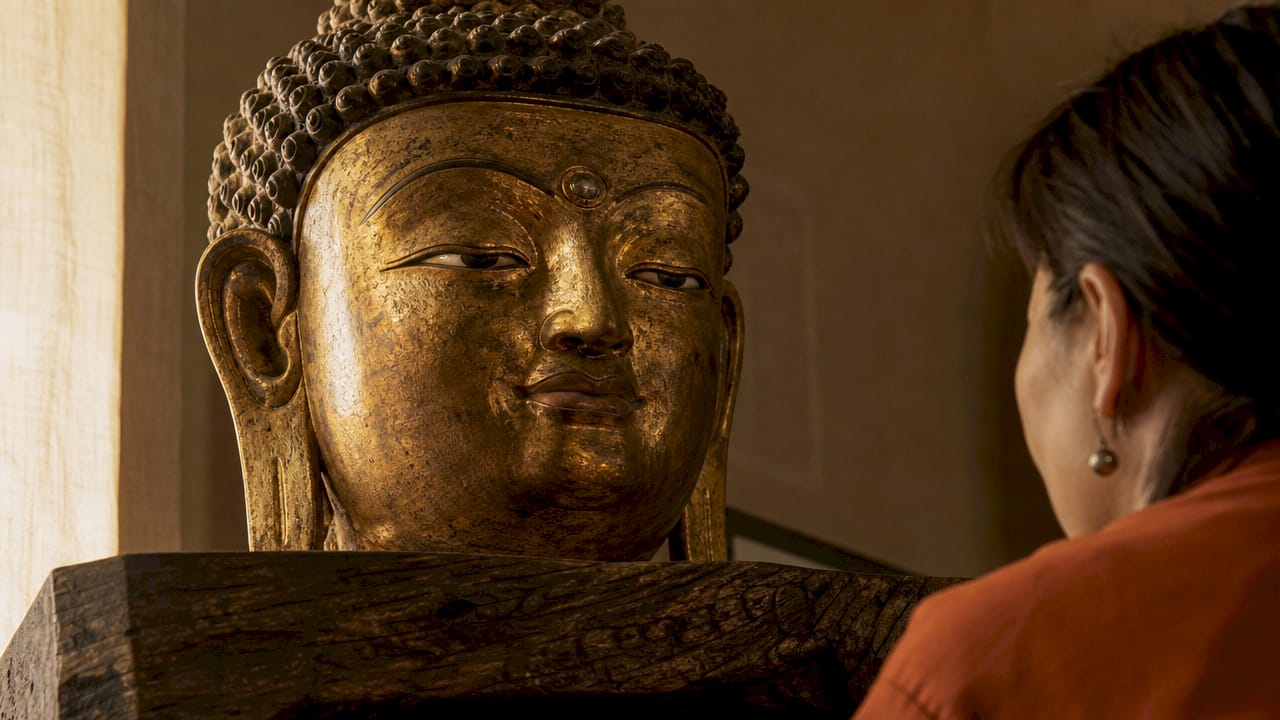
Im Lakkhana Sutta des Pali-Kanons wird beschrieben, dass die Urna Lichtstrahlen aussendet, die entfernte Welten erleuchten. Diese Lichtemission ist im Text keine Metapher. Es wird als eine buchstäbliche physische Eigenschaft des Körpers des Buddha dargestellt. Dieses biblische Detail erklärt, warum sich spätere Bildhauer dafür entschieden, die Urna mit Edelsteinen oder Kristallen zu versehen: Das Material fängt Licht ein und gibt die Beschreibung der Sutras in physischer Form wieder.
Die Urna ist kein Schmuckstück, das zur Dekoration hinzugefügt wird. Es handelt sich um eine kanonische Anforderung. Jede Skulptur, die den historischen Buddha Shakyamuni oder einen fortgeschrittenen Bodhisattva darstellt, muss diesen enthalten, um ikonografisch korrekt zu sein.
Ursprünge und historische Entwicklung der Urna
Die Urna erscheint ab dem 2. Jahrhundert n. Chr als Standardmerkmal in der buddhistischen Ikonographie. Seine frühesten geschnitzten Formen tauchen in der Gandharan-Skulptur auf, der Kunsttradition, die im heutigen Pakistan und Afghanistan unter der Kushan-Herrschaft entstand. Gandhara-Künstler stellten die Urna als subtilen erhabenen Punkt oder eine kleine Spirale dar, was im Einklang mit dem naturalistischen Stil der Region steht, der von der hellenistischen Skulptur beeinflusst ist.
Die biblische Grundlage für die Urna basiert auf zwei großen Texttraditionen:
- Das Lakkhana Sutta des Pali-Kanons: Listet die Urna als 31. von 32 physischen Merkmalen eines großen Wesens auf und beschreibt sie als weißes Haar zwischen den Augenbrauen, das sich nach rechts kräuselt.
- Mahayana-Sutras: Erweitern Sie die lichtemittierenden Eigenschaften der Urna und beschreiben Sie Strahlen, die entfernte Buddha-Felder offenbaren und alle Bereiche der Existenz erhellen.
- Die Mahapurusha Konzept: Verbindet die Urna mit einer vorbuddhistischen indischen Tradition, außergewöhnliche Wesen anhand physischer Merkmale zu identifizieren, die der Buddhismus übernommen und systematisiert hat.
- Frühe indische buddhistische Kunst: Sanchi- und Amaravati-Reliefs aus dem 1.–2. Jahrhundert v. Chr. lassen die menschliche Gestalt Buddhas oft vollständig weg und verwenden stattdessen Symbole. Die Urna erscheint prominent, sobald die figurative Darstellung zum Standard wird.
Die Mahayana-Erweiterung der Urna-Symbolik trieb ihre visuelle Ausarbeitung in ostasiatischen Traditionen voran. Chinesische, japanische und koreanische Bildhauer stellten die Urna zunehmend als markante Edelstein- oder Kristalleinlage dar, was die Betonung des Lichts in den Sutras widerspiegelte. Dieser Wandel von der geschnitzten Spirale zum eingelegten Juwel ist eines der klarsten Beispiele dafür, dass die Theologie der Heiligen Schrift über Jahrhunderte hinweg künstlerische Formen prägte.
Wie unterscheidet sich die Urna in den verschiedenen buddhistischen Regionen und Traditionen?
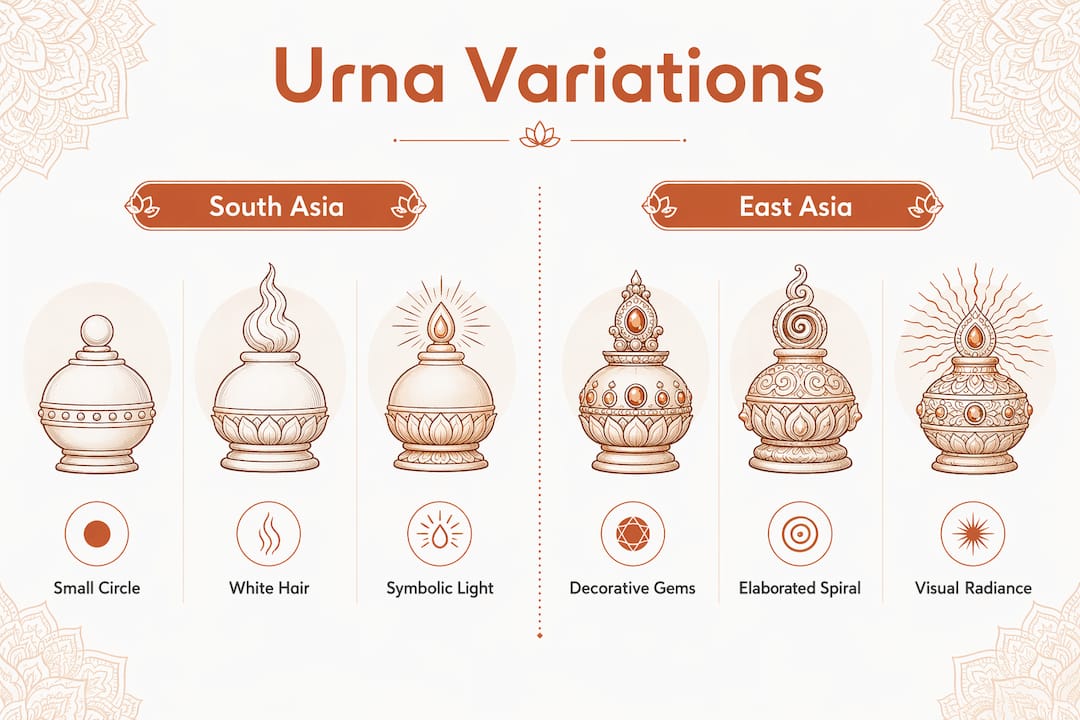
Die Urna trägt in den asiatischen Kulturen unterschiedliche Namen, und jeder Name verrät, wie die lokalen Traditionen das Zeichen interpretierten. In allen asiatischen Kulturen wird die Urna genannt uṇṇākesa in Pali, mdzod spu auf Tibetisch, Baihao auf Chinesisch, byakugō auf Japanisch und paekho auf Koreanisch. Alle diese Begriffe lassen sich grob mit „weißes Haarbüschel“ oder „Haarschatz“ übersetzen. Die Konsistenz der Bedeutung in allen Sprachen bestätigt den kanonischen Status der Marke.
| Region / Tradition | Lokaler Name | Typische visuelle Form |
|---|---|---|
| Gandhara (Südasien) | Urna (Sanskrit) | Kleiner erhabener Punkt oder dezente Spirale |
| Sri Lanka / Südostasien | Uṇṇākesa (Pali) | Geschnitzte Spirale oder erhabener Kreis |
| Tibet | Mdzod spu | Punktieren, manchmal mit Goldfarbe |
| China / Korea / Japan | Baihao / Paekho / Byakugō | Markante Edelstein- oder Kristalleinlage |
| Java / Indonesien | Urna (Sanskrit-Tradition) | Geschnitzt oder mit Edelsteinen besetzt, oft aus Bronze |
Die Vielfalt der Urna-Darstellung in den buddhistischen Regionen zeigt, wie sich lokaler Kunstgeschmack mit kanonischer Symbolik vermischt. Gandhara-Bildhauer hielten die Urna im Einklang mit ihrem zurückhaltenden Naturalismus zurückhaltend. Ostasiatische Werkstätten machten es zu einem Blickfang und verwendeten polierten Kristall oder Halbedelsteine, um die Lichtreflexion zu maximieren. Javanische Bronzegießer aus der Majapahit-Zeit stellten es oft als präzise geschnitzten erhabenen Kreis dar, der die kanonische Form Indiens mit lokalen Metallverarbeitungstraditionen in Einklang brachte.
Profi-Tipp: Achten Sie bei der Untersuchung einer südostasiatischen oder javanischen Bronze auf einen kleinen erhabenen Kreis oder eingelegten Punkt zwischen den Augenbrauen. Seine Anwesenheit bestätigt sofort, dass es sich bei der Figur um ein erleuchtetes Wesen handelt und nicht um einen gewöhnlichen Mönch oder eine Gottheit aus einer anderen Tradition.
Die Wahl des Materials signalisiert auch den ursprünglichen Kontext der Skulptur. Mit Edelsteinen eingelegte Urnen in späteren Skulpturen spiegeln die Hingabe der Spender und die Ressourcen des Tempels wider. Eine mit Kristallen besetzte Urna auf einem großen Tempelbuddha weist auf bedeutendes Mäzenatentum hin. Eine einfach geschnitzte Spirale auf einer kleineren Votivfigur spiegelt eher persönliche Hingabe als institutionellen Auftrag wider.
Welche spirituelle Bedeutung hat das Urna-Symbol?
Die Urna symbolisiert sowohl ein physisches Zeichen als auch eine spirituelle Metapher für ein erleuchtetes Bewusstsein, das Licht und Weisheit ausstrahlt. Der wissenschaftliche Konsens betrachtet es als weit mehr als nur ein dekoratives Element. Es repräsentiert die Fähigkeit des Buddha, alle Bereiche der Existenz gleichzeitig wahrzunehmen, eine Fähigkeit, die unerleuchteten Wesen nicht zur Verfügung steht.
„Die Urna ist der Punkt, von dem aus die Weisheit Buddhas nach außen strahlt und alle Welten erleuchtet. Sie ist kein drittes Auge. Sie ist ein Leuchtfeuer.“
Die Urna wird häufig fälschlicherweise als „Drittes Auge“ identifiziert, dieser Vergleich ist jedoch ikonografisch falsch. Die Urna unterscheidet sich vom hinduistischen dritten Auge Shivas, das vertikal und mandelförmig ist und mit Zerstörung und Transzendenz der Dualität in Verbindung gebracht wird. Die Urna ist horizontal, kreisförmig und steht für Lichtemission und Weisheit. Die Vermischung der beiden führt zu einer Fehlinterpretation beider Traditionen.
Die spirituelle Funktion der Urna als Lichtaustrittspunkt hat in der buddhistischen Theologie Vorrang vor ihrer physischen Erscheinung. Diese Unterscheidung ist für Sammler und Wissenschaftler wichtig. Die Urne einer Skulptur ist nicht dazu da, schön auszusehen. Es soll signalisieren, dass diese Figur einen Bewusstseinszustand erreicht hat, der über die gewöhnliche menschliche Wahrnehmung hinausgeht.
Zu den wichtigsten symbolischen Assoziationen der Urna gehören:
- Göttliche Vision: Die Fähigkeit, alle Bereiche und alle Wesen ungehindert zu sehen.
- Weisheitsstrahlung: Die aktive Weitergabe erleuchteter Einsichten an alle, die dem Buddha begegnen.
- Toller Seinsstatus: Bestätigung, dass die abgebildete Figur die volle Buddhaschaft erreicht hat oder sich auf dem Weg dorthin befindet.
- Kanonische Vollständigkeit: Eine Skulptur ohne Urna ist unabhängig von ihrer künstlerischen Qualität ikonographisch unvollständig.
Das Unalome-Yantra, ein stilisiertes Spiralsymbol, das in der buddhistischen Kultur weit verbreitet ist, leitet sich direkt von der Urna ab. Dies verstärkt die Reichweite der Urna über die Skulptur hinaus bis hin zu Tätowierungskunst, Manuskriptdekoration und Ritualobjekten in ganz Südostasien.
So identifizieren Sie die Urna in buddhistischen Skulpturen und Kunstsammlungen
Die Urna dient als unmittelbares visuelles Zeichen dass es sich bei einer Figur um einen erleuchteten Buddha oder einen fortgeschrittenen Bodhisattva handelt, was sie von gewöhnlichen Mönchen oder kleineren Gottheiten unterscheidet. Um es richtig zu erkennen, muss man wissen, worauf man achten und was man ausschließen sollte.
-
Suchen Sie zuerst das Stirnmal. Die Urna sitzt immer zwischen den Augenbrauen, etwas oberhalb des Nasenrückens. Es befindet sich niemals auf dem Scheitel (das heißt). Ushnisha, ein separates Zeichen) und niemals unterhalb der Nase.
-
Identifizieren Sie das Formular. Die Urna erscheint je nach Region und Epoche als erhabene Spirale, als geschnitzter Kreis, als aufgemalter Punkt oder als eingelegter Edelstein. All dies sind gültige Darstellungen derselben kanonischen Marke.
-
Querverweis mit der Ushnisha. Die Ushnisha ist der kraniale Vorsprung auf dem Kopf des Buddha. Skulpturen, bei denen sowohl die Urna als auch die Ushnisha vorhanden sind, sind ikonografisch vollständig. Das Vorhandensein beider Zeichen zusammen ist ein starkes Authentifizierungssignal für Buddha-Figuren.
-
Überprüfen Sie das Material auf Kontexthinweise. Eine Bronzefigur aus Java bzw Kambodscha mit einer präzise gegossenen Urna weist auf eine Werkstatt hin, die mit kanonischen Sanskrit-Texten vertraut ist. Eine thailändische Figur aus lackiertem Holz mit einer bemalten Urna spiegelt die Konventionen des Theravada wider. Material- und Stilunterschiede helfen Sammlern, den Andachtskontext und die beabsichtigte Verwendung der Skulptur zu verstehen.
-
Vermeiden Sie Fehlinterpretationen durch das dritte Auge. Wenn ein Stirnfleck vertikal, länglich oder flammenförmig ist, handelt es sich bei der Figur möglicherweise eher um eine hinduistische als um eine buddhistische Gottheit. Die Urna ist immer kreisförmig oder spiralförmig, niemals länglich.
Profi-Tipp: Achten Sie bei der Beurteilung einer Bodhisattva-Figur auf die Urna neben anderen Merkmalen wie den verlängerten Ohrläppchen und der Ushnisha. Figuren wie Avalokiteshvara Tragen Sie die Urna als Zeichen ihres fortgeschrittenen spirituellen Status, auch wenn sie noch nicht die volle Buddhaschaft erreicht haben.
Sammler arbeiten mit Theravada-buddhistische Skulptur wird feststellen, dass die Urna konservativer wiedergegeben ist als in Mahayana-Traditionen. Figuren aus Sri Lanka und Burma zeigen typischerweise eine kleine, saubere Spirale ohne Edelsteineinlage. Diese Zurückhaltung spiegelt Theravadas stärkeres Festhalten an frühen kanonischen Beschreibungen wider als an den ausführlichen Mahayana-Berichten über Lichtemission.
Wichtige Erkenntnisse
Die Urna ist der zuverlässigste ikonografische Marker eines erleuchteten Wesens in der buddhistischen Skulptur. Sie wird durch kanonische Texte definiert, ist in allen Traditionen einheitlich und unterscheidet sich in Form und Bedeutung vom dritten Auge der Hindus.
| Punkt | Details |
|---|---|
| Kanonische Definition | Die Urna ist das 31. von 32 Hauptzeichen eines großen Wesens, dokumentiert im Lakkhana Sutta des Pali Canon. |
| Regionale Variation | Die visuelle Form reicht von einer geschnitzten Spirale in der Gandharan-Kunst bis hin zu Edelsteineinlagen in ostasiatischen und javanischen Traditionen. |
| Spirituelle Bedeutung | Die Urna stellt die Fähigkeit Buddhas dar, Weisheit auszustrahlen und alle Bereiche wahrzunehmen, und nicht ein dekoratives drittes Auge. |
| Identifikation des Sammlers | Lokalisieren Sie die kreisförmige oder spiralförmige Markierung zwischen den Augenbrauen und verweisen Sie zur ikonografischen Vollständigkeit auf die Ushnisha. |
| Unterscheidet sich von der hinduistischen Ikonographie | Die Urna ist kreisförmig und horizontal; Das hinduistische dritte Auge von Shiva ist vertikal, mandelförmig und trägt unterschiedliche Symbolik. |
Die Urna und was sie mir über das Lesen buddhistischer Kunst beigebracht hat
Ich habe mich mit buddhistischen Skulpturen befasst und diese erforscht Kambodscha, Java, Sri Lanka, Thailand, und Birma seit vielen Jahren. Die Urna ist das Detail, das eine sorgfältige Betrachtung einer Skulptur konsequent von einer oberflächlichen Betrachtung trennt. Die meisten Erstsammler bemerken zuerst die Mudra (Handbewegung) oder die Gesamthaltung. Die Urna wird übersehen, weil sie klein ist. Das ist ein Fehler.
Die Urna verrät Ihnen die Quellentradition des Bildhauers. Eine javanische Bronze mit einem präzise gegossenen erhabenen Kreis spiegelt die kanonische Sanskrit-Schulung wider. Eine burmesische Lackfigur mit einem aufgemalten Punkt spiegelt die Textkonventionen der Pali wider. Dabei handelt es sich nicht um dieselbe Tradition, und die Urna ist oft der schnellste Weg, sie voneinander zu unterscheiden, bevor man sich etwas anderes ansieht.
Die Fehlidentifikation des dritten Auges frustriert mich mehr als fast jeder andere Fehler in populären buddhistischen Kunstschriften. Die Urna ist kein drittes Auge. Das war es nie. Wenn man es „eins“ nennt, werden zwei unterschiedliche religiöse Traditionen in einem einzigen vagen Konzept zusammengefasst und die Urna ihrer spezifischen biblischen Bedeutung beraubt. Wenn Sie die Beschreibung des Lakkhana Sutta kennen und verstehen, dass dieses Zeichen Licht ausstrahlen soll, das ferne Welten erleuchtet, sehen die mit Edelsteinen eingelegten Urnen ostasiatischer Buddha-Tempel nicht mehr wie Dekoration aus. Sie wirken wie sichtbar gemachte Theologie.
Mein Rat an jeden Sammler: Bevor Sie den Zustand, die Herkunft oder den Preis einer Skulptur beurteilen, suchen Sie die Urne. Ihre Form, ihr Material und ihre Ausführung verraten Ihnen mehr über den Ursprung, die Epoche und den beabsichtigten Andachtskontext der Skulptur als fast jedes andere Einzelmerkmal.
— James, HDAsianArt.com
Authentische buddhistische Skulpturen mit Urna-Ikonographie bei HDAsianArt
HDAsianArt bietet eine kuratierte Auswahl antiker und traditioneller buddhistischer Skulpturen, bei denen die Urna vorhanden, korrekt wiedergegeben und vollständig dokumentiert ist.
Die Sammlung umfasst Stücke wie a sitzender javanischer Buddha, der predigt in Bronze, wobei die Urna als präzise gegossenes erhabenes Zeichen erscheint, das den kanonischen Standards der Majapahit-Ära entspricht. A Javanischer Avalokiteshvara Bodhisattva in der Sammlung trägt die Urna neben anderen Zeichen eines großen Wesens, was sie zu einem wichtigen Referenzstück für Sammler macht, die sich mit buddhistischer Ikonographie beschäftigen. Jede Skulptur bei HDAsianArt wird individuell von Spezialisten recherchiert, fotografiert und beschrieben, wobei weltweiter versicherter DHL-Versand möglich ist.
FAQ
Was ist die Urna in der buddhistischen Skulptur?
Die Urna ist ein kreisförmiger oder spiralförmiger weißer Haarfleck zwischen den Augenbrauen einer Buddha- oder Bodhisattva-Figur. Es ist das 31. der 32 großen physischen Merkmale eines großen Wesens (Mahapurusha) und bedeutet göttliche Vision und erleuchtetes Bewusstsein.
Ist die Urna dasselbe wie das dritte Auge?
Nein. Die Urna unterscheidet sich ikonografisch vom hinduistischen dritten Auge Shivas, das vertikal und mandelförmig ist. Die Urna ist kreisförmig oder spiralförmig und stellt ein weißes Haarbüschel dar, das Licht ausstrahlt, kein zerstörerisches oder transzendentes Auge.
Warum haben manche Urnas Edelsteine oder Kristalle?
Mit Edelsteinen eingelegte Urnas erscheinen in späteren, vom Mahayana beeinflussten Skulpturen, um die Beschreibung der Sutras über den Buddha, der Lichtstrahlen aussendet, physisch nachzubilden. Das reflektierende Material ruft diese Lichtemission in Andachts- und Tempelkontexten hervor.
Wie kann ich anhand der Urna eine Buddhafigur von einem Bodhisattva unterscheiden?
Sowohl Buddha- als auch fortgeschrittene Bodhisattva-Figuren tragen die Urna als Zeichen ihres spirituellen Status. Querverweis mit der Ushnisha (Schädelausstülpung) und anderen ikonografischen Details wie Kronenornamenten zur Unterscheidung der beiden.
Kommt die Urna in allen buddhistischen Traditionen vor?
Ja. Die Urna erscheint in allen Theravada-, Mahayana- und Vajrayana-Traditionen, obwohl ihre visuelle Form unterschiedlich ist. Theravada-Skulpturen zeigen typischerweise eine einfach geschnitzte Spirale, während ostasiatische Mahayana-Figuren oft eine markante Edelsteineinlage aufweisen.
Empfohlen
- Theravada-buddhistische Skulptur für Kunstwissenschaftler erklärt – HD Asian Art
- Seltene buddhistische Reliquienkunst: Beispiele für Sammler – HD Asian Art
- Große antike Buddha-Statue im thailändischen Stil in Lehr-Mudra – 84 cm – HD Asian Art
- Sri Lankas Buddha-Statuen erklärt: Kunst und Symbolik – HD Asian Art
