



Südostasiatische Bronzetradition: Geschichte und Bedeutung
Südostasiatische Bronzetradition: Geschichte und Bedeutung
Die südostasiatische Bronzetradition wird als vielfältiges, regionales Erbe der Metallverarbeitung definiert, das prestigeträchtige Gussobjekte wie Trommeln, Waffenornamente und religiöse Statuen in mehreren miteinander verbundenen Kulturen hervorbrachte. Wissenschaftler verwenden zur Beschreibung dieser Periode den Begriff „Metallzeit“ und nicht eine strenge Bronzezeit, da sich in der gesamten Region vor etwa 2.000 bis 500 Jahren gleichzeitig Bronze- und Eisenmetallurgie entwickelten.
Die Tradition umfasst Kulturen vom Đông Sơn in Vietnam bis zu den Khmer Kambodscha und der Montag von Thailand, Jeder trägt unterschiedliche technische und spirituelle Dimensionen bei. Um zu verstehen, was die südostasiatische Bronzetradition bedeutet, muss man sich mit ihrer Archäologie, ihren Gussmethoden und ihrer dauerhaften Rolle im religiösen Leben befassen.
Wie sieht die südostasiatische Bronzetradition historisch aus?
Die südostasiatische Bronzetradition folgte nicht der linearen Abfolge von Bronzezeit bis Eisenzeit, die aus der europäischen oder chinesischen Archäologie bekannt ist. Regionale politische und ökologische Unterschiede prägten unterschiedliche metallurgische Praktiken innerhalb eines Gesamtrahmens des Metallzeitalters, was es irreführend macht, die Region als eine einzige einheitliche Kultur zu behandeln. Bronze und Eisen tauchten an vielen Fundorten gleichzeitig auf, und Wissenschaftler ziehen es heute vor, die Tradition als ein Netzwerk miteinander verbundener metallurgischer Gemeinschaften und nicht als einen einzigen Entwicklungsbogen zu betrachten.
Mehrere große Kulturen verankern die historischen Aufzeichnungen:
- Đông Sơn-Kultur (Nordvietnam, ca. 600 v. Chr. bis 3. Jahrhundert n. Chr.): Die archäologisch am besten dokumentierte bronzeproduzierende Gesellschaft auf dem südostasiatischen Festland, bekannt für ihre kunstvollen Trommeln und Waffen
- Mon Dvaravatī (zentral Thailand, 6. bis 11. Jahrhundert n. Chr.): stellte buddhistische Bronzestatuen mit besonderen stilistischen und technischen Merkmalen her
- Khmer-Reich (Kambodscha, 9. bis 15. Jahrhundert n. Chr.): Guss großformatiger hinduistischer und buddhistischer Bronzen, die an staatliche Zeremonien gebunden sind
- Indonesische Traditionen (Java und Sumatra, 8. bis 10. Jahrhundert n. Chr.): Es wurden hinduistische und buddhistische Statuetten mit Legierungszusammensetzungen hergestellt, die Verbindungen zu Festlandtraditionen erkennen lassen
Austauschnetzwerke transportierten sowohl Rohstoffe als auch technisches Wissen zwischen diesen Kulturen. Wissenschaftliche Rekonstruktionen betonen dass es bei der Bronzemetallurgie in Südostasien sowohl um soziale Interaktion und zeremonielle Entwicklung als auch um die Materialproduktion ging. Das gleichzeitige Auftauchen von Eisen neben Bronze deutet auch darauf hin, dass Gemeinschaften Metalle gezielt für unterschiedliche funktionelle und rituelle Zwecke einsetzten, anstatt feste technologische Stufen zu durchlaufen.
Profi-Tipp: Wenn Sie die Geschichte der Bronze in Südostasien studieren, vergleichen Sie archäologische Phasenrahmen mit spezifischen Standortberichten. Breite regionale Zeitpläne verdecken oft wichtige lokale Unterschiede, wann und wie die Verwendung von Bronze begann.
Was sind die prägenden Bronzeartefakte dieser Tradition?
Die bekanntesten Objekte der südostasiatischen Bronzetradition sind die Đông Sơn-Trommeln, die im Wachsausschmelzverfahren gegossen und mit geometrischen Mustern und Szenen aus dem täglichen und zeremoniellen Leben verziert wurden. Đông Sơn Schlagzeugdatum Von etwa 600 v. Chr. bis zum 3. Jahrhundert n. Chr. dienten sie sowohl als Musikinstrumente als auch als Kultobjekte. Ihre Tympana (flache Oberseite) weist typischerweise ein zentrales Sternmotiv auf, das nach außen strahlt und von Gruppen aus Vögeln, Booten, Kriegern und Tänzern umgeben ist. Diese Bilder sind nicht rein dekorativ. Sie kodieren kosmologische und soziale Erzählungen, die Archäologen weiterhin interpretieren.
Über Trommeln hinaus brachte die Tradition eine breite Palette verschiedener Artefakttypen hervor:
- Waffenornamente: Äxte, Speerspitzen und Dolche mit gegossenen Zierelementen, gefunden in ganz Vietnam, Thailand, und der indonesische Archipel
- Schmuck und persönliche Verzierung: Armbänder, Fußkettchen und Ohrringe aus Bronze, die aus Grabstätten geborgen wurden, was auf die Rolle von Bronze bei der Kennzeichnung des sozialen Status hinweist
- Religiöse Statuen: Im Rundguss gegossene buddhistische und hinduistische Bronzefiguren, vom handtellergroßen Votivobjekt bis zum monumentalen Tempelbild
- Ritualgefäße: Behälter, die in zeremoniellen Kontexten verwendet werden, von denen einige direkte Verbindungen zu chinesischen Bronzegefäßtraditionen aufweisen
Das Wachsausschmelzverfahren (auch Wachsausschmelzverfahren genannt). cire perdue) ist das technische Markenzeichen der schönsten Objekte der Tradition. Ein Wachsmodell wird mit Ton überzogen, gebrannt, um das Wachs auszuschmelzen, und dann mit geschmolzener Bronze gefüllt. Dieses Verfahren ermöglicht feine Oberflächendetails und komplexe dreidimensionale Formen, die durch Sandguss nicht erreicht werden können. Die Sukhothai-Bronzeskulptur Tradition in Thailand stellt eine der raffiniertesten Anwendungen dieser Methode in der Region dar.
| Artefakttyp | Region | Primäre Funktion |
|---|---|---|
| Đông Sơn Schlagzeug | Vietnam, Süden China | Ritual, Musik, Prestige |
| Buddhistische Statuetten | Thailand, Kambodscha, Indonesien | Religiöse Verehrung |
| Äxte mit Sockel | Festland und Insel Südostasien | Funktional, zeremoniell |
| Hinduistische Bronzen | Java, Sumatra, Kambodscha | Tempelanbetung |
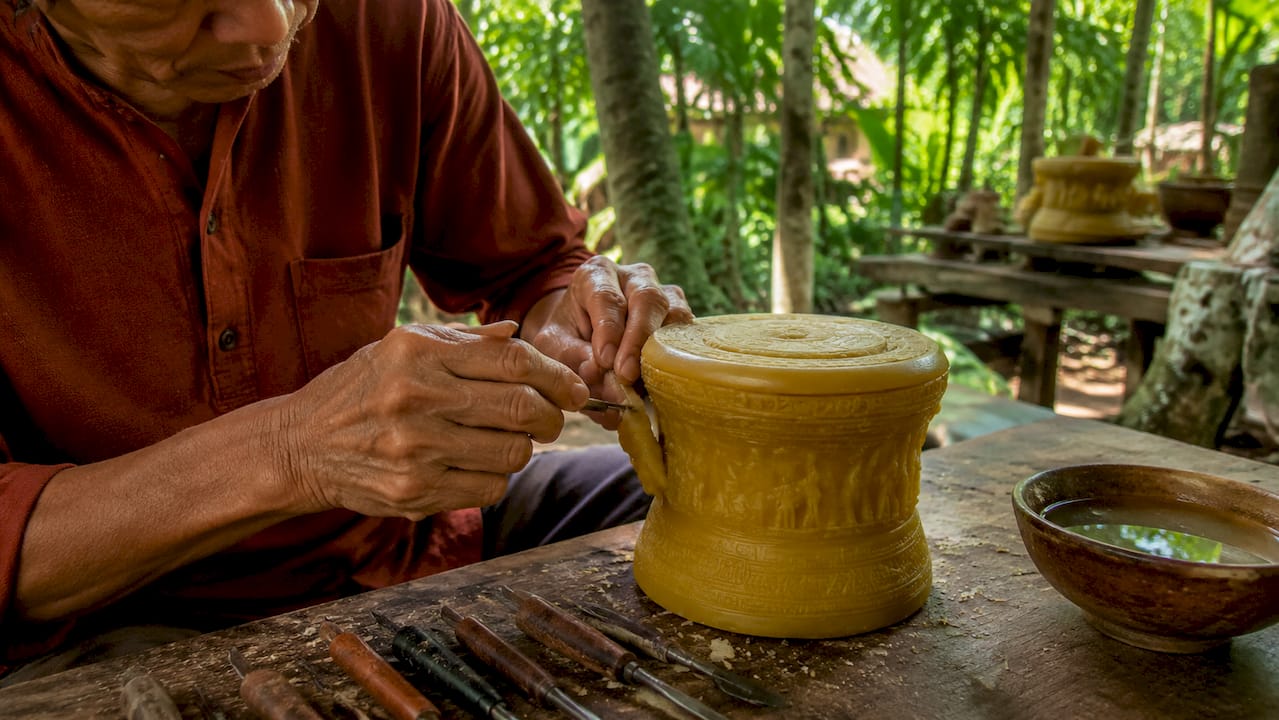
Profi-Tipp: Das Vorhandensein von Gussnähten und Kernstiften an einem Bronzegegenstand kann dabei helfen, seine Herstellungsmethode zu identifizieren. Stücke aus Wachsausschmelzverfahren weisen typischerweise feinere Oberflächendetails und weniger sichtbare Nähte auf als Objekte aus Sandguss.
Wie unterscheiden sich regionale Legierungszusammensetzungen und Gussverfahren?
Regionale Unterschiede in der Legierungszusammensetzung sind einer der aufschlussreichsten Aspekte der südostasiatischen Metallurgie. Typischerweise werden indonesische Bronzen verwendet bleifreie Zinnbronze, wobei einige Stücke einen ungewöhnlich hohen Zinngehalt aufweisen. Diese hochzinnhaltige Formel verbindet bestimmte indonesische Statuen technisch mit den Traditionen der Mon und Khmer auf dem Festland und weist darauf hin, dass metallurgisches Wissen unabhängig von stilistischen Einflüssen über Seewege verbreitet wurde.
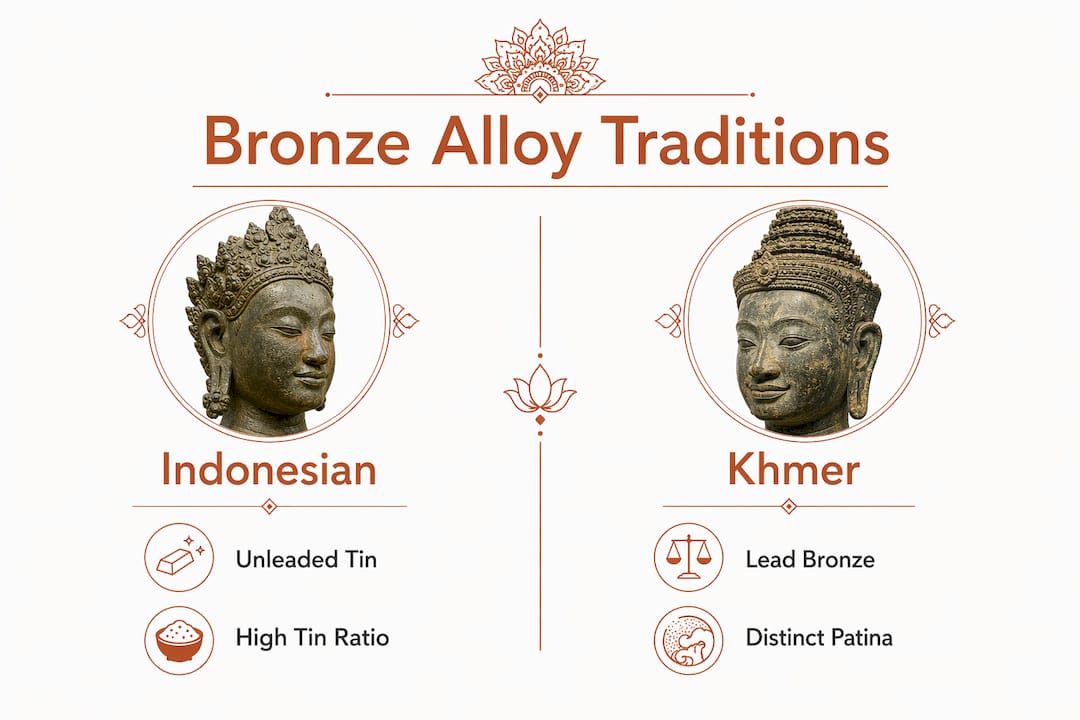
Die Unterscheidung zwischen stilistischer Ähnlichkeit und tatsächlichem Rezeptaustausch ist für das Verständnis des kulturellen Austauschs von enormer Bedeutung. Die Entflechtung stilistischer Einflüsse aus der metallurgischen Rezepturübertragung ist heute eine zentrale Forschungsmethode zur Rekonstruktion interregionaler Zusammenhänge. Zwei Statuen können nahezu identisch aussehen, wenn sie aus chemisch unterschiedlichen Legierungen gegossen werden, was bedeutet, dass sie in verschiedenen Werkstätten hergestellt wurden, auch wenn beide von derselben ikonografischen Tradition inspiriert wurden.
Die Neutronentomographie hat die Art und Weise, wie Wissenschaftler religiöse Bronzen analysieren, verändert. Diese zerstörungsfreie Bildgebungstechnik macht innere Strukturen sichtbar, ohne das Objekt zu beschädigen. Die Neutronentomographie lokalisiert Weiheablagerungen, die während ritueller Aktivierungszeremonien in Statuen platziert werden. Diese Ablagerungen, zu denen Samen, Edelsteine oder beschriftete Metallplatten gehören können, bestätigen, dass die Statuen als lebende rituelle Präsenz und nicht als statische Kunstobjekte behandelt wurden. Die Technik wurde auf indonesische Statuetten aus dem 8., 9. und 10. Jahrhundert angewendet, mit Ergebnissen, die das wissenschaftliche Verständnis der Funktionsweise dieser Objekte verändert haben.
Die folgende Tabelle fasst die wichtigsten technischen Unterschiede zwischen drei großen regionalen Traditionen zusammen:
| Tradition | Legierungstyp | Besonderheit |
|---|---|---|
| Indonesisch (Java/Sumatra) | Bleifreie Zinnbronze, teilweise mit hohem Zinngehalt | Interne Weiheablagerungen durch Neutronentomographie bestätigt |
| Mon Dvaravatī (Thailand) | Variable Zinn-Blei-Bronze | Starke stilistische Verbindungen zu indischen Gupta-Prototypen |
| Khmer (Kambodscha) | Gewöhnliche Bleibronze | Großformatiger Guss für Tempelkontexte |
Profi-Tipp: Wenn Sie eine südostasiatische Bronzestatue zu Sammlungs- oder Forschungszwecken untersuchen, Datierung antiker thailändischer Bronzen Durch Legierungsanalyse und Stilvergleich ist eine zuverlässigere Zuschreibung möglich als durch Herkunftsdokumente allein, insbesondere angesichts der Plünderungsgeschichte vieler Stätten.
Welche kulturelle und spirituelle Bedeutung hat Bronze in Südostasien?
Bronzeobjekte in Südostasien haben Bedeutungen, die weit über ihre materielle Zusammensetzung hinausgehen. Bronzetrommeln bleiben zeremonielle Symbole bei Gruppen wie den Zhuang, Lolo und anderen ethnischen Gemeinschaften in Vietnam und im Süden China, wo sie weiterhin in Tempelritualen und Gemeinschaftszeremonien auftauchen. Vietnam bezeichnet Đông Sơn-Trommeln als nationale Kultursymbole, eine Anerkennung, die die moderne nationale Identität mit einem metallurgischen Erbe vor der Staatsgründung verbindet.
Die Einbeziehung indischer religiöser Ikonographie in südostasiatische Bronzestatuen veranschaulicht einen Prozess, den Wissenschaftler Lokalisierung nennen. Buddhistische und hinduistische Bronzeskulpturen nahm indische ikonografische Konventionen auf und wurde gleichzeitig durch lokale rituelle Praktiken, ästhetische Vorlieben und politische Kontexte umgestaltet. Ein bronzener Khmer-Vishnu und ein javanischer bronzener Vishnu weisen möglicherweise dieselben ikonografischen Merkmale auf, unterscheiden sich jedoch in Körperhaltung, Proportionen und Oberflächenbehandlung auf eine Art und Weise, die unterschiedliche lokale Traditionen widerspiegelt. Das ist keine Nachahmung. Es ist kreative Anpassung.
Die spirituelle Bedeutung von Bronzeobjekten wirkte auf mehreren Ebenen gleichzeitig:
- Kosmologisch: Trommeln verschlüsselte Weltanschauungen über die Beziehung zwischen Himmel, Erde und Wasser
- Politisch: Große bronzene Tempelbilder symbolisierten königliche Schirmherrschaft und legitimierte staatliche Autorität
- Beerdigung: Grabbeigaben aus Bronze markierten den sozialen Rang und dienten dem Verstorbenen als ritueller Schutz
- Andächtig: Religiöse Statuen dienten als Mittelpunkt für tägliche Opfergaben und Meditationsübungen
Die Lokalisierung indischer religiöser Einflüsse in Bronzeobjekten spiegelt eher dynamische historische Prozesse als passive Rezeption wider. Gemeinschaften in ganz Südostasien wählten, modifizierten und interpretierten indische Modelle neu, um lokalen spirituellen und politischen Bedürfnissen gerecht zu werden. Das Ergebnis ist eine Bronzetradition, die nach außen blickt Indien und China während es in seinen Formen und Funktionen deutlich südostasiatisch bleibt. Verständnis Theravada-buddhistische Skulptur In diesem Rahmen wird deutlich, wie tief metallurgische und spirituelle Traditionen über Jahrhunderte hinweg miteinander verflochten waren.
Wichtige Erkenntnisse
Die südostasiatische Bronzetradition lässt sich am besten als ein Netzwerk regional unterschiedlicher metallurgischer und spiritueller Praktiken verstehen, die durch gemeinsame Gusstechniken, Austauschnetzwerke und die rituelle Zentralität von Bronzeobjekten vereint sind.
| Punkt | Einzelheiten |
|---|---|
| Rahmenwerk des Metallzeitalters | Bronze und Eisen entwickelten sich gleichzeitig in Südostasien, wodurch strenge Bezeichnungen der Bronzezeit ungenau waren. |
| Đông Sơn Schlagzeug | Diese im Wachsausschmelzverfahren aus der Zeit um 600 v. Chr. gegossenen Trommeln dienten als Ritualobjekte und nationale Symbole. |
| Legierungsvariationen verraten Austausch | Bronze mit hohem Zinngehalt verbindet indonesische und kontinentale Traditionen technisch, unabhängig von stilistischen Ähnlichkeiten. |
| Neutronentomographie | Interne Weiheablagerungen bestätigen, dass Bronzestatuen als lebende Ritualobjekte und nicht als dekorative Kunst fungierten. |
| Lokalisierung statt Nachahmung | Indische ikonografische Einflüsse wurden von den örtlichen Gemeinschaften aktiv übernommen und nicht direkt kopiert. |
Warum die technischen Details genauso wichtig sind wie die Ästhetik
Die meisten Menschen, die mit südostasiatischer Bronzekunst in Kontakt kommen, konzentrieren sich auf die Schönheit der Oberfläche: die Patina, die Haltung, die ikonografischen Details. Das ist ein vernünftiger Ausgangspunkt. Aber nach Jahren der Arbeit mit diesen Objekten bei HDAsianArt bin ich zu der Überzeugung gelangt, dass die wahre Tiefe in den technischen und rituellen Dimensionen liegt.
Die Entdeckung, dass in indonesischen Bronzestatuen Weiheablagerungen vorhanden sind, hat meine Einstellung zu jedem Stück unserer Sammlung verändert. Dabei handelt es sich nicht um Dekorationsgegenstände, die zufällig religiöse Themen haben. Sie wurden geschaffen, um von heiliger Präsenz bewohnt zu werden. Der Gussprozess, die Wahl der Legierung, die inneren rituellen Ablagerungen: All dies war Teil eines einzigen Schöpfungsakts, der gleichzeitig technischer und spiritueller Natur war.
Die Herausforderung von Plünderungen und fragmentierter Herkunft ist real. Fälle wie der Hort von Prakhon Chai zeigen, wie jahrzehntelange Fehlzuschreibungen die wissenschaftliche Bilanz verzerren können. Verantwortungsvoller Umgang mit dieser Tradition bedeutet, Unsicherheit dort zu akzeptieren, wo sie besteht, anstatt Lücken mit bequemen Narrativen zu füllen. Der ehrlichste Ansatz kombiniert wissenschaftliche Analyse, sorgfältigen archäologischen Kontext und Respekt für die lebenden Gemeinschaften, die diese Objekte immer noch als heilig betrachten.
Für Studenten und Sammler gilt gleichermaßen die gleiche Lektion: Schauen Sie sich die Legierung, die Gussmethode und den rituellen Kontext genau an, bevor Sie zu einem ästhetischen Urteil greifen. Die Bronze verrät Ihnen mehr, als die Oberfläche vermuten lässt.
— James, HDAsianArt.com
Entdecken Sie authentische südostasiatische Bronzekunst bei HDAsianArt
HDAsianArt ist auf antike Bronze-, Stein- und Holzskulpturen in Museumsqualität spezialisiert Kambodscha, Thailand, Indonesien, Sri Lanka, Vietnam und darüber hinaus. Jedes Stück der Sammlung wird individuell von Experten mit fundierten Kenntnissen der südostasiatischen Metallurgie und religiösen Ikonographie recherchiert, fotografiert und beschrieben.
Unabhängig davon, ob Sie eine wissenschaftliche Referenzsammlung aufbauen oder ein einzelnes bedeutendes Werk suchen, bietet HDAsianArt eine detaillierte Provenienzdokumentation, fachmännische Zustandsbewertungen und weltweiten versicherten DHL-Versand. Entdecken Sie alles Sammlung antiker asiatischer Kunst um authentifizierte religiöse Bronzeskulpturen zu finden, die das lebendige Erbe südostasiatischer Gusstraditionen darstellen.
FAQ
Was ist die südostasiatische Bronzetradition?
Die südostasiatische Bronzetradition bezieht sich auf ein vielfältiges, regionales Erbe der Metallverarbeitung, das prestigeträchtige Gussobjekte wie Trommeln, Waffenornamente und religiöse Statuen in Kulturen wie Đông Sơn, Khmer, Mon und indonesischen Traditionen hervorbrachte. Wissenschaftler verwenden den Begriff „Metallzeitalter“ anstelle von „Bronzezeit“, da sich Bronze und Eisen in der gesamten Region gleichzeitig entwickelten.
Was sind Đông Sơn-Bronzetrommeln?
Đông Sơn-Trommeln sind gegossene Bronzeobjekte aus der Zeit von etwa 600 v. Chr. bis zum 3. Jahrhundert n. Chr., die mit geometrischen Mustern und zeremoniellen Szenen verziert sind und sowohl als Musikinstrumente als auch als Ritualobjekte verwendet werden. Sie bleiben in Vietnam nationale Kultursymbole und gehören zu den am besten untersuchten südostasiatischen Bronzeartefakten.
Wie unterschieden sich die Bronzegusstechniken in Südostasien?
Regionale Traditionen verwendeten unterschiedliche Legierungszusammensetzungen: Indonesische Bronzen verwendeten typischerweise bleifreie Zinnbronze, während Khmer-Bronzen häufig Blei enthielten. Der hohe Zinngehalt in einigen indonesischen und kontinentalen Stücken deutet eher auf gemeinsames metallurgisches Wissen hin, das über maritime Austauschnetzwerke weitergegeben wurde, als auf einen rein stilistischen Einfluss.
Warum enthalten Bronzestatuen innere Ablagerungen?
Neutronentomographie hat ergeben, dass viele religiöse Bronzestatuen in Südostasien Weiheablagerungen wie Samen, Edelsteine oder beschriftete Metallplatten enthalten, die während ritueller Aktivierungszeremonien in ihr Inneres gelegt werden. Diese Ablagerungen bestätigen, dass die Statuen als lebendige heilige Präsenzen und nicht als statische Kunstobjekte behandelt wurden.
Wie studiere ich verantwortungsvoll südostasiatische Bronzeartefakte?
Verantwortungsvolles Studium kombiniert wissenschaftliche Analyse (Legierungszusammensetzung, Bildgebung), sorgfältige Berücksichtigung des archäologischen Kontexts und Kenntnis der Plünderungsgeschichten, die die Herkunftsaufzeichnungen vieler Stücke fragmentiert haben. Fälle wie der Hort von Prakhon Chai veranschaulichen, wie Fehlzuschreibungen über Jahrzehnte andauern können, ohne dass eine strenge interdisziplinäre Prüfung erfolgt.
Empfohlen
- Skulptur aus der Sukhothai-Zeit: Ein kunsthistorischer Leitfaden für Gelehrte – HD Asian Art
- Theravada-buddhistische Skulptur für Kunstwissenschaftler erklärt – HD Asian Art
- Thailändische Buddha-Stile erklärt: Ein Leitfaden für Sammler – HD Asian Art
- HD Asian Art | Antike asiatische Kunst | Buddhistische Statuen | Hinduistische Skulpturen
