



Südostasiatische Kunstgalerie: 10 Sammlungen, die man unbedingt besuchen muss
Südostasiatische Kunstgalerie: 10 Sammlungen, die man unbedingt besuchen muss
Inhaltsverzeichnis
Was eine erstklassige südostasiatische Kunstgalerie ausmacht
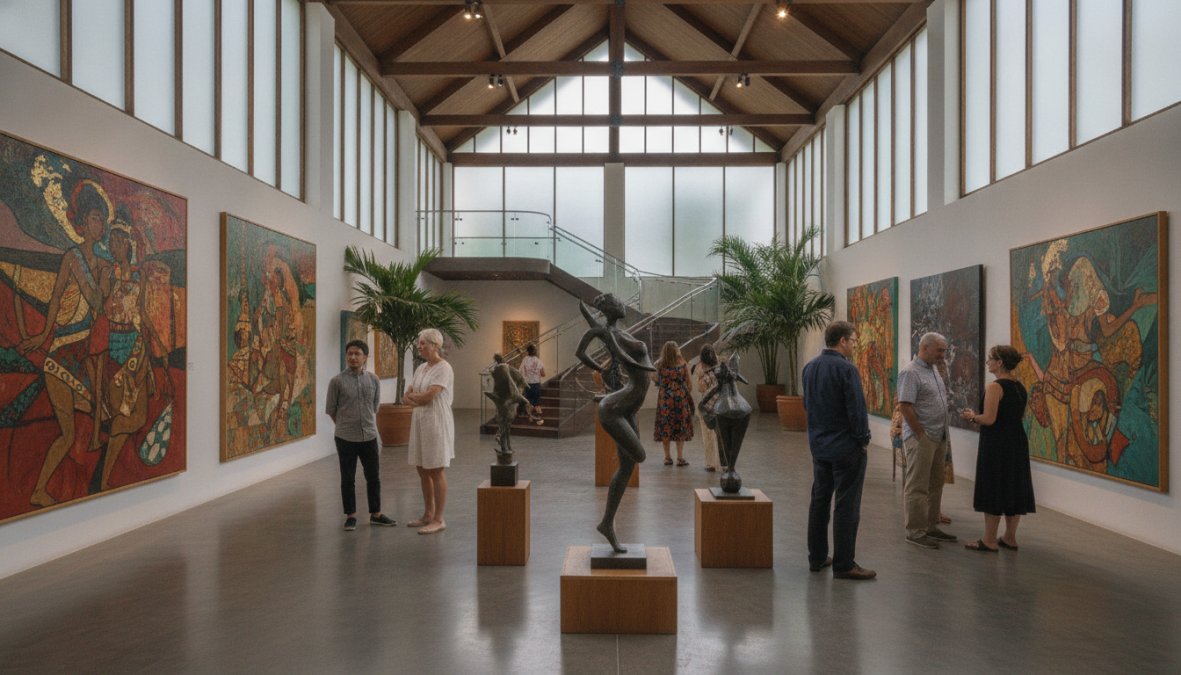
Eine südostasiatische Kunstgalerie ist ein kultureller Treffpunkt, in dem künstlerische Traditionen auf zeitgenössische Visionen treffen. Laut UNESCO-Kulturerbebericht 2026Die südostasiatischen Kunstmärkte sind jährlich um 34 % gewachsen, was das steigende weltweite Interesse an regionalen kreativen Ausdrucksformen widerspiegelt. Erstklassige Galerien vereinen historische Bedeutung mit progressiver Kuration und präsentieren sowohl Andachtsstücke als auch experimentelle Werke, die konventionelle Ästhetik herausfordern.
Was erstklassige Institutionen von gewöhnlichen Orten unterscheidet, hängt von drei Faktoren ab: der Tiefe der Sammlung, der wissenschaftlichen Genauigkeit und dem Engagement für die Künstlerentwicklung. Die besten Veranstaltungsorte kontextualisieren Kunst, erklären, warum ein Bodhisattva aus einer Kupferlegierung aus dem 15. Jahrhundert heute wichtig ist, und schaffen einen Dialog zwischen alter hinduistischer Ikonographie und zeitgenössischem südostasiatischen Ausdruck.
Buddhistische und hinduistische Objekte als Sammlungsanker
Buddhistische und hinduistische Bildhauertraditionen bilden den philosophischen Kern südostasiatischer Kunstgalerien. Ein Khmer-Bodhisattva aus der Angkor-Zeit demonstriert technische Präzision bei der Steinmetzarbeit, die die künstlerische Praxis in der gesamten Region beeinflusste. Museen wie die National Gallery Singapore widmen diesen Andachtspraktiken ganze Flügel und zeigen eingelegte Bronzefiguren, geschnitzte Steinreliefs und bemalte Holzskulpturen, die regionale Unterschiede in der buddhistischen Interpretation offenbaren.
Für Sammler stellen buddhistische und hinduistische Objekte das stabilste Segment des südostasiatischen Kunstmarktes dar. Hier ist die Herkunft von entscheidender Bedeutung, da die Authentifizierung Fachwissen erfordert. Die wissenschaftlichen Ressourcen des Asia Art Archive bieten unschätzbare Dokumentation und helfen Sammlern, die Echtheit zu überprüfen und die Reise eines Objekts durch die Zeit zu verstehen.
Skulpturale und malerische Traditionen werden ausgestellt
Bildhauertraditionen in südostasiatischen Galerien zeigen die Beherrschung der dreidimensionalen Form in der Region. Die Steinschnitzerei erreichte während der Angkor-Zeit eine außergewöhnliche Raffinesse. Der Bronzeguss entwickelte unterschiedliche regionale Stile. Zeitgenössische Bildhauer bauen auf diesen Grundlagen auf, würdigen manchmal traditionelle Techniken und unterwandern sie manchmal bewusst.
Die klassische südostasiatische Malerei betonte die erzählerische und dekorative Funktion durch Tempelwandgemälde und Manuskriptillustrationen. Moderne und zeitgenössische Maler führten Perspektive, Abstraktion und persönlichen Ausdruck ein. Regionale Unterschiede spielen eine große Rolle. Die burmesischen Maltraditionen unterscheiden sich von den thailändischen Traditionen, die wiederum von den vietnamesischen Ansätzen abweichen. Was diese Traditionen im Jahr 2026 so faszinierend macht, ist die Art und Weise, wie lebende Künstler auf sie Bezug nehmen, indem sie traditionelle Pigmente auf Leinwand verwenden oder Holz mit überlieferten Techniken schnitzen, um abstrakte Formen zu schaffen.
Schneller Vergleich: Galerietypen und Spezialisierungen
| Galerietyp | Hauptfokus | Am besten für | Geografische Basis |
|---|---|---|---|
| Nationalmuseen | Umfangreiche regionale Sammlungen | Kunsthistoriker, Studenten | Singapur, Bangkok, Jakarta |
| Kommerzielle Galerien | Lebende Künstler, zeitgenössische Arbeiten | Ernsthafte Sammler | Mehrere regionale Hubs |
| Forschungsarchiv | Dokumentation, Stipendium | Forscher, Kuratoren | Hongkong, digitaler Zugang |
| Aufstrebende Künstlerräume | Experimentelle, ortsspezifische Arbeit | Fortschrittliche Sammler | Jakarta, Yangon, Bangkok |
| Online-Plattformen | Zugängliche, vielfältige Auswahl | Digital-First-Sammler | Globale Reichweite |
Verschiedene Galerietypen dienen unterschiedlichen Zwecken. Nationale Institutionen wahren den historischen Kontext und wahren wissenschaftliche Standards. Kommerzielle Galerien fördern Künstlerkarrieren und erleichtern den Verkauf. Ihr Ansatz sollte zu Ihren Zielen passen: Bauen Sie eine Sammlung auf, suchen Sie nach Bildung oder entdecken Sie aufstrebende Talente?
Museumssammlungen: National Gallery Singapore & Beyond
National Gallery Singapore: Regional Heritage Hub
Die National Gallery Singapore besitzt die größte öffentliche Sammlung moderner und zeitgenössischer Kunst aus Singapur und Südostasien. Ein Spaziergang durch die permanenten Galerien bedeutet, die künstlerische Entwicklung der gesamten Region über mehr als 150 Jahre kennenzulernen. Die Stärke der Galerie liegt in der Kontextualisierung, die erklärt, warum bestimmte Maler wichtig sind und wie Künstler auf Kolonialismus, Unabhängigkeit, Modernisierung und Globalisierung reagierten.
Die National Gallery Singapore bietet öffentliche Online-Kurse und Bildungsressourcen zur regionalen Kunstgeschichte an und demokratisiert so den Zugang zu Fachwissen über die physischen Besucher hinaus.
Asia Art Archive: Forschung und Dokumentation
Das Asia Art Archive ist eine gemeinnützige Forschungsorganisation, die Archive aufbaut und Ressourcen zur Dokumentation der jüngsten Geschichte der zeitgenössischen Kunst in Asien bereitstellt. Für Sammler und ernsthafte Liebhaber ist es von unschätzbarem Wert, um auf digitalisierte Materialien über Künstler zuzugreifen, historische Aufsätze zu lesen und Ausstellungsgeschichten zu überprüfen.
Zeitgenössische südostasiatische Kunstgalerien
Gajah Gallery: Etablierte und aufstrebende Talente
Die Gajah Gallery vertritt seit 1996 südostasiatische Künstler und hat sich den Ruf erworben, Talente frühzeitig zu erkennen und die langfristige künstlerische Entwicklung zu unterstützen. Was die Gajah Gallery auszeichnet, ist die kuratorische Sorgfalt. Die Ausstellungen umfassen kritische Essays und Künstlerstatements, die den Zuschauern helfen, zu verstehen, was sie sehen. Das Netzwerk der Galerie erstreckt sich über Südostasien, verbindet Künstler über Grenzen hinweg und positioniert regionale künstlerische Ausdrucksformen in breiteren Dialogen über zeitgenössische Praxis.
ROH Jakarta: Experimentelle und ortsspezifische Arbeit
ROH operiert von Jakarta aus mit der Mission, experimentelle zeitgenössische Kunst und aufstrebende indonesische Künstler zu unterstützen. Die Galerie umfasst Installationen, Performances und ortsspezifische Arbeiten, die herkömmliche Galerieformate herausfordern. Für Sammler, die an aufstrebenden indonesischen Künstlern interessiert sind, bietet ROH eine frühzeitige Begegnung mit Künstlern, die oft internationale Bekanntheit erlangen.
100 Tonson Gallery Bangkok: Regionaler und globaler Dialog
Die 100 Tonson Gallery in Bangkok positioniert sich an der Schnittstelle zwischen thailändischer und globaler zeitgenössischer Kunst. Die Galerie zeigt regionale Künstler neben internationalen Persönlichkeiten und schafft so einen Dialog zwischen lokaler Praxis und globalen Gesprächen. Für Sammler, die Arbeiten an der Schnittstelle zwischen regionaler Identität und internationaler Relevanz suchen, bietet die Galerie einen entscheidenden Zugang.
River Gallery Yangon: Burmesische zeitgenössische Kreativität
Die River Gallery in Yangon zeigt zeitgenössische Kreativität aus Myanmar und repräsentiert sowohl etablierte als auch aufstrebende burmesische Künstler. Die burmesische zeitgenössische Kunst hat im Jahr 2026 ein besonderes Gewicht, da sich viele Künstler direkt mit sozialen und politischen Themen auseinandersetzen. Für Sammler, die authentische Stimmen aus einer unterrepräsentierten Region suchen, bietet burmesische zeitgenössische Kunst echte künstlerische Innovation.
FOST Gallery Singapur: Progressive Vision
Die FOST Gallery im Kunstcluster Gillman Barracks in Singapur konzentriert sich auf progressive zeitgenössische Künstler mit besonderem Schwerpunkt auf singapurischen Talenten. Für Sammler, die sich für moderne zeitgenössische Praxis interessieren, bietet die FOST Gallery Zugang zu Künstlern, die an der Spitze regionaler und internationaler Entwicklungen arbeiten.
So sammeln Sie südostasiatische Kunst: Praktische Wege
Direkter Galerieerwerb und Künstlerbeziehungen
Der einfachste Ansatz zum Sammeln besteht darin, direkt mit Galerien zusammenzuarbeiten. Der Aufbau von Beziehungen zu Galeriedirektoren und Kuratoren beschleunigt Ihre Sammelreise. Sie verstehen Ihre ästhetischen Vorlieben und machen Sie auf bevorstehende Anschaffungen aufmerksam, die Ihren Interessen entsprechen.
Online-Plattformen und Marktzugang
Digitale Plattformen haben den Zugang zu südostasiatischen Kunstgalerien demokratisiert. The Artling ist ein kuratierter Online-Marktplatz mit zeitgenössischer Kunst aus Asien und den besten Galerien und Künstlern Südostasiens. Die Online-Akquise bietet Komfort und oft günstigere Preise als physische Galerien, allerdings verliert man das physische Erlebnis, Arbeiten in Originalgröße zu sehen.
Auktionshäuser und Werke mit Investment-Grade-Bewertung
Auktionshäuser wie Bonhams unterhalten eigene Abteilungen für moderne und zeitgenössische Kunst aus Südostasien. Auktionen bieten Zugang zu seltenen Werken etablierter Meister und aufstrebender Künstler mit professioneller Bewertung und Authentifizierung.
| Erwerbsmethode | Am besten für | Vorteile | Überlegungen |
|---|---|---|---|
| Direkte Galerie | Beziehungsaufbau, Kurationsunterstützung | Fachkundige Beratung, Authentifizierung, Herkunft | Höhere Preise, begrenzte Auswahl |
| Online-Plattformen | Komfort, Preisvergleich | Weltweiter Zugriff, detaillierte Informationen | Keine physische Besichtigung, Versandrisiko |
| Auktionen | Investment-Grade-Arbeit, Markttransparenz | Seltene Stücke, Preisfindung | Ausschreibung, Käuferprämien |
| Künstler direkt | Aufstrebende Talente, Aufträge | Authentische Beziehungen, potenzielle Entdeckungen | Erfordert ästhetisches Vertrauen |
Berühmte südostasiatische Künstler und ihre Marktpräsenz
Zeitgenössische südostasiatische Künstler haben internationale Bekanntheit erlangt. Vietnamesische Künstler wie Tran Luong und Nguyen Tuan haben Pionierarbeit in der zeitgenössischen Praxis geleistet, die sich mit Identität und kulturellem Wandel beschäftigt. Indonesische Künstler wie Aji Susanto und Agus Suwage arbeiten medienübergreifend und schaffen Installationen, die sich mit zeitgenössischen gesellschaftlichen Themen auseinandersetzen. Thailändische Künstler wie Navin Rawanchaikul haben internationale Anerkennung erlangt.
Singapurische Künstler nehmen auf dem regionalen Markt eine besondere Stellung ein und ihre Werke sind in bedeutenden internationalen Sammlungen vertreten. Burmesische Künstler stellen das am meisten unterbewertete Segment der zeitgenössischen Kunst Südostasiens dar und bieten Sammlern, die auf der Suche nach aufstrebenden Talenten sind, Möglichkeiten.
Südostasiatische Kunstinvestition: Aufbau einer bedeutungsvollen Sammlung
Provenienz und Authentifizierung verstehen
Die Provenienz, also die dokumentierte Besitzgeschichte eines Kunstwerks, ist auf dem südostasiatischen Kunstmarkt von großer Bedeutung. Arbeiten mit klarer Herkunft erzielen Spitzenpreise und lassen sich leichter verkaufen. Seriöse Sammler verlangen eine vollständige Dokumentation der Provenienz, aus der hervorgeht, wo das Werk entstanden ist und in welchen Ausstellungen es gezeigt wurde.
Die Authentifizierung erfordert Fachwissen. Renommierte Galerien und Auktionshäuser beschäftigen Authentifizierungsspezialisten. Forschungsorganisationen wie das Asia Art Archive pflegen Dokumentationen, die zur Überprüfung historischer Stücke beitragen.
Markttrends und Wachstumspotenzial
Der südostasiatische Kunstmarkt hat im letzten Jahrzehnt ein bemerkenswertes Wachstum erlebt. Artnets asiatischer Kunstmarktbericht 2026 dokumentiert im Jahresvergleich eine stetige Ausweitung der Auktionsverkäufe und Galerieaktivitäten. Zeitgenössische Werke erzielen in vielen Fällen höhere Preise als historische Stücke. Die Märkte für zeitgenössische Kunst in Vietnam und Indonesien wachsen rasant. Burmesische zeitgenössische Kunst bleibt im Vergleich zu ihrer künstlerischen Qualität unterbewertet, was Erwerbsmöglichkeiten schafft.
Die besten Sammlungen werden von Menschen erstellt, die die Arbeit lieben. Arbeiten, die ausschließlich aus Investitionsgründen erworben wurden, weisen oft eine schlechte Leistung auf, während Arbeiten, die aufgrund ihrer künstlerischen Resonanz erworben wurden, mit zunehmender Reife des Fachgebiets tendenziell an Wert gewinnen.
Besucherführer: Planen Sie Ihr südostasiatisches Kunstgalerie-Erlebnis
Regionale künstlerische Ausdrucksformen in ganz Südostasien
Das Verständnis regionaler Unterschiede bereichert den Galeriebesuch. Die vietnamesische künstlerische Praxis legt Wert auf narratives und soziales Engagement. Die thailändische Kunst beinhaltet oft buddhistische philosophische Rahmenwerke. Indonesische Kunst integriert hinduistisch-buddhistische und islamische Traditionen. Malaysische Kunst thematisiert multikulturelle Identität. Singapurische Kunst beschäftigt sich mit dem globalen zeitgenössischen Diskurs. Die burmesische Kunst ist aufgrund der jüngsten politischen Umwälzungen von großer Dringlichkeit.
Galeriebesuche gewinnen an Bedeutung, wenn man sich vorher recherchiert. Lesen Sie mehr über die Kunstgeschichte des Landes, verstehen Sie religiöse und kulturelle Zusammenhänge und machen Sie sich mit bedeutenden Künstlern und Bewegungen vertraut.
Öffnungszeiten, Zugang und praktische Informationen
Die meisten großen Museen in Südostasien sind täglich von 10 bis 18 Uhr geöffnet und haben ein bis zwei Mal pro Woche geschlossen. Überprüfen Sie die Websites vor Ihrem Besuch, da die genauen Öffnungszeiten je nach Institution variieren können. Internationale Reisende sollten Galeriebesuche mit ausreichend Zeit einplanen, große Museen erfordern mehrere Besuche. Viele Galerien verlangen Eintritt, einige kommerzielle Galerien sind jedoch weiterhin kostenlos. Der Museumseintritt liegt in der Regel zwischen bescheiden und moderat. Bringen Sie bequeme Wanderschuhe mit und nehmen Sie sich Zeit zum Nachdenken.
Die lohnendsten Galerieerlebnisse entstehen, wenn man sich langsam bewegt, sich intensiv mit der Arbeit beschäftigt, die Anklang findet, und sich Zeit zum Nachdenken lässt.
Der Aufbau einer bedeutenden Sammlung südostasiatischer Kunstgalerien erfordert Geduld, Wissen und echte Auseinandersetzung mit der künstlerischen Praxis. Ganz gleich, ob Sie Institutionen besuchen, um Ihr Verständnis zu vertiefen, oder Arbeiten für Ihr persönliches Heiligtum erwerben, gehen Sie das Erlebnis mit Respekt für die Künstler und Kulturen an, die hinter der Arbeit stehen.
Bei HD Asian Art, Wir haben buddhistische und hinduistische Statuen neben exquisiten Khmer- und südostasiatischen Skulpturen ausgewählt, um Ihnen dabei zu helfen, Räume zu schaffen, die diese künstlerischen Traditionen würdigen. Unsere handverlesenen antiken und zeitgenössischen Stücke werden ausgewählt, um Meditationsräume und raffinierte spirituelle Innenräume aufzuwerten. Entdecken Sie unsere Sammlung und entdecken Sie, wie authentischer südostasiatischer künstlerischer Ausdruck Ihre Umgebung verändern kann.
Häufig gestellte Fragen
Was macht eine südostasiatische Kunstgalerie authentisch und seriös?
Authentische südostasiatische Kunstgalerien legen Wert auf Herkunftsdokumentation, Künstlerdarstellung und kulturellen Kontext. Suchen Sie nach Galerien mit etablierter Erfolgsbilanz, Teilnahme an internationalen Kunstmessen und transparenten Beschaffungspraktiken. Renommierte Institutionen wie die National Gallery Singapore und die Gajah Gallery halten strenge kuratorische Standards ein, stellen detaillierte Kunstwerkdokumentationen zur Verfügung und unterstützen häufig Künstlerresidenzen oder Bildungsinitiativen, die das Engagement in der regionalen Kunstgeschichte vertiefen.
Wie fange ich an, südostasiatische Kunst als Investition zu sammeln?
Beginnen Sie damit, sich durch Museumsbesuche und Galerieausstellungen weiterzubilden, um künstlerische Traditionen, regionale Stile und historischen Kontext zu verstehen. Treten Sie direkt mit auf südostasiatische Arbeiten spezialisierten Galerien in Kontakt, besuchen Sie Kunstmessen und erwägen Sie die Zusammenarbeit mit Auktionshäusern wie Bonhams für die Authentifizierung und Bewertung. Beginnen Sie mit aufstrebenden Künstlern oder zeitgenössischen Werken mittlerer Preisklasse, bevor Sie in Blue-Chip-Werke investieren. Fordern Sie stets Herkunftsdokumente und professionelle Gutachten an, um Authentizität und Investitionspotenzial sicherzustellen.
Was sind die Hauptunterschiede zwischen traditionellen und zeitgenössischen südostasiatischen Kunstgalerien?
Traditionelle südostasiatische Kunstgalerien legen Wert auf buddhistische und hinduistische Ikonographie, Bildhauer- und Maltraditionen, die in historischen Praktiken verwurzelt sind, und auf religiöse Bedeutung. Zeitgenössische Galerien konzentrieren sich auf experimentelle Installationen, moderne künstlerische Ausdrucksformen und globalen Dialog. Museen wie die National Gallery Singapore verbinden beides und beherbergen umfangreiche Sammlungen des regionalen Erbes sowie moderne Werke. Die Wahl hängt von Ihren ästhetischen Vorlieben, Ihren Investitionszielen und davon ab, ob Sie spirituelle Artefakte oder innovative künstlerische Innovationen suchen.
Welche südostasiatischen Kunstgalerien eignen sich am besten für Erstbesucher?
Die National Gallery Singapore bietet die umfassendste Einführung mit umfangreichen Sammlungen zur regionalen Geschichte und zeitgenössischen Werken sowie Bildungsressourcen. Die Gajah Gallery bietet einen leicht zugänglichen Zugang zu zeitgenössischen südostasiatischen Talenten mit klaren Künstlernarrativen. Der Artling bietet eine Online-Alternative für die digitale Erkundung. Für spirituelle Kunstsuchende bieten Galerien, die auf buddhistische und hinduistische Skulpturen spezialisiert sind, unmittelbare ästhetische und kulturelle Resonanz. Beginnen Sie mit Institutionen, die klare Besucherinformationen, Bildungsprogramme und kuratierte Highlights anbieten.
