



Kunsttradition des Mahayana-Buddhismus: Ein visueller Leitfaden
Kunsttradition des Mahayana-Buddhismus: Ein visueller Leitfaden
Die Kunsttradition des Mahayana-Buddhismus wird als visuelles System zum Ausdruck des Bodhisattva-Pfades definiert, das die Lehren des Mahayana-Sutra in symbolische Skulpturen, Gemälde und rituelle Bilder übersetzt, die Mitgefühl und Erleuchtung wecken sollen. Im Gegensatz zur dekorativen Kunst hat jede Figur, Geste und jeder Gegenstand in dieser Tradition eine doktrinäre Bedeutung.
Die Tradition reicht weit zurück Indien, Tibet, China, Japan, Korea und Südostasien produzieren einige der ikonografisch komplexesten Sakralkunstwerke der Menschheitsgeschichte. Um es zu verstehen, muss man wissen, was jedes visuelle Element kommuniziert und warum diese Entscheidungen getroffen wurden.
Was ist die Kunsttradition des Mahayana-Buddhismus?
Die Kunsttradition des Mahayana-Buddhismus ist der organisierte visuelle Ausdruck der Lehre des Mahayana-Buddhismus, der sich auf das konzentriert Bodhisattva-Ideal: das Streben nach Erleuchtung zum Wohle aller Lebewesen. Diese Motivation, Bodhicitta genannt, ist nicht nur ein theologisches Konzept. Es ist das Organisationsprinzip jeder wichtigen Kunstform der Tradition, von bronzenen Bodhisattva-Skulpturen bis hin zu kunstvollen Thangka-Rollgemälden.
Zu den Kunstformen des Mahayana gehören Skulpturen aus Bronze, Stein und Holz; Thangka-Gemälde auf Seide oder Baumwolle; architektonische Wandgemälde; und Mandalas, die als Meditationshilfen verwendet werden. Jede Form erfüllt eine bestimmte Funktion, sei es das Lehren von Lehren, die Unterstützung von Ritualen oder die Anleitung zur Meditation. Die Tradition betrachtet Kunst nicht als Dekoration. Es behandelt Kunst als funktionales Werkzeug für die spirituelle Entwicklung.
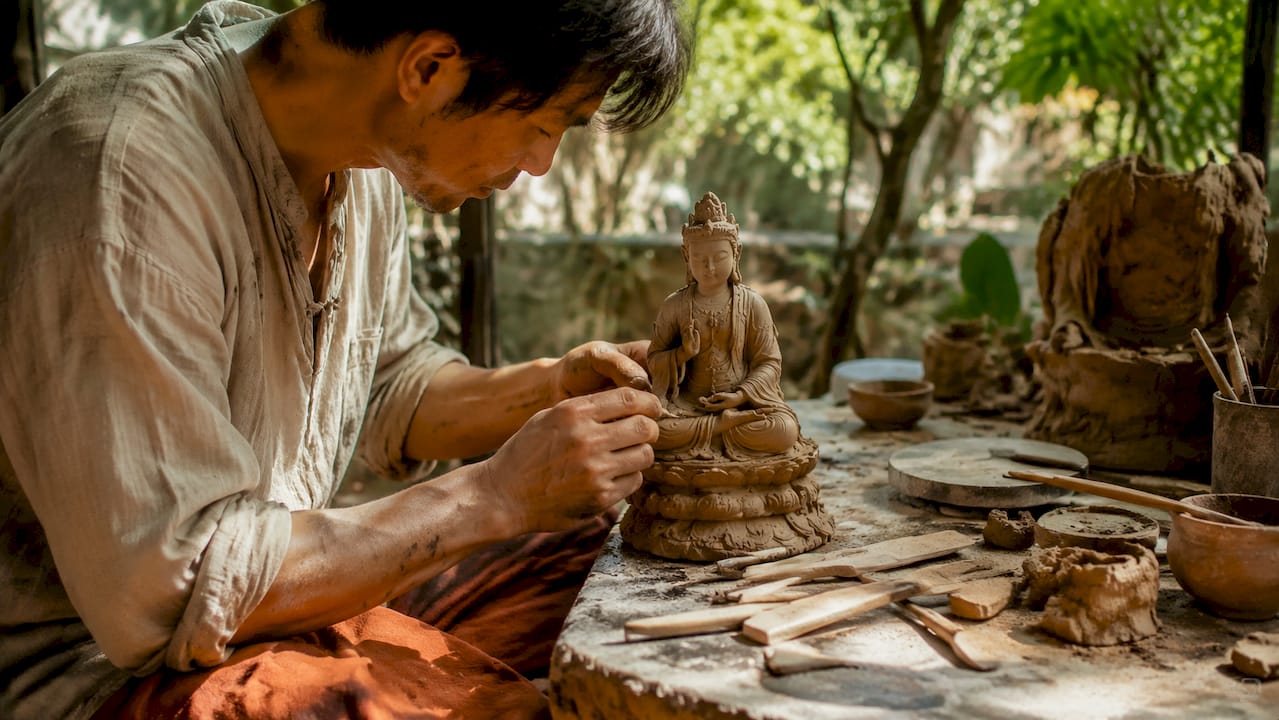
Die Bodhisattva-Weg zur Buddhaschaft erklärt, warum die Mahayana-Kunst den visuellen Katalog erleuchteter Figuren weit über den historischen Buddha Shakyamuni hinaus erweitert. Figuren wie Avalokiteshvara (Mitgefühl), Manjushri (Weisheit) und Amitabha (grenzenloses Licht) repräsentieren jeweils unterschiedliche Qualitäten des Erwachens. Diese Wucherung von Figuren ist eine direkte visuelle Konsequenz der Mahayana-Lehre und keine künstlerische Erfindung um ihrer selbst willen.
Was sind die charakteristischen Merkmale und die Ikonographie der Mahayana-buddhistischen Kunst?
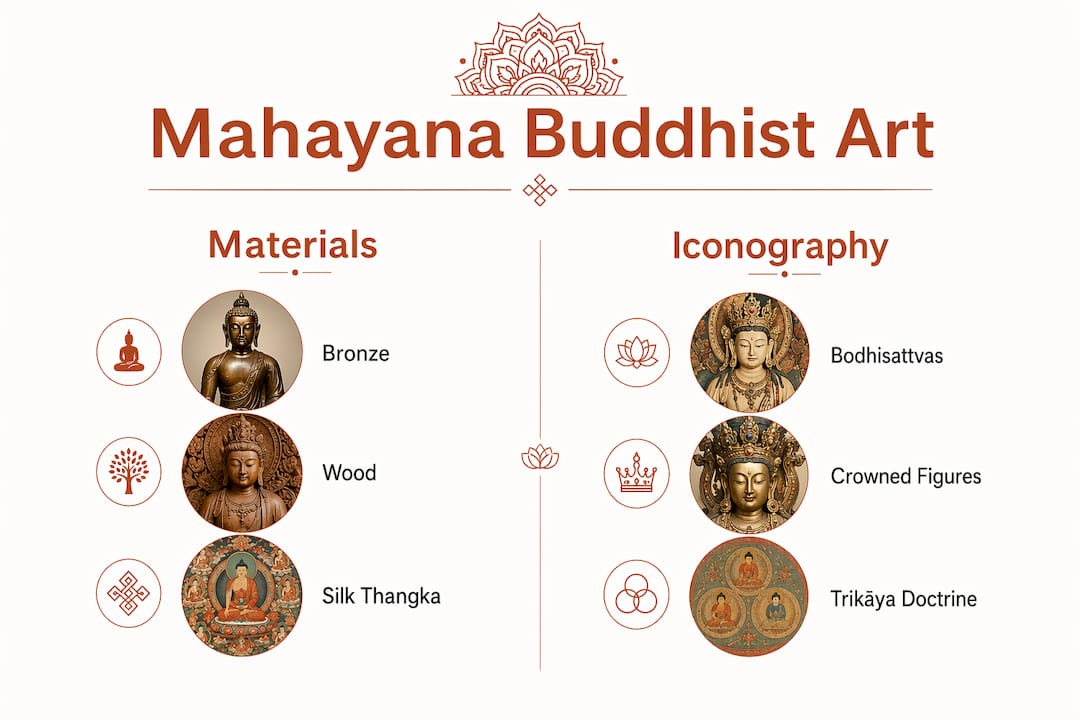
Die Kunst des Mahayana-Buddhismus verwendet eine präzise visuelle Sprache, um Figuren zu identifizieren und ihre spirituellen Qualitäten zu kommunizieren. Die Identität von Buddha- und Bodhisattva-Figuren wird durch körperliche Merkmale, gehaltene Gegenstände, Mudrā (Handgesten), āsana (sitzende oder stehende Position) und charakteristische Attribute wie Kronen, Lotusblumen, Juwelen, Bücher und Blitze bestimmt.
Zu den wichtigsten ikonografischen Markierungen gehören:
- Mudras: Handgesten mit spezifischer Bedeutung. Das Dhyāna Mudrā (im Schoß ruhende Hände) signalisiert Meditation. Das Abhaya Mudrā (erhobene rechte Hand, Handfläche nach außen) signalisiert Schutz. Das Varada Mudrā (offene Handfläche nach unten) signalisiert Großzügigkeit.
- Asanas: Sitzhaltungen. Das Vajrāsana (Lotussitz mit gekreuzten Beinen) weist auf tiefe Meditation hin. Das Lalitāsana (Einbeinanhänger) ist bei Bodhisattvas in einer entspannten, zugänglichen Haltung üblich.
- Kronen und Ornamente: Historische Buddha-Bilder zeigen normalerweise keine Krone oder Schmuck. Bodhisattvas tragen kunstvolle Kronen und Ornamente und signalisieren damit, dass sie in der Welt bleiben, um den Wesen zu helfen, und nicht ins endgültige Nirvana eingetreten sind.
- Attribute: Avalokiteshvara hält einen Lotus. Manjushri hält ein brennendes Schwert und ein Buch. Vajrapani hält einen Blitz. Diese Gegenstände sind nicht dekorativ. Sie verschlüsseln die spezifische Funktion und doktrinäre Rolle der Figur.
Die Lehre von Trikāya (drei Körper des Buddha) fügt eine weitere Ebene der Komplexität hinzu. Eine einzelne Buddha-Figur kann den historischen Shakyamuni, einen himmlischen Buddha wie Amitabha oder den Dharmakāya (die ultimative Realität selbst) darstellen. Um herauszufinden, was gemeint ist, muss man den gesamten visuellen Kontext des Bildes lesen, nicht nur die zentrale Figur.
Profi-Tipp: Wenn Sie eine Mahayana-Skulptur oder ein Mahayana-Gemälde untersuchen, schauen Sie sich zuerst die Krone an. Eine gekrönte Figur ist fast immer ein Bodhisattva oder himmlischer Buddha, nicht der historische Shakyamuni. Dieses einzelne Detail löst die meisten Fragen zur Identifizierung schnell.
Es gibt auch lokalisierte ikonografische Variationen, die keine Fehler darstellen. A 2026 MDPI-Studie über Seidenmalereien aus Dunhuang zeigt, dass die scheinbare Verschmelzung von Manjushri und Samantabhadra in bestimmten mittelalterlichen Werken eine bewusste rituell-theologische Synthese und keine künstlerische Verwirrung widerspiegelt. Diese Art der absichtlichen Variation ist in späteren Volksdrucken erhalten geblieben und zeigt, wie die Mahayana-Kunst die Lehre an lokale rituelle Bedürfnisse anpasst.
Wie spiegelt die Kunst des Mahayana-Buddhismus die Heilige Schrift und die rituelle Praxis wider?
Die Mahayana-Kunst illustriert Sutras nicht beiläufig. Es präsentiert sie als strukturierte visuelle Programme, die für den rituellen Gebrauch konzipiert sind. A 2026 MDPI-Studie zu Dunhuangs Medizin-Buddha-Bildern zeigt, wie Künstler während der Sui-Dynastie das Medizinbuddha-Sutra in Bildform übersetzten, wobei sie genau auf die Anzahl der für das Ritualbild erforderlichen Medizinstatuen und die Platzierung der Inschriftenkartuschen für die Zwölf Halbgötter achteten. Das Kunstwerk ist ein funktionales Ritualobjekt, keine narrative Illustration.
Die Beziehung zwischen Text und Bild in der Mahayana-Kunst folgt einem klaren Prozess:
- Sutra-Identifikation: Der Künstler identifiziert das spezifische Sutra oder Lehrthema, das das Werk zum Ausdruck bringen muss.
- Figurenauswahl: Geeignete Buddhas, Bodhisattvas und begleitende Figuren werden auf der Grundlage der Charaktere des Sutra ausgewählt.
- Attributzuweisung: Jede Figur erhält ihre kanonischen Attribute, Mudras und Asanas.
- Räumliche Anordnung: Die Figuren sind hierarchisch angeordnet, wobei die primäre Gottheit in der Mitte steht und die Begleiter nach außen strahlen.
- Rituelle Integration: Das fertige Werk wird geweiht und in einen bestimmten rituellen Kontext gestellt, sei es eine Tempelnische, ein tragbarer Altar oder ein Meditationsraum.
| Kunstform | Primäre Funktion | Schlüsselbeispiel |
|---|---|---|
| Tempelwandgemälde | Rituelles Tableau und Lehrlehre | Wandgemälde des Medizinbuddha in Dunhuang, Sui-Dynastie |
| Thangka-Gemälde | Tragbare Meditations- und Lehrhilfe | Tibetische Avalokiteshvara-Thangkas |
| Mandala | Visualisierungsunterstützung für die Meditation | Kalachakra-Mandala, tibetische Tradition |
| Bronzeskulptur | Andachtsbrennpunkt und Ritualobjekt | Kambodschanische Avalokiteshvara-Bronzen |
Besondere Aufmerksamkeit verdienen Thangka-Gemälde. A Thangka ist ein heiliges Rollbild Hergestellt aus Seiden- oder Baumwollstoff, dient es eher als Lehr- und Meditationshilfe als als Ausstellungsobjekt. Mönche und Anhänger nutzen Thangkas zur Visualisierungspraxis, bei der der Praktizierende die Eigenschaften der dargestellten Gottheit im Geiste verinnerlicht. Die Tradition hat ihren Ursprung in Indien zu Lebzeiten Gautama Buddhas entstand, was sie zu einer der ältesten kontinuierlichen sakralen Kunstformen der Welt macht.
Profi-Tipp: Thangka-Gemälde folgen strengen ikonometrischen Regeln, die die Proportionen jeder Figur bestimmen. Eine mit falschen Proportionen bemalte Figur gilt als rituell ineffektiv und nicht nur als ästhetisch falsch. Aus diesem Grund erfordern authentische Thangkas jahrelanges Training, um richtig hergestellt zu werden.
Die Dunhuang-Wandgemälde als integrierte visuelle Systeme zeigen, dass Beleuchtung, rituelle Objekte und räumliche Anordnung alle zur Bedeutung des Werks beitragen. Nichts ist zufällig. Dieses Prinzip gilt für alle Mahayana-Kunstformen: Das Werk ist immer ein System, keine Ansammlung einzelner Elemente.
Was sind Schlüsselbeispiele und historische Entwicklungen in der Mahayana-Kunst?
Die Kunst des Mahayana-Buddhismus entwickelte sich über einen weiten geografischen und zeitlichen Bereich hinweg und brachte unterschiedliche regionale Stile hervor, während sie gleichzeitig gemeinsame ikonografische Prinzipien beibehielt. Zu den Hauptphasen gehören:
- Uralt Indien (ab dem 1. Jahrhundert v. Chr.): Die frühe Mahayana-Kunst entstand parallel zur Entwicklung der Mahayana-Lehre. Die vom hellenistischen Kontakt beeinflusste Gandharan-Skulptur brachte die ersten anthropomorphen Buddha-Bilder hervor. Diese begründeten den physischen Kanon, den spätere Traditionen adaptierten.
- Zentralasien und Dunhuang (4. bis 11. Jahrhundert n. Chr.): Der Dunhuang-Höhlenkomplex in der Gegenwart China Enthält über 490 bemalte Höhlen mit Wandgemälden aus mehreren Dynastien. Medizinbuddha-Tableaus aus der Sui-Dynastie stellen die raffinierteste Integration von Sutra-Text und visuellem Programm in der Tradition dar.
- Tibet (ab dem 7. Jahrhundert n. Chr.): Der tibetische Buddhismus entwickelte die Thangka-Malerei und die Mandala-Kunst zu hochsystematischen Praktiken. Tibetische Thangkas folgen präzisen ikonometrischen Rastern, und diese Tradition brachte einige der detailliertesten Bodhisattva-Bilder der Welt hervor.
- Ostasien (China, Japan, Korea): Chan- und Zen-Traditionen passten die Mahayana-Ikonographie an strengere Formen an, während die Traditionen des Reinen Landes kunstvolle Amitabha-Paradiesgemälde hervorbrachten, die das westliche Reine Land in architektonischen Details zeigen.
„Der erste Thangka entstand zu Lebzeiten von Gautama Buddha und begründete eine lange Tradition heiliger buddhistischer bildender Kunst.“ — Buddhistische Tradition, wie sie in historischen Übersichten über die Ursprünge der Thangka festgehalten ist
Die Rolle von Avalokiteshvara in der buddhistischen Kunst veranschaulicht, wie sich eine einzelne Bodhisattva-Figur über Kulturen hinweg verändert. In Kambodscha, Avalokiteshvara erscheint als vierarmige Bronzefigur mit einem kleinen Amitabha-Bild in der Krone. In China, die gleiche Figur wird zum Guanyin, oft in weißen Gewändern dargestellt. In Tibet wird die Figur zu Chenrezig, dargestellt mit elf Köpfen und tausend Armen. Der Lehrkern bleibt identisch. Der visuelle Ausdruck passt sich den örtlichen Andachtsbedürfnissen an.
Wie unterscheidet sich die Kunst des Mahayana-Buddhismus von anderen buddhistischen Kunsttraditionen?
Die Mahayana-Kunst unterscheidet sich von anderen buddhistischen Kunsttraditionen vor allem durch ihren Fokus auf das Bodhisattva-Ideal und die visuelle Verbreitung erleuchteter Figuren, die sie hervorbringt.
| Funktion | Mahayana-Kunst | Theravada-Kunst | Vajrayana-Kunst |
|---|---|---|---|
| Zentrale Figur | Bodhisattvas und mehrere Buddhas | Historischer Buddha (Shakyamuni) | Tantrische Gottheiten und Mandalas |
| Spirituelles Ziel dargestellt | Universelle Erleuchtung für alle Wesen | Individuelle Befreiung (Arahant-Pfad) | Schnelle Erleuchtung durch tantrische Praxis |
| Ikonografische Komplexität | Hoch: mehrere Figuren, Attribute, kosmische Szenen | Mäßig: Konzentrieren Sie sich auf das Leben und die Lehre Buddhas | Sehr hoch: zornige Gottheiten, komplexe Mandalas |
| Primäre Kunstformen | Skulptur, Thangka, Wandgemälde, Mandala | Skulptur, Reliefschnitzerei, Wandgemälde | Mandala, Thangka, Ritualgeräte |
| Geografische Zentren | Indien, Tibet, China, Japan, Korea | Sri Lanka, Thailand, Birma, Kambodscha | Tibet, Nepal, Bhutan, Mongolei |
Theravada-buddhistische Skulptur Im Mittelpunkt stehen der historische Buddha und das Arahat-Ideal: die persönliche Befreiung aus dem Kreislauf der Wiedergeburt. In der Theravada-Kunst werden Bodhisattvas selten im Sinne des Mahayana dargestellt. Das visuelle Vokabular ist enger und konzentriert sich mehr auf Shakyamunis Lebensereignisse und Lehrhaltungen.
Die Vajrayana-Kunst, oft auch als tantrische buddhistische Kunst bezeichnet, weist das Bodhisattva-System des Mahayana auf, fügt jedoch eine Ebene tantrischer Ikonographie hinzu. Zornige Gottheiten, komplexe Mandalas und rituelle Geräte, die speziell auf die tantrische Praxis zugeschnitten sind, unterscheiden Vajrayana-Werke von den gängigen Mahayana-Bildern. Vajrayana ist technisch gesehen eine Untergruppe der Mahayana-Doktrin, weshalb die beiden Traditionen viele Bodhisattva-Figuren gemeinsam haben, sich aber in den rituellen Kunstformen deutlich unterscheiden.
Wichtige Erkenntnisse
Die Kunst des Mahayana-Buddhismus ist ein strukturiertes visuelles System, das den Bodhisattva-Pfad durch Ikonographie, rituelle Funktion und doktrinäre Symbolik in Skulpturen, Thangkas, Wandgemälden und Mandalas kodiert.
| Punkt | Einzelheiten |
|---|---|
| Kernprinzip der Organisation | Bodhicitta (Mitgefühlsstreben) bestimmt die Auswahl aller Figuren und ikonografischen Entscheidungen in der Mahayana-Kunst. |
| Ikonografische Identifikation | Mudras, Asanas, Kronen und gehaltene Attribute kennzeichnen die doktrinäre Rolle und spirituelle Funktion jeder Figur. |
| Kunst als Ritualsystem | Werke wie Dunhuangs Medizinbuddha-Wandgemälde sind integrierte visuelle Programme, die direkt mit Sutra-Texten und ritueller Verwendung verknüpft sind. |
| Historischer Bereich | Die Tradition reicht weit zurück Indien durch Tibet, China, Japan, und Südostasien, wodurch unterschiedliche regionale Stile entstehen. |
| Unterscheidung vom Theravada | Die Mahayana-Kunst erweitert den visuellen Katalog um mehrere Bodhisattvas und himmlische Buddhas, im Gegensatz zu Theravadas Fokus auf Shakyamuni. |
Warum Mahayana-Kunst immer noch ernsthafte Aufmerksamkeit erfordert
Ich habe Jahre damit verbracht, antike buddhistische Skulpturen und Gemälde aus ganz Asien zu untersuchen, und der häufigste Fehler, den ich bei neuen Sammlern und Liebhabern sehe, besteht darin, Mahayana-Kunst als ästhetisch interessant, aber doktrinär undurchsichtig zu behandeln. Dieser Ansatz geht völlig am Thema vorbei.
Jedes Stück Mahayana-buddhistischer Kunst ist ein Argument. Der Künstler drückt keine persönliche Kreativität aus. Der Künstler kodiert eine Lehrposition, eine rituelle Funktion oder eine meditative Anweisung in visueller Form. Wenn Sie verstehen, dass ein vierarmiger Avalokiteshvara, der eine Lotusblume und einen Rosenkranz hält, eine konkrete Aussage über Mitgefühl ist, das auf mehreren Existenzebenen wirkt, hört die Skulptur auf, dekorativ zu sein, und wird zu einem Text, den Sie lesen können.
Das andere, was ich unterschätzt finde, ist das Wie Kunst unterstützt die Achtsamkeitspraxis auf eine Weise, die die schriftliche Lehre nicht kann. Ein Praktizierender, der vor einem gut gemachten Thangka oder einer Bronzefigur sitzt, regt die visuellen und räumlichen Sinne auf eine Weise an, wie es beim Lesen eines Sutras nicht der Fall ist. Die Kunst ist kein Ersatz für die Lehre. Es handelt sich um ein anderes Bereitstellungssystem für denselben Inhalt, das sich über zweitausend Jahre und Dutzende von Kulturen hinweg als wirksam erwiesen hat.
Die ikonografischen Unterschiede zwischen den Regionen sind keine Inkonsistenzen. Sie zeugen von einer lebendigen Tradition, die sich an neue Kontexte anpasst und dabei ihre Kernlogik bewahrt. Genau diese Anpassungsfähigkeit ist der Grund, warum Mahayana-Kunst auch heute noch für Sammler, Gelehrte und Praktiker relevant ist.
— James, HDAsianArt.com
Entdecken Sie authentische Mahayana-buddhistische Kunst bei HDAsianArt
HDAsianArt bietet eine kuratierte Auswahl an antiken und traditionellen buddhistischen Statuen, Skulpturen und Tempelkunst, die die Mahayana-Tradition widerspiegeln Kambodscha, Thailand, Indonesien, Sri Lanka, und Vietnam.
Jedes Stück in der HDAsianArt-Sammlung wird individuell von Spezialisten mit direkten Kenntnissen der buddhistischen Ikonographie und regionalen Kunsttraditionen recherchiert, fotografiert und beschrieben. Die Werke werden authentifiziert und weltweit per versichertem DHL-Versand versendet. Egal, ob Sie eine Sammlung mit Schwerpunkt auf Bodhisattva-Bronzen, Tempelskulpturen oder Andachtsbildern aufbauen, die HDAsianArt-Sammlung bietet Stücke in Museumsqualität mit vollständiger Provenienzdokumentation. Sammler, die Stücke suchen, die spezifische ikonografische Traditionen widerspiegeln, von kambodschanischen Avalokiteshvara-Bronzen bis hin zu thailändischen Buddha-Skulpturen, finden neben jedem Werk detaillierte wissenschaftliche Beschreibungen.
FAQ
Was ist die Kunsttradition des Mahayana-Buddhismus?
Die Kunsttradition des Mahayana-Buddhismus ist ein visuelles System zur Kodierung der Bodhisattva-Doktrin, der Sutra-Lehren und der Mitgefühlsideale durch Skulpturen, Thangka-Gemälde, Wandgemälde und Mandalas. Jedes Element hat eine spezifische ikonografische Bedeutung, die mit der Lehre des Mahayana-Buddhismus verbunden ist.
Wie erkennt man einen Bodhisattva in der Mahayana-Kunst?
Bodhisattvas werden durch Kronen, Schmuck und Ornamente identifiziert, die sie vom historischen Buddha unterscheiden, kombiniert mit spezifischen Attributen wie Avalokiteshvaras Lotus oder Manjushris flammendem Schwert. Mudras und Asanas liefern zusätzliche Hinweise zur Identifizierung.
Was ist ein Thangka-Gemälde und wie wird es verwendet?
Ein Thangka ist ein heiliges Rollbild auf Seide oder Baumwolle, das buddhistische Gottheiten, Mandalas oder Szenen aus dem Leben Buddhas darstellt und von Mönchen und Anhängern als Lehr- und Meditationshilfe verwendet wird. Thangkas folgen strengen ikonometrischen Regeln, die die Proportionen der Figuren und die Platzierung von Attributen regeln.
Wie unterscheidet sich die Mahayana-Kunst von der buddhistischen Theravada-Kunst?
Die Mahayana-Kunst zeigt mehrere Bodhisattvas und himmlische Buddhas, die das universelle Erleuchtungsideal widerspiegeln, während sich die Theravada-Kunst hauptsächlich auf den historischen Buddha Shakyamuni und den individuellen Befreiungsweg konzentriert. Das ikonografische Vokabular der Mahayana-Kunst ist wesentlich umfassender.
Was sind die wichtigsten Symbole des Mahayana-Buddhismus in der Kunst?
Der Lotus (Reinheit), das Dharmachakra (Rad der Lehre), Mudrās (Handgesten, die bestimmte Bedeutungen kodieren), Kronen (Bodhisattva-Status) und Mandalas (kosmische Diagramme für die Meditation) sind die in allen regionalen Kunsttraditionen am häufigsten verwendeten Symbole des Mahayana-Buddhismus.
Empfohlen
- Theravada-buddhistische Skulptur für Kunstwissenschaftler erklärt – HD Asian Art
- Die Rolle des Bodhisattva Avalokiteshvara in der buddhistischen Kunst – HD Asian Art
- Thailändische Buddha-Stile erklärt: Ein Leitfaden für Sammler – HD Asian Art
- Die Rolle des Gesichtsausdrucks in buddhistischen Statuen – HD Asian Art
