



Vergoldung antiker buddhistischer Statuen: Symbolik und Handwerk
Vergoldung antiker buddhistischer Statuen: Symbolik und Handwerk
Unter Vergoldung versteht man das Aufbringen von Gold oder Blattgold auf eine Oberfläche und ist in der antiken buddhistischen Bildhauerei die primäre visuelle Sprache zur Vermittlung von Erleuchtung, Reinheit und göttlicher Weisheit. Die Rolle der Vergoldung antiker buddhistischer Statuen geht weit über die Dekoration hinaus. Gold kodiert die theologische Bedeutung, leitet die kontemplative Praxis und dokumentiert Jahrhunderte gemeinschaftlicher Hingabe.
Techniken wie die Feuervergoldung mit Quecksilberamalgam und die Wasservergoldung mit armenischem Tonbolus erzeugen jeweils unterschiedliche visuelle und spirituelle Effekte. Das Verständnis dieser Methoden und der dahinter stehenden Symbolik ist die Grundlage für das Lesen buddhistischer Kunst mit echter Autorität.
Welche traditionellen Vergoldungstechniken wurden bei antiken buddhistischen Statuen angewendet?
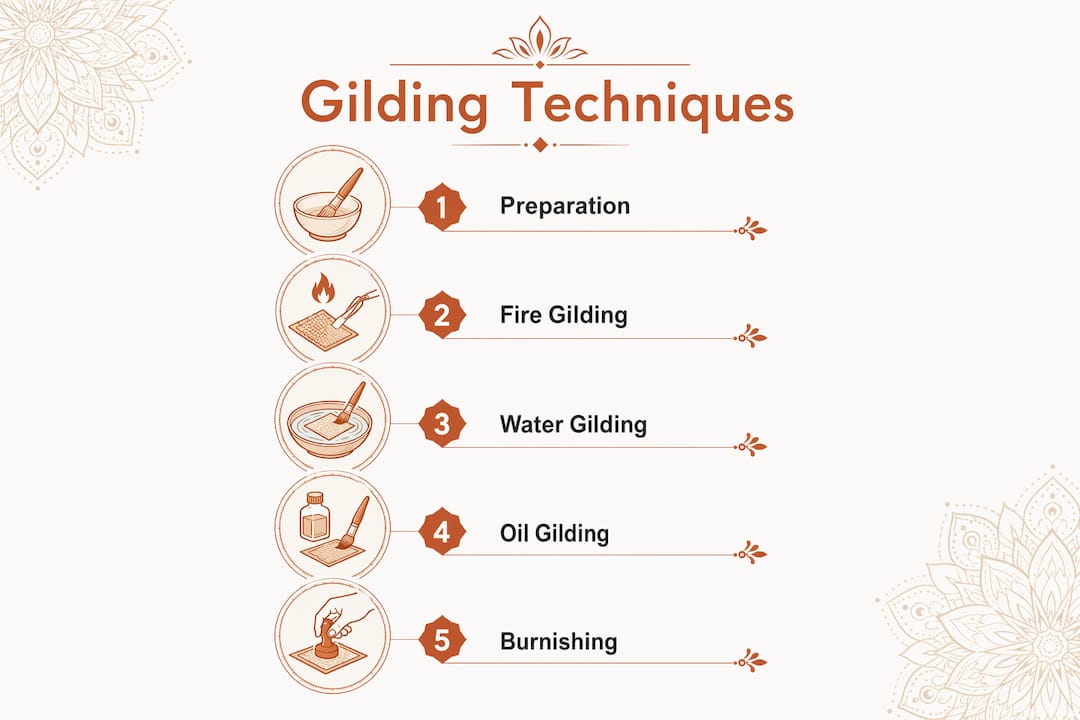
Drei Hauptvergoldungsmethoden prägten das Erscheinungsbild buddhistischer Statuen in ganz Asien: Feuervergoldung, Wasservergoldung und Ölvergoldung. Jede Methode erzeugt eine andere Oberflächenqualität und jede hat unterschiedliche Auswirkungen auf die Konservierung und spirituelle Wirkung.
Feuervergoldung ist die älteste und langlebigste Technik. Kunsthandwerker trugen ein Quecksilber-Gold-Amalgam direkt auf eine Bronzeoberfläche auf und erhitzten das Stück dann, um das Quecksilber zu verdampfen chemisch gebundene Goldschicht beständig gegen Anlaufen. Wissenschaftliche Analysen bestätigen, dass bei der Feuervergoldung Schichtdicken von 5–10 Mikrometern entstehen, die weit über die Tiefe moderner Galvanisierung hinausgehen. Diese Dicke verleiht feuervergoldeten Statuen ihren charakteristischen warmen, buttergelben Farbton und die subtile Oberflächenstruktur, Eigenschaften, die galvanisierte Oberflächen nicht reproduzieren können.
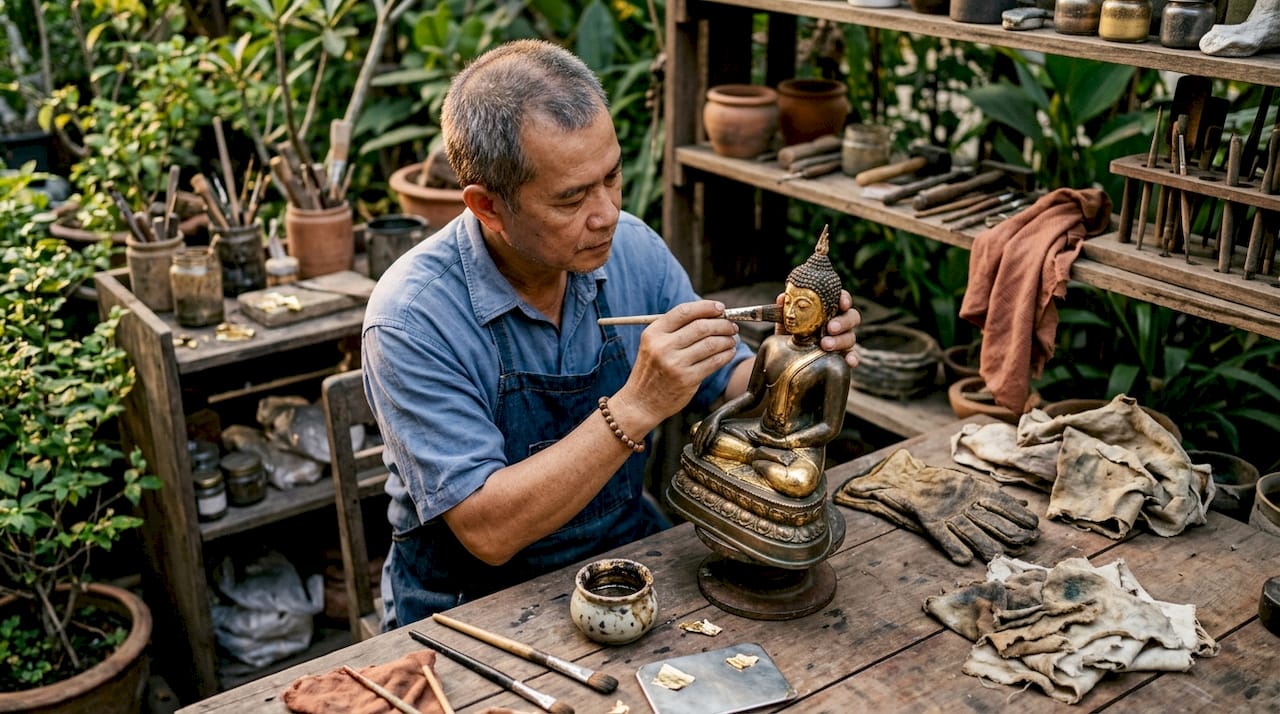
Wasservergoldung verfolgt einen anderen Ansatz. Der Kunsthandwerker trägt zunächst mehrere Schichten Gesso auf und beschichtet dann die Oberfläche mit Bolus, einer Tonverbindung, die Eisenoxid und armenischen Ton enthält. Dann wird Blattgold über den feuchten Bolus gelegt und mit Achatstein brüniert um ein spiegelähnliches Finish zu erzielen. Diese reflektierende Oberfläche hatte keinen rein ästhetischen Zweck. In Tempelumgebungen mit wenig Licht verstärkte die Spiegeloberfläche das Kerzenlicht und ließ die Statue scheinbar ihren eigenen Glanz ausstrahlen.
Ölvergoldung Als Kleber für Blattgold wird ein langsam trocknender Ölleim verwendet. Es ist weniger reversibel als Wasservergoldung und erzeugt ein mattes Finish. Handwerker verwendeten es auf Außenflächen oder in Bereichen, in denen das Polieren unpraktisch war.
- Feuervergoldung: Quecksilberamalgam auf Bronze, 5–10 Mikron Schichten, warmer Gelbton, hohe Haltbarkeit
- Wasservergoldung: Gesso- und Bolusvorbereitung, Achatbrünierung, spiegelähnliche Oberfläche, ideal für Innenstatuen
- Ölvergoldung: Ölleimkleber mit mattem Finish, geeignet für den Außenbereich oder komplexe Oberflächen
Profi-Tipp: Suchen Sie nach „Quecksilberblüten“, einem schwach schillernden Oberflächenschleier, der unter Streiflicht sichtbar ist, um authentische Feuervergoldungen auf antiken Bronzestatuen zu erkennen. Der modernen Galvanotechnik fehlt diese optische Qualität gänzlich.
Die für jede Methode erforderlichen Fähigkeiten waren beträchtlich. Bei einer einzelnen wasservergoldeten Statue könnte eine Woche Vorbereitung der Oberfläche erforderlich sein, bevor eine einzelne Blattgoldschicht aufgetragen werden konnte. Dieser Arbeitsaufwand ist selbst Teil der Bedeutung der Statue: Die Anstrengung der Schöpfung spiegelt die Anstrengung der spirituellen Praxis wider.
Warum ist Gold in der buddhistischen Kunst das Symbol der Erleuchtung?
Gold stellt in der buddhistischen Ikonographie keinen materiellen Reichtum dar. Es repräsentiert Weisheit, Reinheit und die leuchtende Qualität eines ungehinderten Geistes. Die Symbolik des Goldes in der buddhistischen Kunst unterscheidet scharf zwischen „Preis“ und „Wert“. Der Goldpreis ist nebensächlich. Sein Wert als visueller Hinweis für zeitlose Weisheit ist der Punkt.
„Gold dient in buddhistischen Statuen als Schulungssymbol und weist Praktizierende auf leuchtende und unverhüllte Weisheit hin. Seine reflektierende Qualität unterstützt Ruhe und Klarheit, insbesondere bei schlechten Lichtverhältnissen beim traditionellen Tempelgottesdienst.“
Diese Funktion als Trainingssymbol ist spezifisch und praktisch. Eine vergoldete Statue in einem schummrigen Schreinraum zieht die Blicke auf sich und fesselt sie. Die Aufmerksamkeit des Praktizierenden beruhigt sich. Durch die Reflexion des verfügbaren Lichts schafft die Goldoberfläche einen Brennpunkt, der Meditation und Ehrfurcht unterstützt. Die Statue stellt nicht nur den Buddha dar. Es unterstützt aktiv den mentalen Zustand des Praktizierenden.
Gold ist auch in allen buddhistischen Kulturen mit der Sonnensymbolik verbunden. Die Flamme der Sonne, ihre Fähigkeit zu leuchten, ohne verbraucht zu werden, passt direkt zum buddhistischen Konzept der Weisheit, die klärt, ohne zu schmälern. Die Symbolik in buddhistischen Statuen greift konsequent auf diese Solarsprache zurück, von der Ushnisha (dem Schädelvorsprung, der Weisheit darstellt) bis zur Aureole, die die Figur umgibt.
Der Andachtsakt, eine Statue mit Blattgold zu versehen, hat sein eigenes theologisches Gewicht. Laienpraktizierende gegenüber Thailand, Myanmar und Sri Lanka Drücken Sie Blattgold auf Statuen als Akt liebevoller Güte und als direkte Methode Verdienst übertragen. Jede Anwendung trägt zu einer sichtbaren Aufzeichnung der Gemeinschaftsfürsorge bei. Über Generationen hinweg kann eine einzelne Statue Dutzende von Blattgoldschichten ansammeln, von denen jede ein dokumentierter Akt der Ehrfurcht ist.
- Gold steht für Weisheit und Reinheit, nicht für materiellen Reichtum
- Die reflektierende Oberfläche unterstützt die Meditation, indem sie einen stabilen Brennpunkt schafft
- Die Sonnensymbolik verbindet Gold mit Erleuchtung und Klarheit
- Blattgoldgaben übertragen Verdienste und dokumentieren die gemeinschaftliche Hingabe
- Die Aureole in buddhistischen Statuen erweitert diese Leuchtkraft auf das umgebende Gesichtsfeld
Wie unterscheidet sich die Vergoldungstradition in den verschiedenen buddhistischen Regionen?
Die Vergoldungspraktiken variieren je nach buddhistischer Region und sind geprägt von lokale Materialien, religiöse Bräuche und politische Geschichte. Das Ergebnis ist eine Reihe unterschiedlicher regionaler Traditionen, die denselben theologischen Kern haben, ihn jedoch durch unterschiedliche Materialien und Methoden zum Ausdruck bringen.
| Region | Primäre Vergoldungsmethode | Typisches Substrat | Symbolische Betonung |
|---|---|---|---|
| Thailand | Blattgoldapplikation, Feuervergoldung | Bronze, lackiertes Holz | Verdienstübertragung, gemeinschaftliche Hingabe |
| Nepal und Tibet | Quecksilber-Feuervergoldung | Bronze, Kupferlegierung | Tantrische Ikonographie, rituelle Reinheit |
| China | Ölvergoldung, Lackvergoldung | Bronze, Holz, Ton | Kaiserliches Patronat, kosmische Ordnung |
| Indonesien (Java) | Feuervergoldung auf Bronze | Bronze | Königliche Autorität, spirituelle Verfeinerung |
| Sri Lanka | Blattgold auf Stein und Bronze | Stein, Bronze | Theravada-Reinheit, klösterliche Tradition |
ThailandDie Tradition des gemeinschaftlichen Vergoldens von Blattgold ist eine der sichtbarsten. Gläubige pressen einzelne Blattgoldblätter auf Statuen in Tempelhöfen und bauen so über Jahrzehnte unregelmäßige, strukturierte Oberflächen auf. Das Ergebnis ist eine Statue, die ihrer ursprünglichen Form überhaupt nicht mehr ähnelt. Diese Transformation ist der Punkt: Die Statue wird zu einer physischen Aufzeichnung der Praxis der Gemeinschaft.
Nepal und Tibet bevorzugten die Feuervergoldung auf Kupferlegierungen und Bronze und erzeugten die tiefen, warmen Oberflächen, die mit der buddhistischen Kunst des Himalaya verbunden sind. Tibetische vergoldete Bronzen enthalten neben dem Gold oft auch Türkis- und Koralleneinlagen, was den Zugang der Region zu bestimmten Materialien und ihr ikonografisches Vajrayana-Programm widerspiegelt.
ChinaDie Vergoldungstradition wurde durch kaiserliches Mäzenatentum geprägt. Große lackierte und vergoldete hölzerne Buddhas aus der Tang- und Song-Dynastie zeugen von staatlichen Investitionen in buddhistische Institutionen. Die Vergoldung hier signalisiert kosmische Ordnung und imperiale Legitimität ebenso wie persönliche Hingabe.
Der historische Übergang von der Feuervergoldung zur Galvanisierung im 19. und 20. Jahrhundert veränderte den optischen Charakter vergoldeter Statuen erheblich. Die Tiefe und der Glanz der Feuervergoldung wurden durch dünnere, flachere galvanisierte Oberflächen ersetzt. Die Toxizität von Quecksilber war der Auslöser für die Veränderung, aber die ästhetischen Kosten waren real. Sammler und Restauratoren betrachten feuervergoldete Oberflächen heute als primären Beweis für das Alter und die Herkunft einer Statue.
Welche Rolle spielt die Vergoldung heute in der buddhistischen Praxis?
Vergoldung ist nach wie vor eine aktive Andachtspraxis in buddhistischen Gemeinschaften in ganz Asien und kein historisches Artefakt. Die gemeinschaftliche Vergoldung mit Blattgold wird täglich in großen Tempeln fortgesetzt Thailand, Myanmar und Kambodscha. Jede Bewerbung wird als ein Akt kollektiven Verdienstes verstanden, der sich auf die gesamte Gemeinschaft und über Generationen hinweg erstreckt. Die Statue fungiert als gemeinsames spirituelles Konto und sammelt im Laufe der Zeit Ehrfurcht.
Konservierung stellt eine echte Spannung dar. Das wiederholte Auftragen von Blattgold durch Gläubige verändert die Oberfläche einer Statue dauerhaft. Restauratoren, die an historisch bedeutsamen Stücken arbeiten, müssen die Funktion der Statue als lebendes Andachtsobjekt gegen ihren Wert als Artefakt abwägen. Viele Institutionen stellen heute Repliken von Statuen für den aktiven Andachtsgebrauch zur Verfügung, während die Originale unter kontrollierten Bedingungen aufbewahrt werden.
Bei der Restaurierung kommen auch traditionelle Vergoldungsmethoden zum Einsatz. Wasservergoldungs- und Feuervergoldungstechniken, die von ausgebildeten Restauratoren angewendet werden, können vergoldete Oberflächen stabilisieren und erneuern, ohne den historischen Charakter einer Statue zu beeinträchtigen. Die Authentifizierung antiker Bronzen hängt teilweise von der Interpretation der Vergoldungsschicht ab: Ihre Dicke, ihre Klebemethode und ihre Oberflächenbeschaffenheit liefern allesamt Datierungsbeweise.
- Die gemeinschaftliche Verwendung von Blattgold wird als aktive Andachtspraxis fortgeführt Thailand, Myanmar und Kambodscha
- Konservierungsprogramme gleichen die Andachtsnutzung mit der Erhaltung von Artefakten aus
- Bei der musealen Restaurierung kommen traditionelle Wasser- und Feuervergoldungstechniken zum Einsatz
- Die Analyse der Vergoldungsschicht liefert wichtige Beweise für die Datierung und Authentifizierung antiker Statuen
Profi-Tipp: Historische Neuvergoldungen weisen typischerweise eine unregelmäßige Oberflächenstruktur, Farbunterschiede zwischen den Schichten und Abnutzungsbereiche an Stellen mit hohem Kontakt auf. Moderne Neuvergoldungen erscheinen tendenziell gleichmäßig und hell, ohne sichtbare Schichten oder Abnutzungsmuster darunter.
Die Bedeutung buddhistischer Statuen in der Praxis hängt davon ab, dass ihre Sehkraft erhalten bleibt. Die Vergoldung erhält diese Kraft aufrecht. Eine Statue, deren Goldoberfläche verblasst oder abgeblättert ist, verliert ihre Fähigkeit, die Aufmerksamkeit zu fesseln und ihren theologischen Inhalt zu vermitteln. Restaurierungsvergoldungen sind daher nicht kosmetisch. Es ist funktional.
Wichtige Erkenntnisse
Das Vergolden antiker buddhistischer Statuen ist sowohl ein technisches Handwerk als auch ein theologischer Akt, wobei Gold in allen großen buddhistischen Traditionen als primäre visuelle Sprache für Weisheit, Reinheit und gemeinsame Hingabe dient.
| Punkt | Einzelheiten |
|---|---|
| Haltbarkeit der Feuervergoldung | Quecksilberamalgam erzeugt 5–10 Mikrometer dicke Goldschichten, die in Tiefe und Glanz die moderne Galvanisierung überdauern. |
| Gold als Trainingssymbol | Vergoldete Oberflächen unterstützen die Meditation, indem sie einen leuchtenden Brennpunkt in Tempelumgebungen mit wenig Licht schaffen. |
| Regionale Variation | Thailand, Tibet, China, Java und Sri Lanka Jeder von ihnen entwickelte unterschiedliche Vergoldungsmethoden, die sich an lokalen Materialien und rituellen Bedürfnissen orientierten. |
| Andachtsgoldblatt | Laien-Praktizierende tragen Blattgold als Verdienstübertragungsakt auf und schaffen so ein sichtbares Gemeinschaftsdokument auf der Oberfläche der Statue. |
| Erhaltungsherausforderung | Restauratoren müssen die aktive Andachtsnutzung mit der Notwendigkeit abwägen, historisch bedeutsame vergoldete Oberflächen zu schützen. |
Was mir vergoldete Statuen über Handwerk und Bedeutung beigebracht haben
Der häufigste Fehler, den ich sehe, wenn Menschen sich vergoldeten buddhistischen Statuen nähern, besteht darin, das Gold als Dekoration zu betrachten. Das ist es nicht. Das Gold ist das Argument. Jede technische Entscheidung, die Wahl der Feuervergoldung gegenüber der Wasservergoldung, die Dicke der Bolusschicht, die Richtung der Brünierung, dient der Fähigkeit der Statue, einen spezifischen theologischen Anspruch über die Natur der Weisheit zu vermitteln.
Was mir nach Jahren der Arbeit mit antiken Stücken aus Java am meisten auffällt, Thailand, und Nepal, ist, wie viele Informationen die vergoldete Oberfläche trägt. Eine feuervergoldete javanische Bronze aus dem 9. Jahrhundert liest sich nicht nur optisch, sondern auch doktrinär anders als eine thailändische lackierte Holzfigur aus dem 18. Jahrhundert. Das javanische Stück verwendet Gold, um königliche und kosmische Autorität zu signalisieren. Das thailändische Stück nutzt es, um zum Mitmachen einzuladen. Beides ist richtig. Beide tun genau das, was ihre Traditionen erfordern.
Die Erhaltungsfrage ist für mich die wirklich schwierigste. Eine Statue, die 300 Jahre lang aktiv von Anhängern vergoldet wurde, ist nicht mehr derselbe Gegenstand, der sie war, als sie die Werkstatt verließ. Das angesammelte Blattgold ist selbst ein historischer Beweis, eine Aufzeichnung der Praxis. Wenn man es abzieht, um die ursprüngliche Oberfläche freizulegen, wird diese Aufzeichnung zerstört. Wenn man es intakt lässt, wird die ursprüngliche Handwerkskunst verdeckt. Eine klare Antwort gibt es nicht. Die besten Restauratoren, die ich kenne, vertreten beide Werte gleichzeitig und treffen Entscheidungen von Fall zu Fall.
— James, HDAsianArt.com
Authentische vergoldete buddhistische Statuen bei HDAsianArt
Sammler und Forscher, die auf der Suche nach echten Beispielen traditioneller vergoldeter Handwerkskunst sind, finden bei HDAsianArt sorgfältig dokumentierte Stücke.

Die Sammlung umfasst eine Rarität antikes javanisches Avalokiteshvara Bodhisattva-Statue im indonesischen Stil, die die raffinierte Bronzetradition Javas aus dem 9. Jahrhundert darstellt, und a sitzender Javaner, der Buddh predigta in Bronze, 29 cm, mit Oberflächeneigenschaften im Einklang mit der traditionellen Feuervergoldung. Jedes Stück bei HDAsianArt wird individuell von Spezialisten recherchiert, fotografiert und beschrieben. Für alle Artikel ist ein weltweiter versicherter DHL-Versand möglich.
FAQ
Welche Rolle spielt die Vergoldung in alten buddhistischen Statuen?
Die Vergoldung antiker buddhistischer Statuen vermittelt Erleuchtung, Reinheit und Weisheit durch die leuchtende, dauerhafte Oberfläche des Goldes. Die Goldschicht fungiert als theologische Aussage und praktische Hilfe für die kontemplative Praxis.
Welche Vergoldungstechniken wurden bei buddhistischen Statuen angewendet?
Die drei Haupttechniken sind Feuervergoldung mit Quecksilberamalgam, Wasservergoldung mit Bolus- und Achatbrünierung sowie Ölvergoldung mit langsam trocknendem Leim. Bei der Feuervergoldung entstehen mit 5–10 Mikrometern die dicksten und haltbarsten Schichten.
Warum wird Gold in der buddhistischen Ikonographie verwendet?
Gold steht für Weisheit und einen klaren Geist, nicht für materiellen Reichtum. Seine reflektierende Qualität unterstützt die Meditation, indem es einen stabilen Brennpunkt bei den Lichtverhältnissen im Tempel schafft.
Wie unterscheiden sich die Vergoldungstraditionen im buddhistischen Asien?
Thailand betont die gemeinschaftliche Verwendung von Blattgold als eine wertvolle Praxis. Nepal und Tibet bevorzugen die Feuervergoldung auf Bronze- und Kupferlegierungen. ChinaDie Tradition spiegelt die kaiserliche Schirmherrschaft durch Lackvergoldung auf Holz wider. Jeder regionale Stil kodiert unterschiedliche theologische und politische Prioritäten.
Wie kann man eine historische Vergoldung von einer modernen Neuvergoldung einer Statue unterscheiden?
Historische Feuervergoldungen zeigen Variationen in der Oberflächenstruktur, Quecksilberausblühungen unter Streiflicht und Abnutzung an den Kontaktstellen. Modernes Galvanisieren oder Neuvergolden wirkt gleichmäßig und flach, ohne die Schichttiefe traditioneller Methoden.
