



Asiatische Skulpturen für ein Schlafzimmer: Leitfaden 2026
Asiatische Skulpturen für ein Schlafzimmer: Leitfaden 2026
Ein Rückzugsort im Schlafzimmer ist ein privater Raum, der bewusst so gestaltet ist, dass er Ruhe, Ruhe und spirituelle Erneuerung fördert. Der effektivste Weg, diese Qualität zu erreichen, besteht darin, asiatische Skulpturen als Mittelpunkte für Schlafzimmer zu verwenden und so ästhetische Tiefe mit kultureller Symbolik zu verbinden, die durch generisches Dekor nicht nachgeahmt werden kann.
Skulpturen, die Buddha, Guanyin oder Ganesha darstellen, tragen seit Jahrhunderten eine absichtliche Bedeutung. Diese Bedeutung sieht nicht nur gut aus. Es prägt die Energie eines Raumes auf eine Art und Weise, wie es rein dekorative Objekte nicht tun. Dieser Leitfaden behandelt die Auswahl, Platzierung, Beleuchtung und Gestaltung der Skulpturen, damit Sie ein Schlafzimmer bauen können, das Sie wirklich erholt.
Welche Arten asiatischer Skulpturen werten einen Rückzugsort im Schlafzimmer am besten auf?
Der richtige Skulpturentyp hängt von der Stimmung ab, die Sie schaffen möchten, und dem Einrichtungsstil, den Sie bereits haben. Drei Kategorien dominieren die Schlafzimmernutzung: Gottheitsstatuen, symbolische Figuren und abstrakte kulturelle Formen.
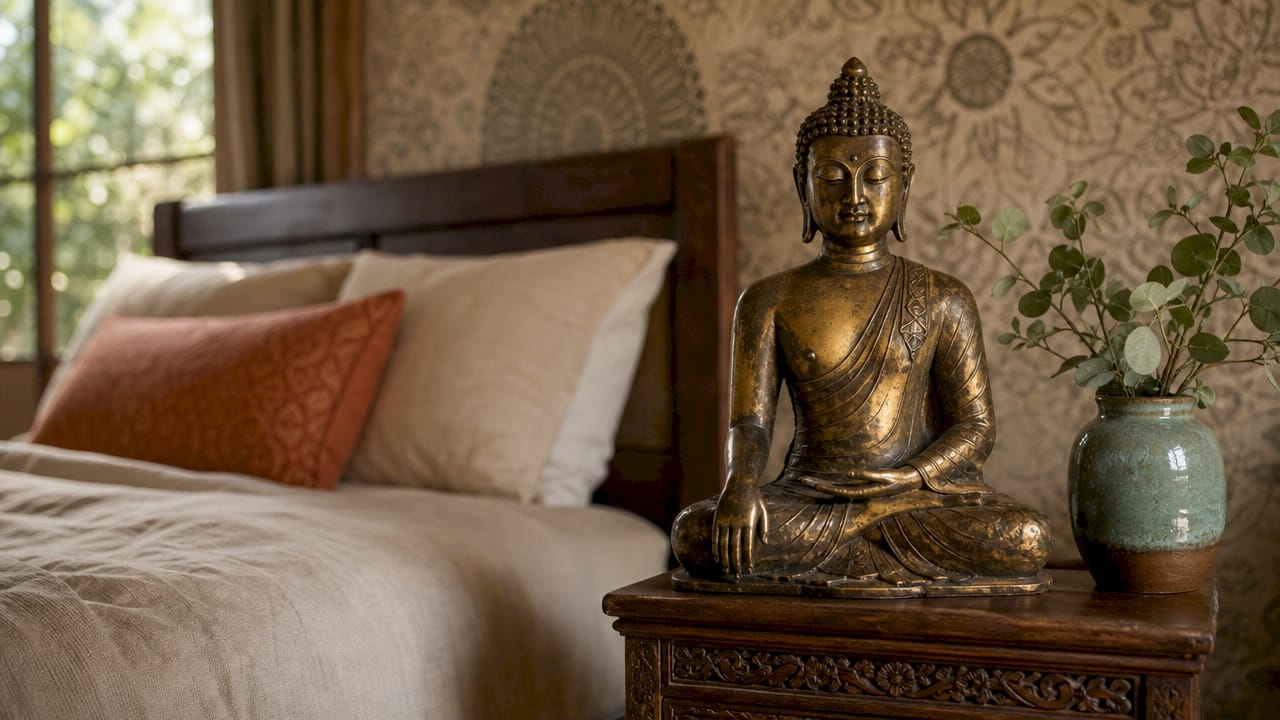
Gottheitsstatuen sind die spirituell direkteste Wahl. Guanyin-Statuen aus Bronze symbolisieren Mitgefühl und Schutz und eignen sich daher gut für Meditationsecken oder Nachtaltäre, wo Ruhe im Vordergrund steht. Buddha-Statuen in der sitzenden Meditationshaltung signalisieren Stille und Konzentration nach innen. A Kambodschanischer Holzbuddha bringt organische Wärme, die Stein oder Metall nicht bieten können, was besonders gut in Räumen mit Naturholzmöbeln funktioniert.
Symbolische Figuren appellieren an Sammler, die spirituelle Resonanz ohne offensichtliche religiöse Bilder wünschen. Skulpturen aus Kristallglas Die Darstellung von Bambus- und Pflaumenblüten symbolisiert Widerstandsfähigkeit und Harmonie. Sie harmonieren mit der zeitgenössischen, minimalistischen Schlafzimmereinrichtung, ohne den Raum zu dominieren. Sammler wählen diese symbolischen Stücke zunehmend als subtile Alternative zu Gottheitsstatuen für moderne, ruhige Umgebungen.
Ganesha-Skulpturen aus Messing und Bronze einen Mittelweg einnehmen. Moderne Ganesha-Idole aus Messing sind minimalistisch, symbolisch kraftvoll und werden verwendet, um positive Energie einzuladen und gleichzeitig Negativität zu beseitigen. Ihr warmes Metallic-Finish passt auf natürliche Weise zu neutralen Schlafzimmerpaletten.
| Skulpturentyp | Primärmaterial | Symbolische Bedeutung | Beste Platzierung im Schlafzimmer |
|---|---|---|---|
| Sitzender Buddha | Bronze, Holz, Stein | Stille, Meditation | Nachttisch, Meditationsecke |
| Guanyin | Bronze, Keramik | Mitgefühl, Schutz | Altarecke, Fokalwand |
| Ganesha | Messing, Bronze | Positive Energie, Neuanfänge | Eingangsregal, Kommode |
| Bambus-/Pflaumenkristall | Kristallglas | Belastbarkeit, Harmonie | Fensterbank, Beistelltisch |
| Bodhisattva | Stein, Bronze | Weisheit, spirituelle Führung | Fokalwand, Meditationsecke |
- Wählen Sie Bronze oder Messing für eine luxuriöse Schlafzimmerästhetik mit warmen Metallic-Tönen.
- Wählen Sie Holz für organische Wärme und ein geerdetes, erdiges Gefühl.
- Wählen Sie Kristallglas für minimalistische Räume, in denen es auf Feinheit ankommt.
- Wählen Sie Stein für Beständigkeit und eine museale Präsenz.
Profi-Tipp: Der Maßstab ist genauso wichtig wie der Stil. Eine zu große Skulptur überfordert ein kleines Schlafzimmer. Für die meisten Wohnräume sollten Stücke mit einer Höhe zwischen 20 cm und 65 cm angestrebt werden.
So wählen Sie den richtigen Standort und die richtige Beleuchtung für asiatische Skulpturen aus
Die Platzierung bestimmt, ob eine Skulptur einen Raum verankert oder darin verschwindet. Vier Standorte erzielen durchweg die besten Ergebnisse im Schlafzimmerbereich.
- Die Brennwand. Platzieren Sie eine größere Skulptur (mindestens 45 cm) an der Wand direkt gegenüber dem Bett. Dies ist die erste Oberfläche, die Sie sehen, wenn Sie aufwachen. A Dvaravati-Buddha-Statue an dieser Wand schafft einen unmittelbaren visuellen Anker, der den Ton des Raumes bestimmt.
- Der Nachttisch. Ein kleineres Stück (20–30 cm), das im Liegen auf Augenhöhe platziert wird, stellt eine persönliche, innige Verbindung mit der Skulptur her. Besonders gut funktionieren hier Guanyin- und sitzende Buddha-Figuren.
- Die Meditationsecke. Wenn Ihr Schlafzimmer über eine Ecke oder Nische verfügt, widmen Sie diese einer einzelnen Skulptur mit einem niedrigen Kissen oder einer Bank davor. Dadurch wird der spirituelle Raum vom Schlafraum getrennt, ohne dass ein separater Raum erforderlich ist.
- Das Eingangsregal. Eine Ganesha- oder Bodhisattva-Figur direkt hinter der Schlafzimmertür signalisiert den Übergang von der aktiven zur erholsamen Welt.
Feng Shui-Prinzipien empfehlen, spirituelle Statuen gegenüber dem Haupteingang oder zentralen Wohnbereichen zu platzieren. Die gleiche Logik gilt für Schlafzimmer. Vermeiden Sie es, Skulpturen direkt gegenüber einer Badezimmertür oder über einer Küchenwand auf dem Boden darunter zu positionieren. Diese Platzierungen unterbrechen den Energiefluss, der dafür sorgt, dass sich ein Zufluchtsort wirklich ruhig anfühlt.
Sanftes, warmes Licht, das auf einer Bronze- oder Kristallskulptur reflektiert wird, sieht nicht nur schön aus. Es aktiviert das Stück optisch und macht es zu einer lebendigen Präsenz im Raum und nicht zu einem statischen Objekt auf einem Regal.
Die richtige Beleuchtung verbessert die Leistung erheblich die beruhigende Wirkung asiatischer Skulpturen in modernen Schlafzimmern. Warme Umgebungsbeleuchtung (Farbtemperatur 2700–3000 K) eignet sich für die meisten Umgebungen. Ein kleiner Richtstrahler, der aus einem 45-Grad-Winkel auf ein Bronzestück gerichtet ist, erzeugt Tiefe und Schatten, die eine flache Deckenbeleuchtung zerstört. Natürliches Morgenlicht aus einem nach Osten gerichteten Fenster ist ideal für Kristallskulpturen, die das Licht auf eine Weise brechen, die künstliche Quellen nicht nachahmen können.
Profi-Tipp: Benutzen Sie einen Dimmerschalter an jedem Strahler, der auf Ihre Schlafzimmerskulptur gerichtet ist. Die Möglichkeit, die Lichtintensität nachts zu verringern, bewahrt die schlafbereite Atmosphäre des Raumes und würdigt gleichzeitig das Stück.
Integration asiatischer Skulpturen in Schlafzimmerdekorstile
Eine Skulptur, die in einer schlecht abgestimmten Umgebung platziert wird, verliert den größten Teil ihrer Wirkung. Das Ziel ist Zusammenhalt, nicht Kontrast.
Kombinieren Sie asiatische Skulpturen mit natürlichen Texturen wie Holz und Stein schaffen einen Rückzugsort-Stil, der die visuelle Harmonie fördert. Ein bronzener Buddha auf einem Regal aus rohem Teakholz, umgeben von einem Leinenläufer und einem kleinen Flussstein, lässt sich als absichtlich und wohlüberlegt lesen. Die gleiche Bronzefigur auf einem Glasregal mit Chrombeschlägen gilt als nicht übereinstimmend.
Die Farbpalette ist gleichermaßen wichtig. Neutrale und erdige Töne, darunter warmes Weiß, Sand, Anthrazit und tiefes Grün, ergänzen die Patina von Bronze und die Maserung von Holz, ohne um Aufmerksamkeit zu konkurrieren. Vermeiden Sie Hochglanzlackierungen und helle Akzentfarben in der Nähe von Skulpturen. Sie lenken den Blick vom Stück ab und untergraben die Ruhe, die Sie aufbauen.
Bei luxuriösen Schlafzimmerstilen gilt der Grundsatz der stillen Zurückhaltung. Ein einzelnes großes antikes Stück verdient mehr Respekt als eine Ansammlung kleinerer Figuren. Erzielung einer ruhigen Luxusästhetik Bei asiatischer Kunst kommt es auf die Kuration an, nicht auf die Quantität. Eine gut ausgewählte Skulptur übertrifft jedes Mal fünf mittelmäßige.
Die Beibehaltung einer einfachen Dekoration rund um asiatische Skulpturen verhindert Unordnung und bewahrt die beruhigende Wirkung des Heiligtums. Durch das ausgewogene Styling mit neutralen Farbpaletten und minimalen Accessoires bleibt der Fokus auf der spirituellen Kunst.
Wichtige asiatische Dekorelemente, die die Ruhe im Schlafzimmer unterstützen:
- Naturfasertextilien: Leinen, Baumwolle, Jute und Seide in gedeckten Tönen
- Flache Möbel mit klaren Linien und ohne verzierte Beschläge
- Topfpflanzen wie Friedenslilie, Bambus oder Schlangenpflanze
- Weihrauch oder ein Diffusor mit Sandelholz- oder Zedernholzöl
- Ein einzelnes gerahmtes Stück beruhigende atmosphärische Kunst an einer angrenzenden Wand
Schritt-für-Schritt-Anleitung für die Einrichtung Ihres Schlafzimmers mit asiatischen Skulpturen
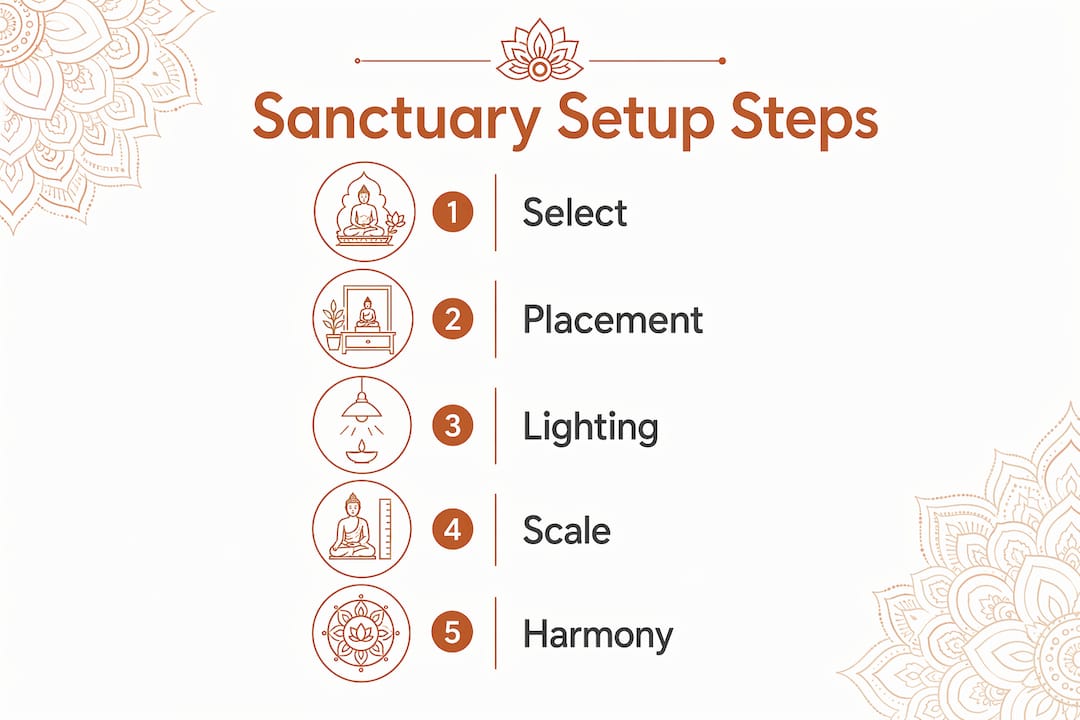
Die Einrichtung eines Skulpturenheiligtums erfordert Vorbereitung, bevor das erste Stück den Raum betritt. Durch die Beschleunigung dieses Prozesses entsteht ein Raum, der eher zusammengesetzt als durchdacht aussieht.
| Schritt | Aktion | Wichtige Überlegung |
|---|---|---|
| 1. Bewerten Sie den Raum | Messen Sie die Wandfläche, die Regaltiefe und die natürlichen Lichtquellen | Maßstab und Proportionen vor dem Kauf |
| 2. Wählen Sie Ihre Skulptur | Wählen Sie Typ, Material und symbolische Bedeutung aus | Passend zu persönlichen spirituellen Zielen und Einrichtungsstil |
| 3. Bereiten Sie die Oberfläche vor | Reinigen und räumen Sie den Platzierungsbereich; Fügen Sie bei Bedarf eine natürliche Basis hinzu | Der Holz-, Stein- oder Leinensockel wertet das Stück optisch auf |
| 4. Positionieren Sie die Skulptur | Platzieren Sie es gegenüber dem Zimmereingang oder dem Bett. Befolgen Sie die Feng Shui-Richtlinien | Vermeiden Sie Positionen, die dem Badezimmer zugewandt sind oder überfüllt sind |
| 5. Stellen Sie die Beleuchtung ein | Installieren Sie einen warmen Umgebungs- oder Richtstrahler | 2700K–3000K für Bronze; natürliches Licht für Kristall |
| 6. Gestalten Sie die Umgebung | Fügen Sie ein oder zwei ergänzende natürliche Elemente hinzu | Weniger ist mehr; Vermeiden Sie konkurrierende Objekte |
| 7. Behalten Sie das Stück bei | Regelmäßig mit einem weichen Tuch abstauben; Vermeiden Sie chemische Reinigungsmittel auf Bronze | Bewahrt die Patina und die spirituelle Integrität des Stücks |
- Beginnen Sie mit einer Skulptur. Widerstehen Sie dem Drang, den Raum zu füllen. Ein gut platziertes Stück erzeugt mehr Wirkung als eine ohne Absicht arrangierte Sammlung.
- Bereiten Sie die Oberfläche vor, bevor die Skulptur eintrifft. Ein Sockel aus rohem Holz, ein flacher Flussstein oder ein gefaltetes Leinentuch unter dem Stück werten es optisch auf und signalisieren, dass es gewürdigt und nicht nur aufbewahrt wird.
- Positionieren Sie sich, bevor Sie sich verpflichten. Platzieren Sie die Skulptur vorübergehend und leben Sie 24 Stunden lang damit, bevor Sie entscheiden, dass sie dauerhaft ist. Morgenlicht und Abendlicht offenbaren sehr unterschiedliche Qualitäten im selben Stück.
- Passen Sie die Beleuchtung zuletzt an. Sobald die Skulptur positioniert ist, testen Sie die Beleuchtungswinkel, bevor Sie eine Leuchte dauerhaft installieren. Zum Testen eignet sich eine kleine verstellbare Klemmleuchte gut.
- Fügen Sie natürliche Elemente sparsam hinzu. Ein einzelner Zweig getrockneter Pflanzenstoffe, eine kleine Schale mit Flusssteinen oder ein Räucherstäbchen neben der Skulptur runden die Kulisse ab, ohne sie zu überladen.
Die Fehlerbehebung ist unkompliziert. Wenn der Raum belebt wirkt, entfernen Sie ein Element, anstatt ein anderes hinzuzufügen. Wenn sich die Skulptur unsichtbar anfühlt, stellen Sie sie auf einen Sockel oder verbessern Sie die Beleuchtung. Sollte sich der Raum trotz der Skulptur kalt anfühlen, fügen Sie in der Nähe ein Textil in einem warmen Farbton hinzu.
Wichtige Erkenntnisse
Asiatische Skulpturen schaffen einen Zufluchtsort im Schlafzimmer, wenn sie aufgrund ihrer symbolischen Bedeutung ausgewählt, nach Feng Shui-Prinzipien platziert, mit warmem gerichtetem Licht beleuchtet und mit natürlichen Texturen und einer zurückhaltenden Farbpalette gestaltet werden.
| Punkt | Einzelheiten |
|---|---|
| Wählen Sie Skulptur nach Symbolik | Passen Sie die Bedeutung des Stücks (Mitgefühl, Belastbarkeit, Stille) an Ihre persönlichen Zufluchtsziele an. |
| Befolgen Sie die Feng Shui-Platzierung | Richten Sie die Skulpturen auf den Raumeingang. Vermeiden Sie Positionen, die dem Badezimmer zugewandt sind. |
| Verwenden Sie warmes, gerichtetes Licht | 2700K–3000K Licht in einem 45-Grad-Winkel aktiviert Bronze- und Steinskulpturen optisch. |
| Kombinieren Sie es mit natürlichen Texturen | Die Umgebung aus Holz, Stein und Leinen verstärkt die beruhigende Präsenz der Skulptur. |
| Priorisieren Sie Zurückhaltung vor Quantität | Ein gut ausgewähltes antikes Stück übertrifft eine überfüllte Sammlung in jedem Schlafzimmer. |
Was ich aus der jahrelangen Platzierung asiatischer Skulpturen in Schlafzimmern gelernt habe
Der häufigste Fehler, den ich sehe, besteht darin, eine Skulptur eher als letzten Schliff denn als Ausgangspunkt zu betrachten. Sammler, die ein Schlafzimmer um ein einziges bedeutungsvolles Stück herum bauen, schaffen durchweg zusammenhängendere, beruhigendere Räume als diejenigen, die zuerst Möbel kaufen und später Kunst hinzufügen. Die Skulptur sollte den Ton des Raumes bestimmen, nicht ihn schmücken.
Das zweite Missverständnis, das es zu beseitigen lohnt, ist, dass asiatische Skulpturen ein „Themen“-Schlafzimmer erfordern. Das tun sie nicht. Ein Vishnu-Torso aus Khmer-Sandstein sieht vor einer weißen Gipswand in einem minimalistischen Raum außergewöhnlich aus. Ein bronzener Guanyin sieht in einem modernen Schlafzimmer mit dunklem Leinen und Walnussmöbeln raffiniert aus. Die Skulptur braucht keine kulturelle Tapete um sich herum. Es braucht Raum, Licht und Respekt.
Meine stärkste Empfehlung ist Kaufen Sie Ihre Buddha-Statue oder Gottheitsfigur aus einer Quelle, die Herkunft und Handwerkskunst dokumentiert. Ein Stück mit bekannter Herkunft und verifiziertem Material hat im Raum ein anderes Gewicht als eine Reproduktion. Dieses Gewicht ist nicht mystisch. Es ist das Ergebnis echten Alters, echten Handwerks und echten kulturellen Kontexts. Sie spüren es und jeder, der den Raum betritt, spürt es auch.
Balance ist das letzte Prinzip. Ein Schlafzimmer ist in erster Linie ein funktionaler Raum. Die Skulptur soll die Ruhe fördern und nicht mit ihr konkurrieren. Wenn Sie den Raum neu arrangieren, um die Kunst unterzubringen, und nicht umgekehrt, ist das Stück zu groß oder zu dominant für den Raum.
— James, HDAsianArt.com
Authentische asiatische Skulpturen für Ihr Schlafzimmer
HDAsianArt ist auf antike und traditionelle buddhistische und hinduistische Skulpturen spezialisiert Kambodscha, Thailand, Indonesien, Sri Lanka, und Vietnam. Jedes Stück der Sammlung wird individuell von Experten recherchiert, fotografiert und beschrieben. Weltweiter versicherter DHL-Versand ist Standard.

Die Sammlung umfasst bronzene Buddha-Statuen, Bodhisattva-Figuren und Gottheitsskulpturen aus Stein und Holz, die als Zufluchtsort für Schlafzimmer dienen. Die antik Laos Bronze-Buddha und die Javanischer Avalokiteshvara Bodhisattva eignen sich besonders gut für Meditationsecken im Schlafzimmer. Durchsuchen Sie die vollständige Seite HDAsianArt-Sammlung um das Stück zu finden, das Ihr Heiligtum verankert.
FAQ
Was ist die beste asiatische Skulptur für ein Schlafzimmer?
Sitzende Buddha-Statuen und Guanyin-Figuren sind die am häufigsten verwendeten Optionen für Zufluchtsorte im Schlafzimmer. Beide symbolisieren Stille und Mitgefühl, die eine erholsame, beruhigende Umgebung direkt unterstützen.
Wo soll ich eine asiatische Skulptur in meinem Schlafzimmer platzieren?
Platzieren Sie die Skulptur mit Blick auf den Zimmereingang oder an der Wand gegenüber dem Bett. In den Feng-Shui-Richtlinien wird empfohlen, Positionen mit Blick auf die Badezimmertür zu vermeiden, da dies den positiven Energiefluss stört.
Welche Materialien eignen sich am besten für asiatische Schlafzimmerskulpturen?
Bronze und Holz sind die praktischsten Materialien für den Einsatz im Schlafzimmer. Bronze entwickelt mit der Zeit eine natürliche Patina, während Holz für organische Wärme sorgt. Kristallglas eignet sich gut für minimalistische Räume mit starkem Tageslicht.
Wie beleuchte ich eine asiatische Skulptur in einem Schlafzimmer?
Verwenden Sie warmes Umgebungslicht bei 2700 K–3000 K oder einen kleinen Richtstrahler, der in einem 45-Grad-Winkel über dem Stück ausgerichtet ist. Warmes Licht aktiviert die Oberfläche von Bronze- und Steinskulpturen und erzeugt eine beruhigende visuelle Präsenz.
Benötige ich ein Themenschlafzimmer, um asiatische Skulpturen auszustellen?
Nein. Eine einzelne, gut ausgewählte Skulptur eignet sich für minimalistische, moderne und luxuriöse Schlafzimmerstile, ohne dass ein Raum mit kulturellem Thema erforderlich ist. Der Schlüssel liegt darin, das Stück mit natürlichen Texturen und einer zurückhaltenden Farbpalette zu kombinieren.
Empfohlen
- Leitfaden zur Integration von asiatischen Skulpturen in den Garten im Freien – HD Asian Art
- Warum asiatische Skulptur Ihrem Raum spirituelle Energie verleiht – HD Asian Art
- Ein Leitfaden zum Kauf einer Buddha-Statue: Frieden in der Kunst finden – HD Asian Art
- In asiatischen Skulpturen verwendete Steinarten: Ein Leitfaden für Sammler – HD Asian Art
