



Best Mudras for Reducing Anxiety and Stress
Best Mudras for Reducing Anxiety and Stress
Table of Contents
- What Are Mudras and How Do They Calm the Nervous System?
-
7 Best Mudras for Anxiety and Stress Relief
- Gyan Mudra for Mental Clarity and Focus
- Apana Vayu Mudra for Heart Health and Acute Stress
- Kalesvara Mudra for Calming Racing Thoughts
- Uttarabodhi Mudra for Self-Confidence Under Pressure
- Prana Mudra for Energy Balance and Fatigue
- Bhu Mudra for Grounding During Fear-Based Anxiety
- Anjali Mudra for Centering Before Stressful Events
- How Long to Hold Mudras for Anxiety?
- How to Practice Mudras for Beginners
- Incorporating Mudras into Daily Meditation and Breathwork
- Contraindications and Safety: What to Know Before You Practice
- Frequently Asked Questions
What Are Mudras and How Do They Calm the Nervous System?
The best mudras for reducing anxiety and stress are specific hand gestures that use fingertip pressure to shift your nervous system out of fight-or-flight and into a calmer state. This guide from HD Asian Art covers seven gestures you can practice anywhere, plus how long to hold each one. A mudra is a deliberate hand position that directs energy flow and attention in the body. Practitioners have used them for centuries alongside breathwork and meditation.
The Science Behind Hand Gestures and Stress Relief
Physiologically, slow breathing paired with a fixed hand position stimulates the vagus nerve, the pathway responsible for calming the mind. The Cleveland Clinic overview of the vagus nerve explains how this nerve governs your rest-and-digest response. Fingertip pressure also creates a mild, grounding sensory input that pulls attention away from racing thoughts. The gestures do not replace medical care, but they work well as a daily stress relief habit.
7 Best Mudras for Anxiety and Stress Relief
These seven gestures cover the most common forms of anxiety, from scattered focus to a racing heart. Each one takes seconds to set up and pairs naturally with deep breathing.
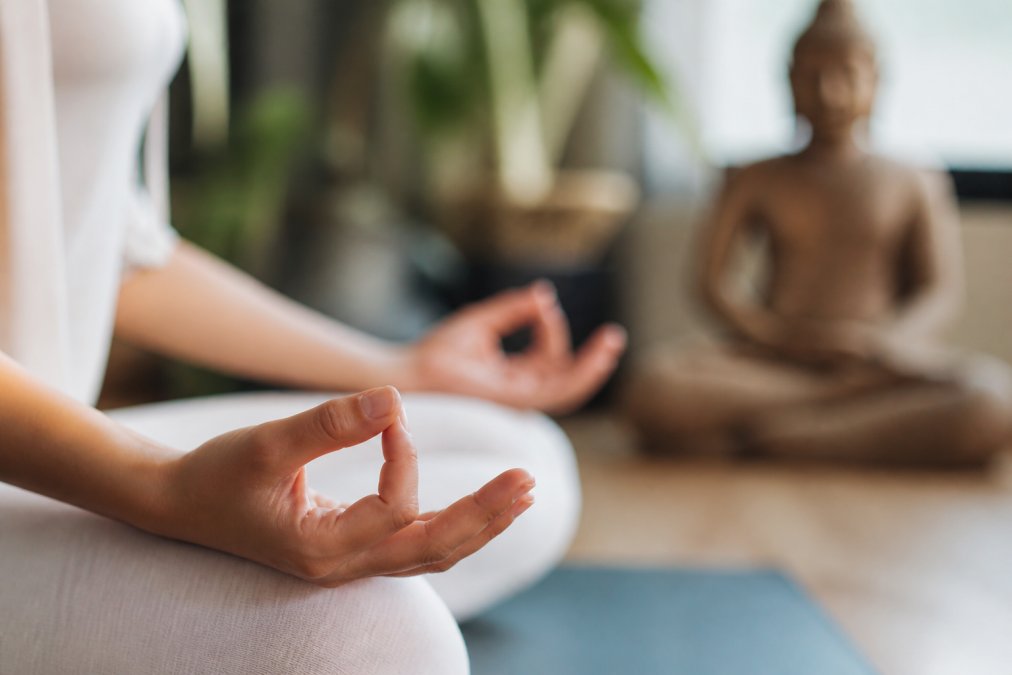
Gyan Mudra for Mental Clarity and Focus
Touch your index fingertip to your thumb tip, keeping the other three fingers extended. Gyan Mudra is the foundational gesture for mental clarity and concentration. It suits long meditation sessions because the hand position is easy to sustain. A common mistake is pressing too hard; light contact is enough.
Apana Vayu Mudra for Heart Health and Acute Stress
This gesture targets the physical symptoms of acute anxiety, especially a pounding heart. Touch your index fingertip to the base of your thumb, then join your middle and ring fingertips to the thumb tip. The placement takes practice, but once set, it supports cardiovascular relaxation. Try it seated whenever stress shows up in your chest.
Kalesvara Mudra for Calming Racing Thoughts
Kalesvara Mudra quiets mental chatter. Bring your palms together, curl the middle, ring, and little fingers inward, and form a heart shape with your index fingers and thumbs. It encourages deep, rhythmic breathing, which makes it useful for chronic worry. Hold it when your thoughts will not slow down.
Uttarabodhi Mudra for Self-Confidence Under Pressure
Interlock your fingers with your index fingers pointing upward, palms facing out. Uttarabodhi Mudra soothes nerves before high-pressure moments like interviews or presentations. It requires both hands free, so use it in the minutes before an event rather than during one.
Prana Mudra for Energy Balance and Fatigue
Join your ring and little fingertips to your thumb tip, keeping the index and middle fingers extended. Prana Mudra activates dormant energy and eases fatigue-driven stress. It works best when you feel drained rather than overstimulated.
Bhu Mudra for Grounding During Fear-Based Anxiety
Connect your thumb and ring finger while extending the other three. Bhu Mudra creates a sense of rootedness during fear-based anxiety. The hand shape is less intuitive for beginners, so give yourself a few sessions to settle into it.
Anjali Mudra for Centering Before Stressful Events
Press your palms together at your heart center. Anjali Mudra is the traditional prayer position, and it centers the mind quickly. Use it before or after a stressful event to restore emotional stability.
How Long to Hold Mudras for Anxiety?
Hold each mudra for five to ten minutes, or roughly 15 to 20 slow breaths, for noticeable calming. Beginners can start with two to three minutes and build up. Consistency matters more than duration. A short daily practice beats one long session each week.
| Mudra | Hold Time | Best Moment to Practice |
|---|---|---|
| Gyan | 10-20 min | Morning meditation |
| Apana Vayu | 5-10 min | During acute stress |
| Kalesvara | 5-15 min | Racing thoughts at night |
| Uttarabodhi | 2-5 min | Before a high-pressure event |
| Prana | 5-10 min | Mid-afternoon fatigue |
| Bhu | 5-10 min | Fear-based anxiety |
| Anjali | 1-3 min | Before or after stress |
How to Practice Mudras for Beginners
Start with one mudra, not seven. Pick the gesture that matches your most common stress pattern and practice it at the same time each day. Sit comfortably with your spine tall and your hands resting on your knees or thighs.
- Choose a single mudra that fits your main stress trigger
- Sit upright and rest your hands on your knees or lap
- Form the gesture with light fingertip contact, never force
- Breathe slowly through your nose for the full hold time
- Release, shake out your hands, and note how you feel
- Repeat daily for at least two weeks before adding another mudra
Pair each mudra with a breathing pattern
Mudras are almost never practiced in isolation in the traditions they come from. The gesture and the breath are one practice. Here is how to match them.
- Gyan Mudra, even 4-4 breathing: inhale for four counts, exhale for four. The balanced rhythm suits long, steady meditation.
- Apana Vayu Mudra, 4-6 breathing: inhale for four, exhale for six. The longer exhale is the fastest route to calming a pounding heart.
- Kalesvara Mudra, 4-8 breathing: inhale for four, exhale for eight. Best at night, when racing thoughts keep you awake.
- Uttarabodhi Mudra, 4-4 breathing for two to three minutes before a high-pressure event.
- Prana Mudra, natural breath, no counting. This one is for fatigue, so let the breath stay easy.
- Bhu Mudra, 4-6 breathing, with attention drawn down toward your seat and feet.
- Anjali Mudra, natural breath. One to three minutes is enough to center before or after a stressor.
Common mistakes to avoid when starting out
The biggest mistake is pressing the fingertips hard enough to create tension, which defeats the purpose. Another is rushing the breath; the gesture and the breathing work as a pair. What most guides miss is that switching mudras every day prevents you from noticing subtle effects. Stay with one for two weeks.
Beyond those, watch for these patterns:
- White-knuckling the hold. If your hand aches after two minutes, you are gripping. Ease off until contact is feather-light.
- Chasing a feeling. Expecting instant bliss sets you up to quit. Look for small shifts, a slower pulse, a looser jaw.
- Practicing only in crisis. A mudra you have never practiced is hard to remember mid-panic. Build the habit while you are calm.
- Skipping the setup. Slumping in a chair closes your chest and shortens your breath. Two seconds of sitting tall changes the whole session.
- Quitting at day four. The first week often feels like nothing is happening. That is normal.
Build the habit with a physical anchor
Set a physical cue, such as a small statue or candle on your meditation shelf, so the object itself reminds you to practice. Practitioners who anchor the habit to a visible object tend to keep it going far longer than those who rely on memory alone. A quiet corner works fine, even a small space can hold a focal point that signals "this is where I settle down."
Incorporating Mudras into Daily Meditation and Breathwork
A quiet corner works fine. Even a small space can hold a focal point that signals "this is where I settle down." HD Asian Art curates Buddhist and Hindu statues designed to anchor exactly these kinds of meditation spaces, with free shipping on every piece.
Contraindications and Safety: What to Know Before You Practice
Mudras are generally safe, but a few cautions apply. Skip any gesture that causes pain, numbness, or tingling in your fingers, and never force a joint into an uncomfortable position. If you have a hand injury, arthritis, or a circulation condition, check with your doctor first.
Frequently Asked Questions
Which mudra is best for anxiety?
There is no single best mudra for everyone. Gyan Mudra suits daily stress management and long meditation sessions. Apana Vayu Mudra targets physical anxiety symptoms like a racing heart. Kalesvara Mudra helps with racing thoughts and chronic worry. Uttarabodhi Mudra works well before high-pressure situations. Try two or three and notice which one settles your body fastest. Consistent practice matters more than picking the perfect gesture.
How long should you hold a mudra to feel the effects?
Most teachers suggest holding a mudra for 5 to 15 minutes during a single session. Beginners often notice a shift in 3 to 5 minutes, especially when combining the gesture with slow breathing. For ongoing anxiety management, aim for 10 to 20 minutes daily. Longer holds of 30 minutes or more are fine if comfortable, but consistency across days produces better results than one long session.
Can mudras be practiced alongside meditation for stress reduction?
Yes. Mudras pair naturally with meditation because the hand position gives your mind a physical anchor. Incorporating mudras into daily meditation means settling into your seat, choosing one gesture, and letting your breath slow while you hold it. Many practitioners layer in Pranayama breathing, such as extending the exhale to twice the length of the inhale, which supports nervous system regulation and deepens the meditative state.
Are there specific mudras for grounding during high-stress moments?
Bhu Mudra is the go-to grounding gesture. It connects the thumb to the ring finger while the other fingers extend, promoting a sense of rootedness when anxiety feels overwhelming. Vayu Mudra also helps by releasing physical tension that feeds mental stress. Both can be done discreetly at a desk or in a meeting. Pair either with slow exhales and press your feet into the floor for added stability.
Anxiety rarely announces itself on a schedule, which is exactly why a portable practice matters. HD Asian Art offers handpicked Buddhist and Hindu statues and Khmer sculptures that turn a corner of your home into a genuine sanctuary, from temple-inspired decor to pieces sized for small apartments.
Browse the collection and give your daily practice a focal point that matches its intention.
